Best GitOps Tools in 2026
An overview of the most relevant GitOps tools in 2026 and guidance on when to use them.
The GitOps tool landscape is mature in 2026. Below are the most relevant options grouped by function, with a short summary of when to choose each.
GitOps Controllers
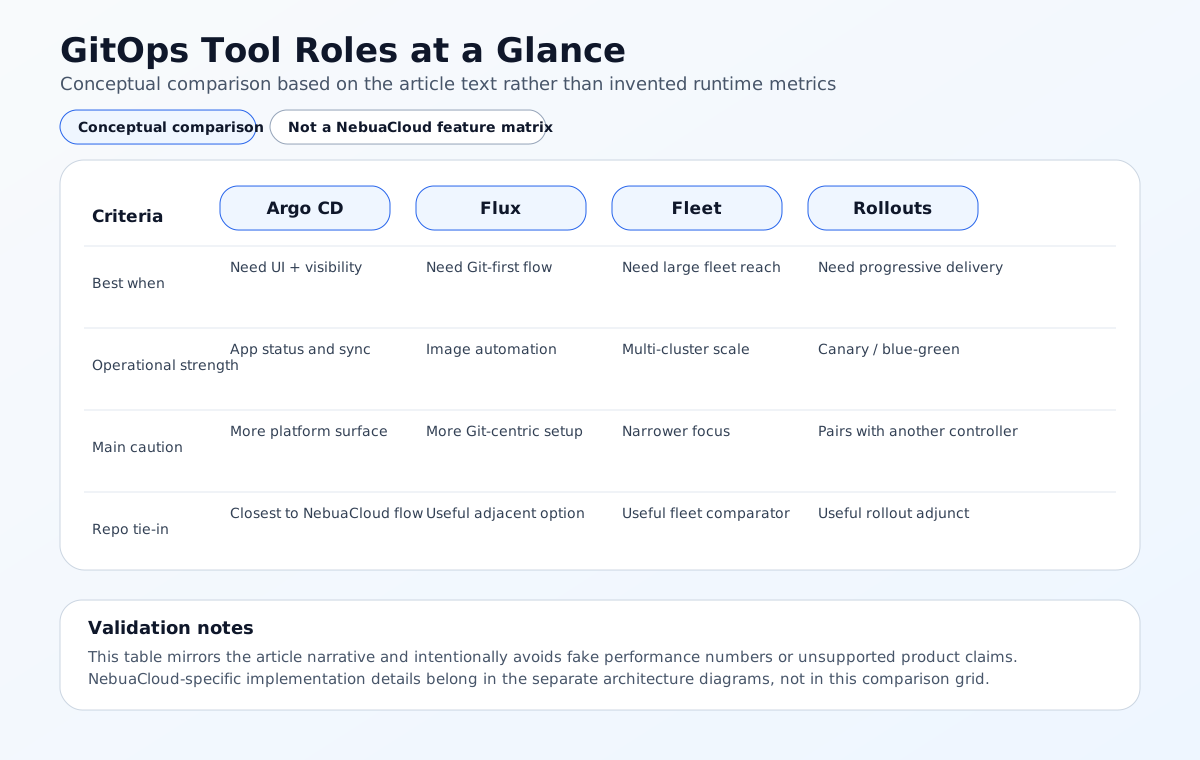
- Argo CD - Rich UI, excellent multi-cluster support, and a broad ecosystem. Ideal when you need operational visibility and integration with promotion pipelines.
- Flux (v2) - Git-native, lightweight, and strong for image automation workflows. Great for Git-first automation and declarative processes.
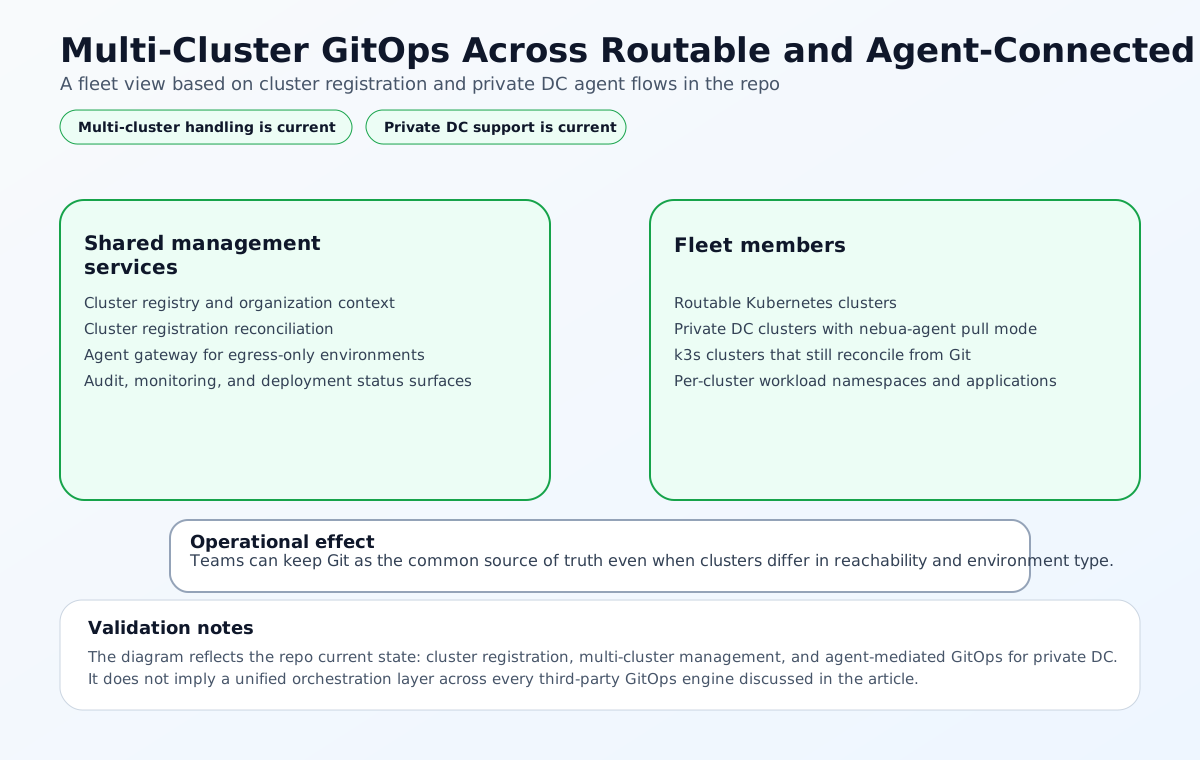
- Rancher Fleet - Designed for large-scale multi-cluster management. Recommended for fleets of many clusters or edge environments.
Progressive delivery and rollout tools
- Argo Rollouts - Supports canary, blue/green, and metrics-driven rollouts. Pairs well with Argo CD.
- Flagger - Automates canaries and progressive delivery integrating with service mesh or ingress; useful for metrics-driven operations.
Image automation and update tools
- Flux Image Automation - Part of the Flux family for automatically updating image tags/values in Git.
- Renovate / Dependabot - Useful for opening automated PRs to bump image tags and dependency versions.
Secrets management
- SOPS (with KMS) - Encrypts files in Git using cloud KMS (AWS, GCP, Azure). Good for compliance-focused workflows.
- Sealed Secrets - Lets you store encrypted secrets in Git that only the target cluster can decrypt.
- ExternalSecrets / Vault - For cases where secrets are managed outside Git and injected at runtime.
Policy and validation
- Kyverno - Kubernetes-native policies that are easy to author and apply.
- OPA / Gatekeeper - Policy-as-code platform suited for complex policies (audit and deny enforcement).
Observability and monitoring (integrations)
- Prometheus + Grafana - Metrics and dashboards to monitor reconciliation status and application health.
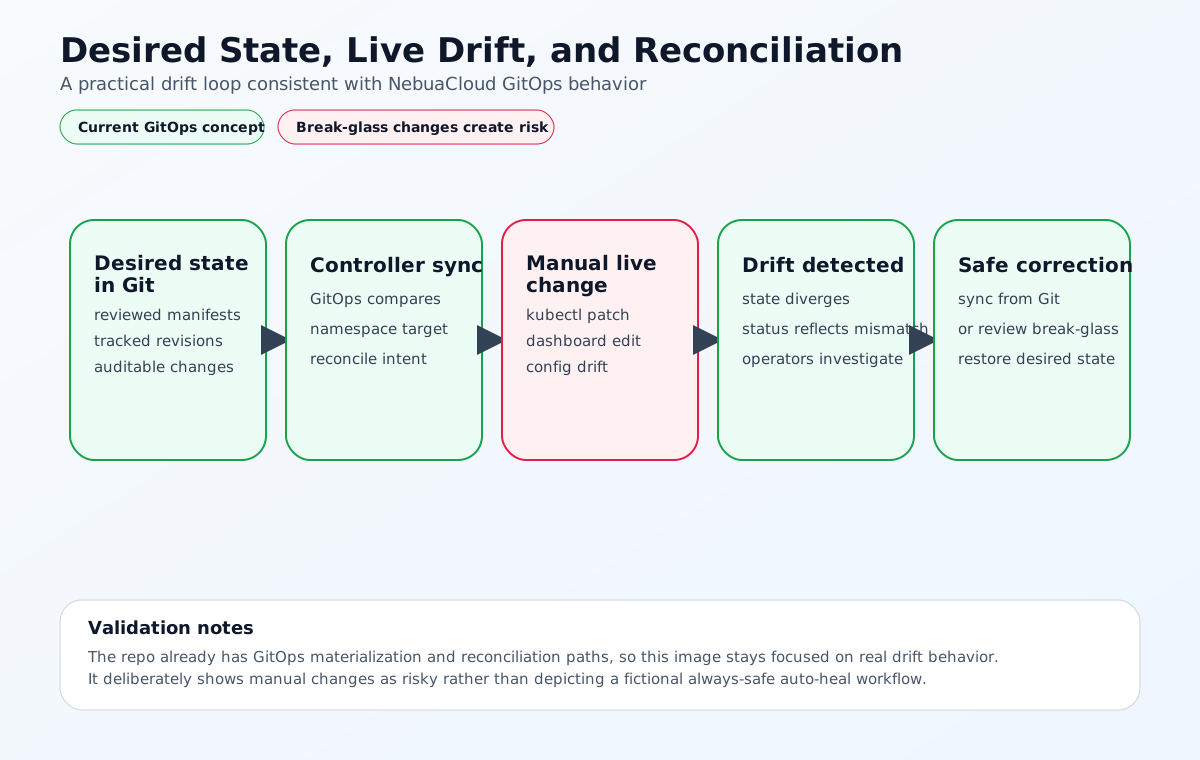
- Controller alerts - Argo CD and Flux provide native integrations to notify sync failures to incident channels.
Enterprise platforms and bundles
- OpenShift GitOps (Argo CD packaged by Red Hat) - For organizations using OpenShift with enterprise support.
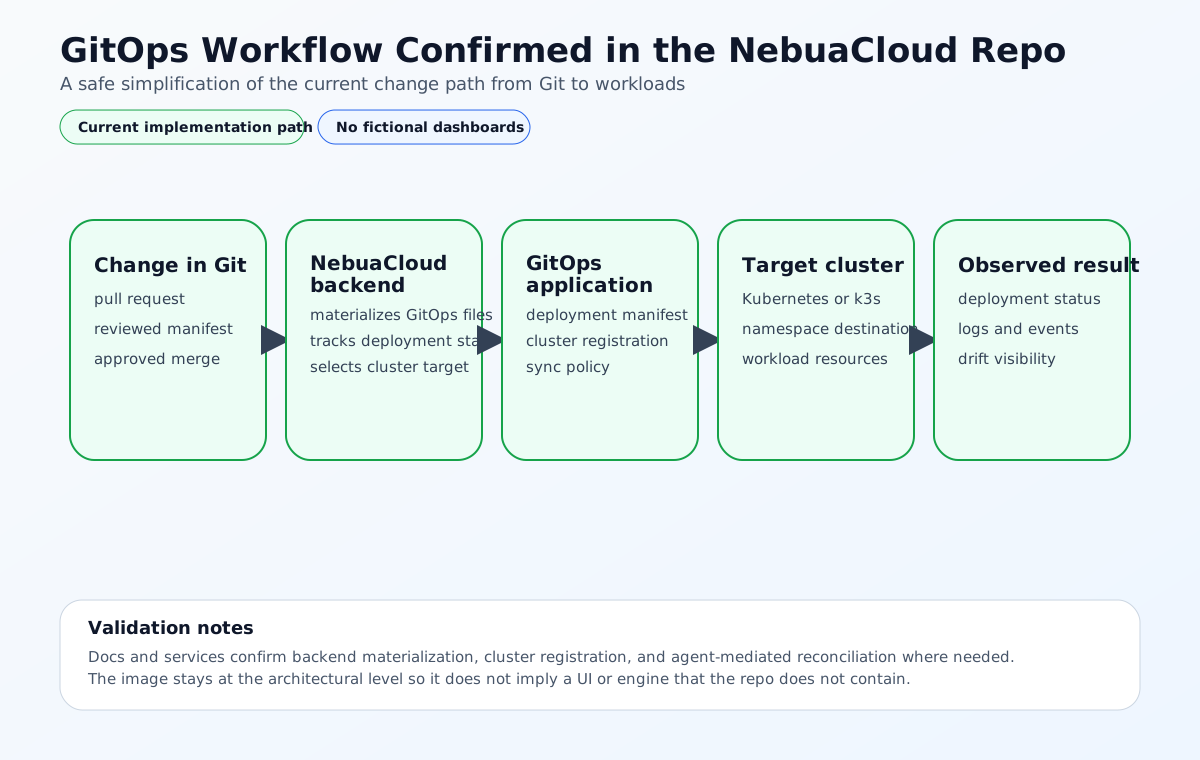
- NebuaCloud - A platform (mentioned in the repo) that centralizes GitOps, multi-cluster management, and operational visibility.
How to choose
- Need UI and visibility: choose Argo CD (plus Argo Rollouts for progressive delivery).
- Prefer Git-first, lightweight automation: choose Flux + Flux Image Automation.
- Large-scale multi-cluster management: consider Rancher Fleet or an enterprise platform (OpenShift/NebuaCloud).
- Secrets management: use SOPS or External Secrets depending on compliance and operational constraints.
Final notes
These tools are often complementary - for example, using Flux for image automation, SOPS for secrets, and Argo Rollouts for canaries is a practical combination. Start with a pilot (one application + one cluster), validate CI -> Git -> Controller integrations, and expand based on operational needs.
Try it with NebuaCloud -> deploy in minutes
Current Availability
Availability note: NebuaCloud currently includes core GitOps capabilities confirmed in the codebase, including deployment flows, cluster registration, pull-mode GitOps reconciliation for connected clusters, and multi-cluster operational handling.
Some advanced capabilities discussed in this article, such as a unified managed layer across multiple GitOps engines or broader controller comparison/orchestration as a product feature, are not yet available as complete managed features in the current release.
GitOps in this article refers to Git-based desired state and controller-driven reconciliation. Any future AI-assisted analysis around telemetry or incident triage would be a separate optional layer, not part of the GitOps engine itself.
These capabilities represent future platform direction. No release date is being promised.