Can AI Replace DevOps Engineers?
A technical look at whether AI can replace DevOps engineers, covering automation, Kubernetes operations, GitOps, AIOps, and the limits of AI in production.
AI tools are changing how engineers write code, debug systems, and automate repetitive work. That has led to a common question in platform and infrastructure teams: can AI replace DevOps engineers?
The short answer is no, at least not in the way the question is usually framed. AI can automate parts of DevOps work, reduce toil, speed up troubleshooting, and improve operations at scale. But DevOps is not just a set of repeatable tasks. It is a combination of system design, operational judgment, risk management, and cross-team coordination.
This article explains what DevOps engineers actually do, which parts of the job AI can help with, where AI falls short in production, and how teams can use AI effectively in Kubernetes, GitOps, and cloud infrastructure workflows.
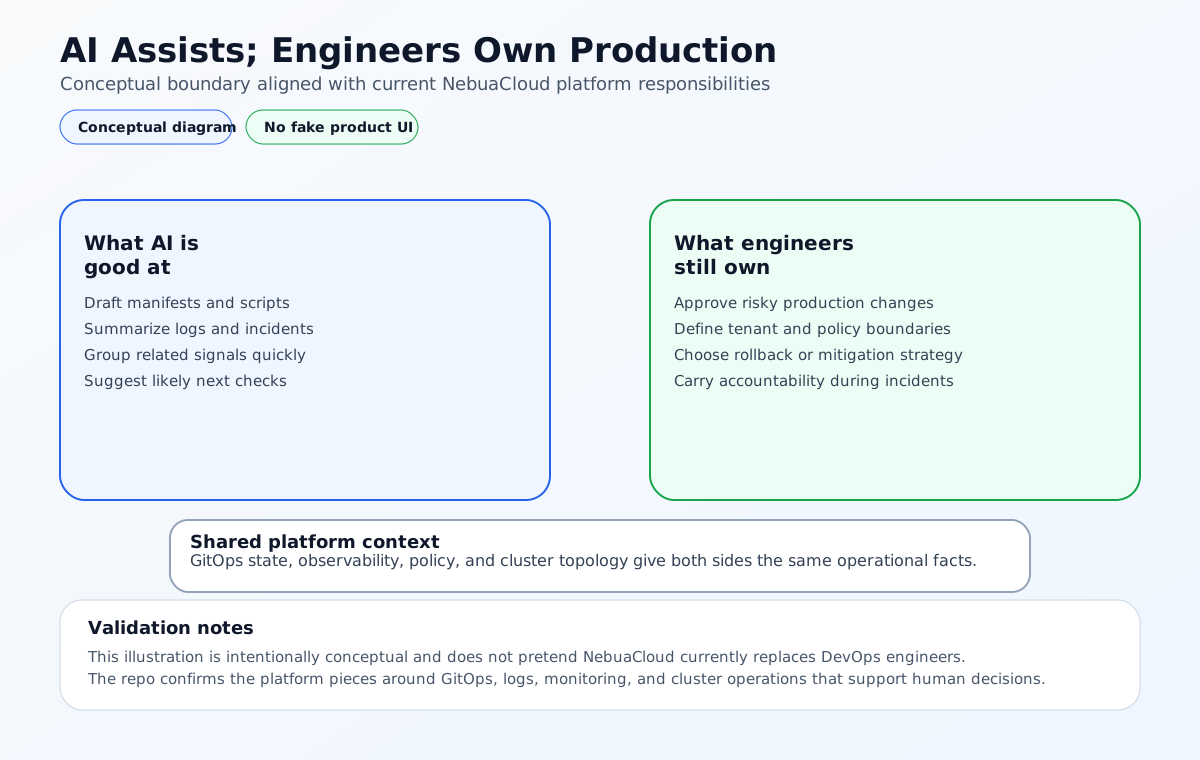
The Problem: DevOps Is More Than Repeating Commands
When people ask whether AI can replace DevOps engineers, they are often imagining the most repetitive parts of the job:
- Writing YAML
- Updating manifests
- Responding to alerts
- Restarting services
- Running common troubleshooting commands
Those tasks are real, but they are not the whole job.
DevOps work also includes:
- Designing deployment workflows
- Making tradeoffs between speed, reliability, and cost
- Building guardrails for production systems
- Deciding when automation is safe
- Coordinating between development, security, and operations
AI can assist with many of those activities, but it does not automatically understand your infrastructure goals, failure domains, or business risk.
Why this matters in Kubernetes and cloud operations
Kubernetes environments are dynamic. Clusters change, workloads scale, incidents happen, and the correct response depends on context.
That means a tool that can generate a deployment manifest is useful, but it is not the same as knowing:
- Whether the manifest matches platform policy
- Whether the cluster can schedule the workload
- Whether the change is safe during a traffic spike
- Whether rollback behavior is acceptable
- Whether the tenant boundary is strong enough
Those are engineering decisions, not just text generation tasks.
What DevOps Engineers Actually Do
DevOps engineers usually sit at the intersection of application delivery and infrastructure operations.
Core responsibilities
- Building CI/CD or GitOps workflows
- Managing Kubernetes clusters and related services
- Designing observability and alerting
- Automating routine operational tasks
- Securing deployment pipelines and runtime environments
- Supporting incident response and recovery
- Standardizing platform behavior across teams
The judgment part
The hardest part of the job is not running a script. It is deciding:
- What should be automated
- What should require human approval
- What should be safe to retry
- What needs rollback versus remediation
- What should be standardized versus customized
That judgment depends on experience, operational context, and organizational risk tolerance.
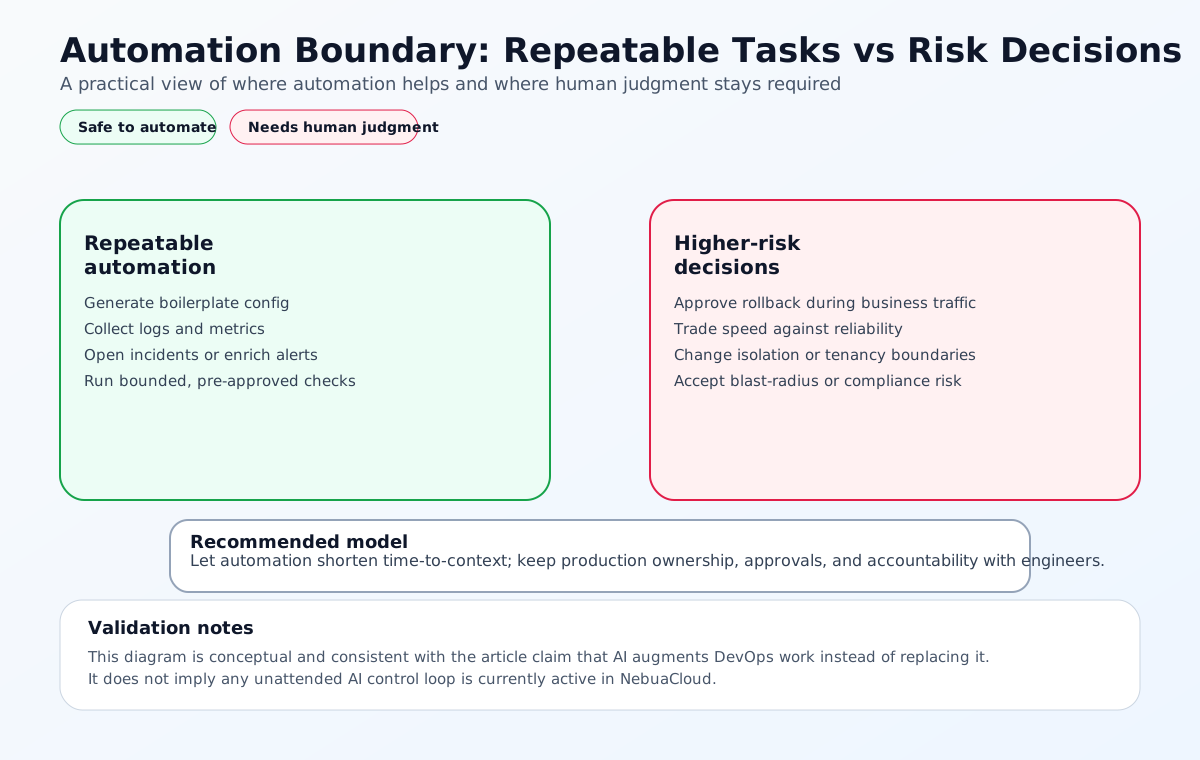
What AI Can Do Well in DevOps
AI is already useful in several areas of DevOps and cloud operations.
1. Accelerate routine work
AI can help generate:
- Kubernetes manifests
- Terraform modules
- CI/CD pipeline snippets
- Shell scripts
- Documentation
This can reduce time spent on repetitive boilerplate.
2. Assist with troubleshooting
AI systems can summarize logs, correlate alerts, and help explain likely causes of an issue.
For example, an AI assistant might identify that:
- Pod restarts increased after a rollout
- A node is under memory pressure
- A service dependency is timing out
- An HPA is scaling but the cluster is out of capacity
3. Reduce alert noise
AIOps-style systems can group related alerts, identify anomalies, and prioritize likely root causes.
This helps with Kubernetes environments where many symptoms are downstream of one issue.
4. Suggest safe next steps
AI can propose:
- A rollback candidate
- A scaling adjustment
- A policy change
- A missing readiness probe
- A likely misconfiguration
The value is speed and consistency, not final authority.
Where AI Falls Short
AI is useful, but it has clear limitations in production infrastructure.
It does not own the system
AI does not have accountability.
If a remediation step breaks production, the responsibility still belongs to the humans and teams operating the platform.
It lacks organizational context
An AI model may not know:
- Which services are customer-critical
- Which clusters have strict compliance rules
- Which changes are safe during business hours
- Which failure can be ignored and which cannot
That context matters a lot in DevOps.
It can be confidently wrong
AI systems can hallucinate, misread signals, or recommend actions that are technically valid but operationally unsafe.
It cannot replace architecture decisions
AI can help configure a cluster, but it cannot choose the right isolation model, release strategy, or capacity plan without guidance.
It cannot replace incident ownership
Production incidents often require communication, prioritization, and coordination between teams. That is not something AI can fully replace.
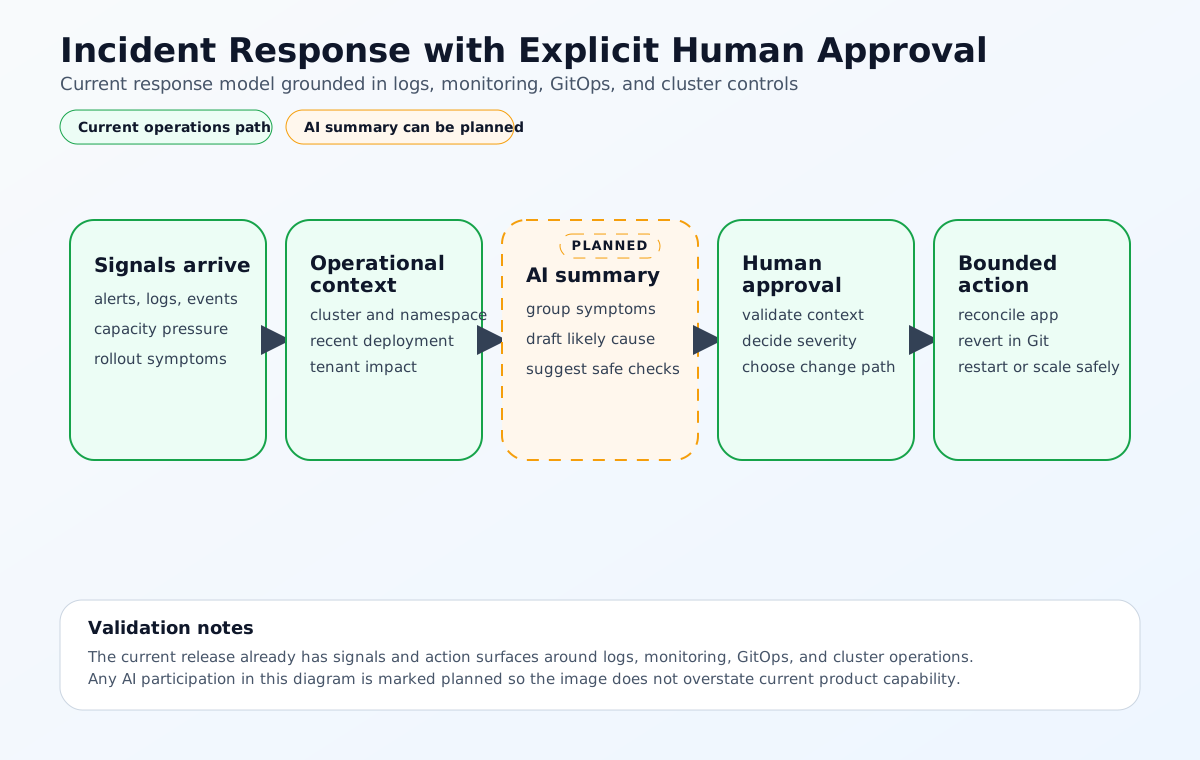
Current Industry Standard Approaches
Most teams use AI as an assistant, not as a replacement.
AI-assisted coding and scripting
Engineers use AI to generate:
- YAML
- Bash
- Python
- Terraform
- CI/CD examples
This speeds up implementation, but still needs review.
AIOps for observability and incident support
Some platforms use AI for:
- Alert correlation
- Anomaly detection
- Incident summarization
- Suggested remediation steps
This reduces the cognitive load during incidents.
GitOps plus AI assistance
Teams often keep Git as the source of truth while using AI to:
- Draft manifests
- Explain diffs
- Suggest policy improvements
- Review operational patterns
This keeps the final decision in code review and platform policy. GitOps itself is still a Git-based deployment and reconciliation model, while AI remains a separate assistant around that workflow.
Human-in-the-loop automation
The most common production pattern is still human-in-the-loop.
AI suggests, engineers approve, and automation executes within guardrails.
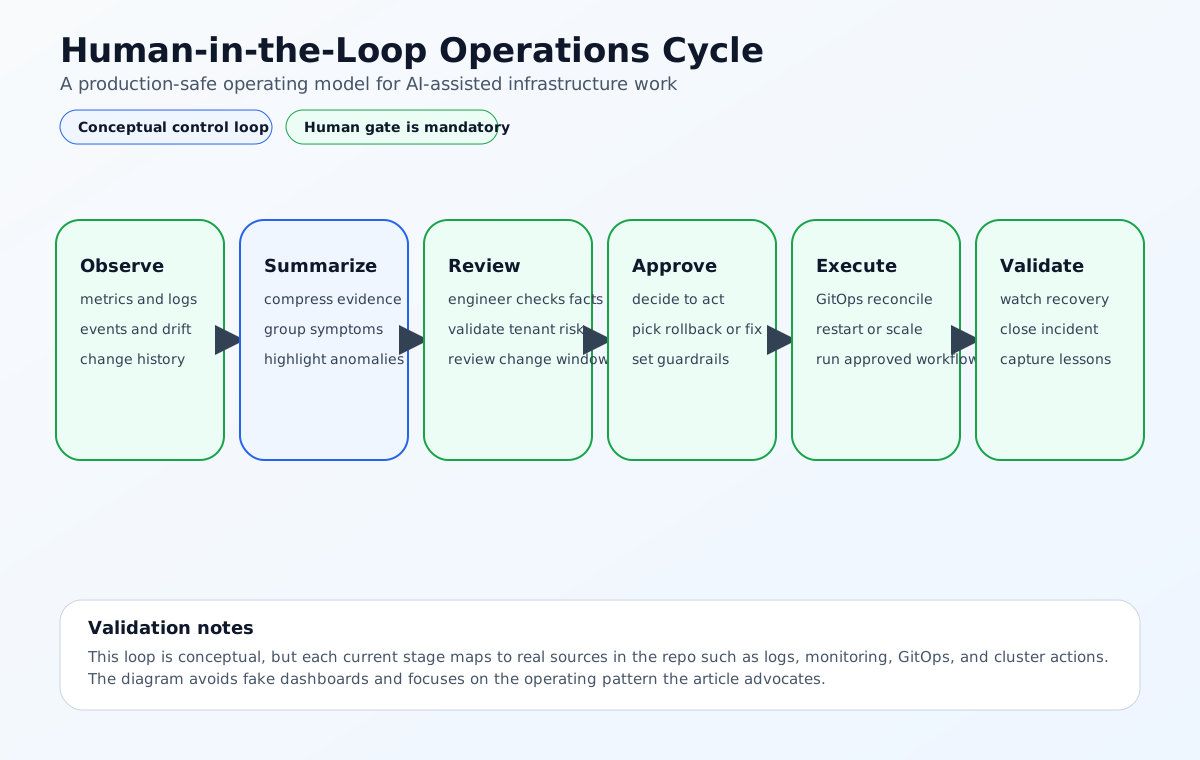
Limitations of Current AI-Driven Approaches
Even with better models, there are still structural limits.
Automation without guardrails is risky
If AI can change infrastructure directly without policy controls, the blast radius can grow quickly.
Training data does not equal your environment
General models may know Kubernetes concepts, but they do not know your cluster layout, your tenant model, or your incident history unless integrated carefully.
AI needs high-quality telemetry
Bad or incomplete data leads to weak recommendations.
Multi-cluster environments make context harder
Signals are often spread across clusters, namespaces, and platforms. AI is more useful when those signals are normalized and connected.
A Better Solution Approach
The best use of AI in DevOps is augmentation, not substitution.
1. Automate repetitive work
Let AI help generate boilerplate and summarize routine data.
2. Keep humans in the decision loop
Use AI to support decisions, not silently make them in production.
3. Combine AI with GitOps
Git remains the source of truth. AI can help draft and explain, but GitOps should still control deployment state.
4. Build strong observability
AI is only useful when it has enough telemetry to analyze.
5. Apply policy and tenancy controls
The more powerful the automation, the more important the guardrails.
How NebuaCloud Fits Into This Model
This is where NebuaCloud fits naturally.
NebuaCloud is focused on Kubernetes management, GitOps workflows, multi-tenant infrastructure, and simplified deployment of production workloads. In the context of AI and DevOps, that means the platform can help teams use AI as a separate operational layer without losing control of the underlying infrastructure.
What this means in practice
NebuaCloud can help teams:
- Manage Kubernetes and k3s clusters with a separate AI-assisted operational layer where appropriate
- Use GitOps workflows as the source of truth for changes
- Support multi-tenant infrastructure with stronger isolation boundaries
- Surface AIOps-style signals for faster incident triage
- Reduce manual effort while keeping human review where it matters
That makes it useful when the goal is not "replace engineers," but "remove repetitive work so engineers can focus on higher-value decisions."
Practical Example: AI in a Kubernetes Operations Workflow
Consider a platform team managing several production clusters.
What AI can do
- Summarize a spike in pod restarts
- Suggest that a recent rollout caused the issue
- Highlight that a node is under memory pressure
- Recommend checking a specific deployment and namespace
What the DevOps engineer still does
- Confirms whether the issue matches known behavior
- Checks whether rollback is safe
- Reviews cluster capacity and policy impact
- Decides whether to automate the fix or apply it manually
AI shortens the path to understanding. It does not remove the need for ownership.
Conclusion
AI will not fully replace DevOps engineers because DevOps is not just execution. It is judgment, design, accountability, and coordination across systems and teams.
What AI can do is make DevOps work faster and more consistent. It can help generate infrastructure code, summarize incidents, detect anomalies, and reduce toil. In Kubernetes and cloud infrastructure, that combination is valuable as long as humans keep ownership of the important decisions.
For teams running Kubernetes and k3s in production, NebuaCloud can provide a natural operational layer for GitOps, observability, and multi-tenant infrastructure so AI supports the platform without replacing the engineering model behind it.
Try it with NebuaCloud -> deploy in minutes
Current Availability
Note: NebuaCloud currently provides the Kubernetes, GitOps, multi-cluster, and operational workflows described in this article, but it does not yet deliver a full AI replacement for DevOps engineers in the current release.
Today, NebuaCloud focuses on Kubernetes management, k3s environments, GitOps workflows, application deployment, multi-cluster operations, and infrastructure automation. AI-assisted DevOps capabilities remain part of the product vision and future roadmap rather than a complete managed feature today.
GitOps flows mentioned here do not depend on artificial intelligence. Any AI assistance around incident triage, drafting, or explanation should be treated as a separate optional layer around the standard GitOps workflow.
This article is intended to explain how AI can support DevOps work in practice while outlining the longer-term direction for NebuaCloud.