What Are the Most Common Kubernetes Mistakes in Production?
Learn the most common Kubernetes mistakes in production, why they happen, and how to build safer deployment and operations practices with GitOps, observability, and isolation.
Running Kubernetes in production is less about launching containers and more about building an operating model that can handle failure, change, and scale. Many teams reach a point where the cluster is technically working, but production incidents still happen because the platform was never designed with day-2 operations in mind.
The most common Kubernetes mistakes are usually not exotic. They are practical gaps in security, scheduling, rollout strategy, observability, and recovery planning. These issues become more visible as teams add more workloads, more environments, more tenants, or more clusters.
This article explains the mistakes engineers most often make in Kubernetes production environments, the standard ways teams try to prevent them, the limitations of those approaches, and a practical model for running Kubernetes and k3s more safely.
The Problem: Kubernetes Is Easy to Start and Hard to Operate Well
Kubernetes makes it easy to declare workloads, scale services, and standardize deployment patterns. That simplicity can hide the operational complexity underneath.
The same cluster must often handle:
- Application rollout and rollback
- Node failure and rescheduling
- Network policy and service discovery
- Persistent storage and stateful workloads
- Secrets and identity management
- Resource isolation and multi-tenancy
- Monitoring, logging, and incident response
- Upgrades and version compatibility
If any of those areas are handled informally, the result is not usually an immediate outage. It is often a slow buildup of technical debt that eventually turns into a production incident.
Why these mistakes repeat
Teams usually know the theory. The issue is execution under real constraints.
Common pressure points include:
- Fast delivery timelines
- Incomplete platform tooling
- Manual changes during incidents
- Weak ownership boundaries between platform and app teams
- Reusing development assumptions in production
In production, Kubernetes does not fail because it is Kubernetes. It fails because the surrounding operational practices are incomplete.
The Most Common Kubernetes Mistakes in Production
The exact order varies by organization, but these are the mistakes that show up repeatedly in real environments.
1. Not defining resource requests and limits
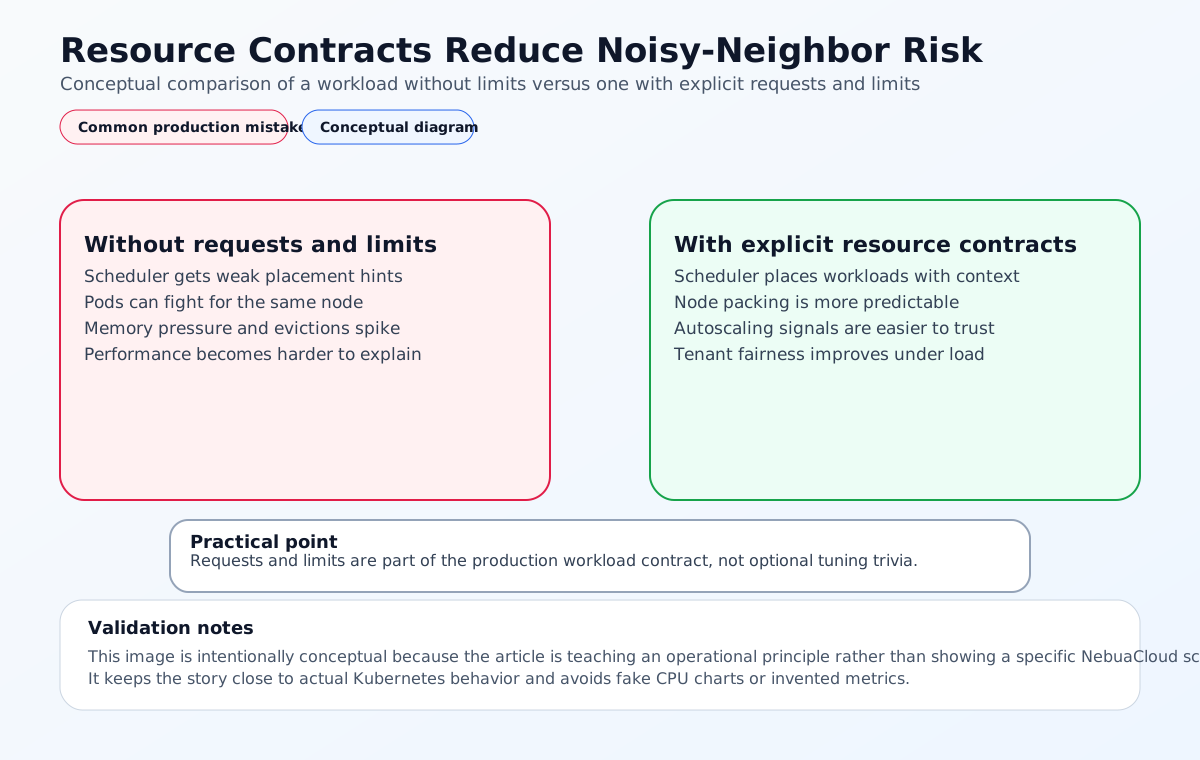
One of the most common production mistakes is deploying workloads without CPU and memory requests and limits.
Without these values, the scheduler has poor information, workloads can compete unpredictably, and a noisy neighbor can consume more than its share of cluster capacity.
This often leads to:
- Evictions under memory pressure
- Unstable autoscaling behavior
- Poor node packing
- Hard-to-debug performance problems
Requests and limits are not tuning details. They are part of the workload contract.
2. Treating namespaces as complete isolation
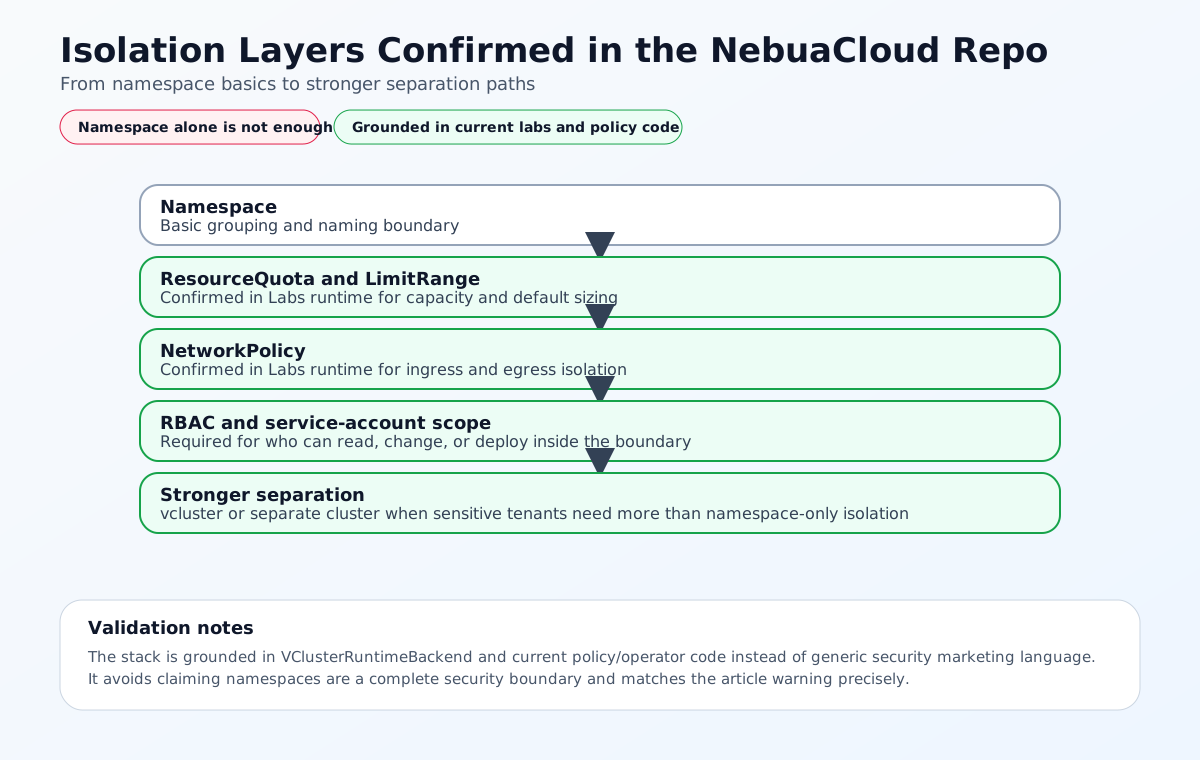
Namespaces are useful, but they are not a full security boundary by themselves. Teams often assume that namespace separation is enough for production multi-tenancy.
In practice, production isolation also needs:
- RBAC scoped to the right service accounts
- NetworkPolicy for east-west traffic control
- Quotas and limits for fair usage
- Admission policy to prevent unsafe objects
- Separate clusters or stronger isolation for sensitive tenants
If multiple teams share the same cluster, namespace-only designs can become risky quickly.
3. Ignoring probes and rollout behavior
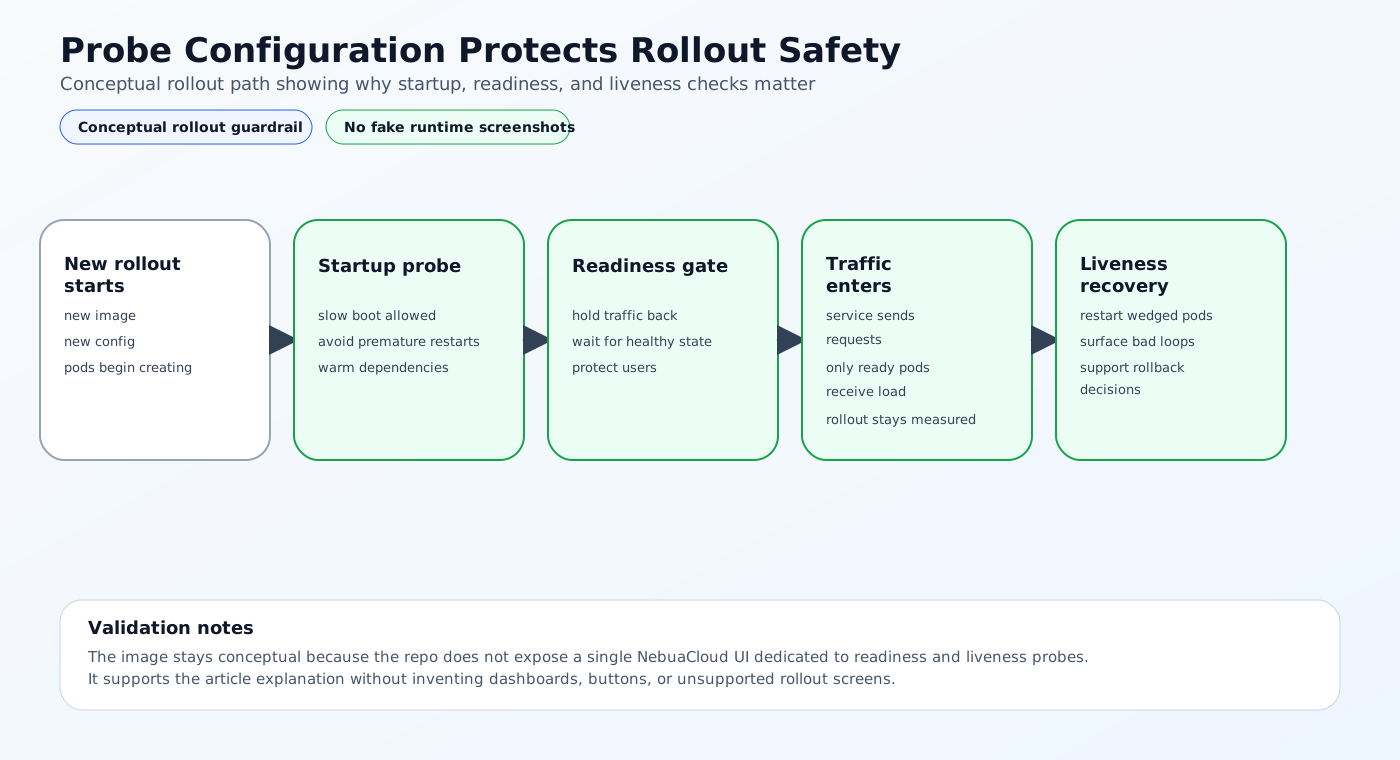
A workload that starts is not necessarily a workload that is ready.
If readiness and liveness probes are missing or incorrect, Kubernetes may send traffic too early, fail to detect unhealthy pods, or restart containers in a loop without solving the root cause.
Poor rollout behavior often shows up as:
- Traffic reaching pods before dependencies are ready
- Deployments that never become healthy
- Long-lived bad replicas during updates
- Rollbacks that do not actually restore service health
Production workloads need clear startup, readiness, and liveness behavior.
4. Using manual kubectl changes as a normal workflow
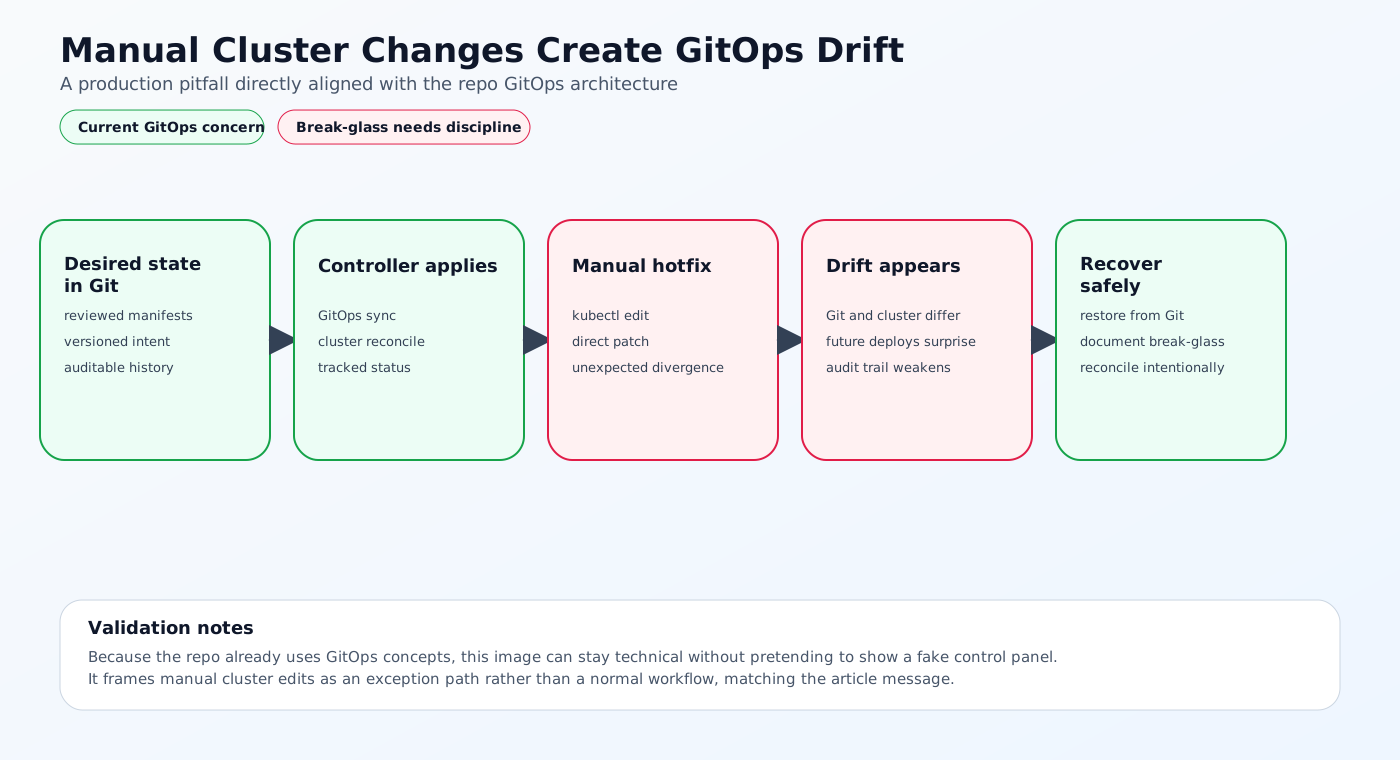
Emergency changes happen. The mistake is letting manual kubectl apply, patching, or dashboard edits become the default operational model.
Manual changes create drift between Git and the live cluster, make audits harder, and cause the next deployment to behave unpredictably.
When production depends on manual fixes, the platform is no longer reproducible.
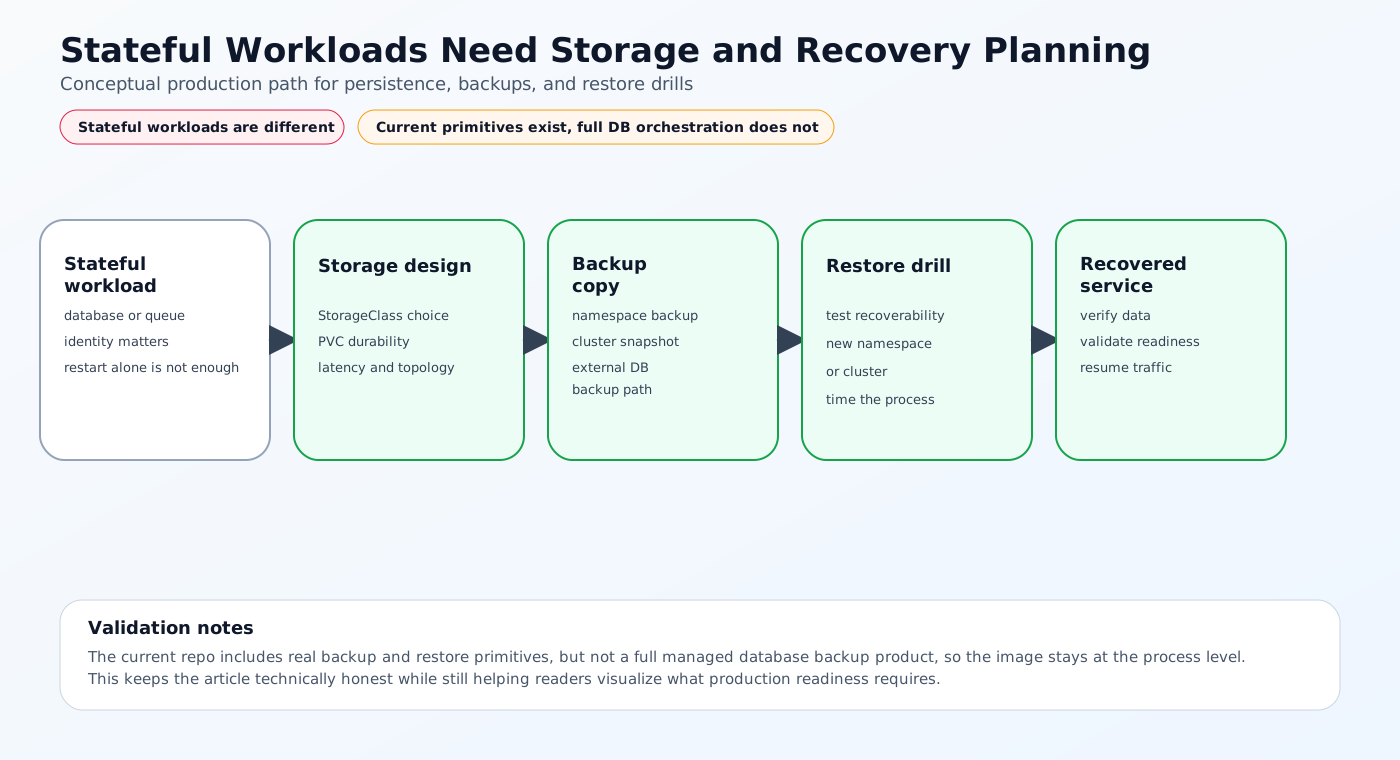
5. Running stateful workloads without a storage and backup plan
Many teams can deploy stateless services safely but treat stateful services as if Kubernetes will handle persistence automatically.
That assumption is dangerous. Stateful services need:
- Durable storage
- Storage class validation
- Backup procedures
- Restore drills
- Upgrade planning for schema and data changes
If the team cannot restore the data, the workload is not production ready even if the pods are healthy.
6. Underestimating cluster upgrades
Upgrades are often postponed until they become urgent. That is usually when they become risky.
Kubernetes version skew, deprecated APIs, and component compatibility can make upgrades disruptive if they are not tested and scheduled properly.
Safe upgrades require:
- A version support policy
- Compatibility testing for manifests and controllers
- A documented upgrade path
- Rollback or recovery procedures
7. Shipping without observability
Logs alone are not enough. Metrics alone are not enough. Production Kubernetes needs a complete visibility model.
Teams often miss issues because they are not watching:
- Node pressure and capacity
- Pod restart rates
- Rollout health
- Controller reconciliation state
- Storage latency
- Error budgets and application SLOs
If the platform team cannot answer what changed, where it failed, and how it is affecting users, incident resolution slows down dramatically.
8. Mixing platform concerns with application concerns
Production clusters work better when platform services are standardized.
Common platform components include:
- Ingress controllers
- Certificate management
- DNS automation
- Storage provisioning
- Monitoring and logging
- Policy engines
Application teams should build on those services instead of re-creating them independently. When every workload solves platform problems differently, the cluster becomes hard to support.
Industry Standard Approaches to Prevent These Mistakes
Most teams address these issues with a combination of Kubernetes best practices and automation.
GitOps for change control
GitOps has become one of the most practical ways to reduce drift and improve change visibility in production Kubernetes.
A typical GitOps workflow looks like this:
- A developer opens a pull request with manifest or Helm changes.
- CI validates the change with linting, tests, and policy checks.
- The change is merged into the Git repository.
- A GitOps controller reconciles the live cluster to the desired state.
- Monitoring confirms whether the rollout succeeded.
This gives teams a clear audit trail and reduces the temptation to make ad hoc changes directly in the cluster.
Policy engines for guardrails
Tools such as OPA/Gatekeeper and Kyverno are often used to prevent unsafe manifests from reaching production.
They help enforce rules like:
- Require resource requests and limits
- Block privileged containers
- Disallow risky host mounts
- Require labels and annotations
- Restrict image sources
Policy is most useful when it prevents mistakes before they become incidents.
Progressive delivery for risky changes
For production workloads, especially customer-facing ones, teams often use canaries, blue-green deployments, or phased rollouts.
The goal is to reduce blast radius. If a rollout fails, only a small portion of traffic is affected before the system detects the problem.
Separate environments and stronger isolation
Some teams keep dev, staging, and production in separate clusters. Others use shared clusters with namespaces and more advanced isolation patterns.
The right answer depends on the trust model, compliance requirements, and number of teams involved.
Limitations of the Standard Approach
The common best practices help, but they do not solve everything on their own.
Tooling does not replace operating discipline
GitOps, policy engines, and observability platforms only work if teams actually use them consistently. If production changes still bypass review, the tools will not prevent drift.
Shared clusters can still be hard to govern
Even with quotas and RBAC, shared infrastructure creates operational complexity. One team can still affect another through bad rollouts, resource pressure, or noisy side effects.
k3s and lightweight clusters still need production controls
k3s is often chosen for smaller environments, edge use cases, or distributed infrastructure. That reduces operational footprint, but it does not reduce the need for RBAC, backups, observability, and rollout safety.
The cluster may be smaller, but production mistakes still behave like production mistakes.
State introduces more failure modes
Databases, queues, and other stateful systems need stronger recovery planning than stateless APIs. Even if the deployment is declarative, the operational behavior may not be.
A Better Solution Approach
The most reliable production Kubernetes setups usually combine four layers:
1. Clear workload contracts
Every workload should define:
- Requests and limits
- Probes
- Storage requirements
- Security context
- Update strategy
This makes the workload behavior explicit.
2. Declarative change management
Infrastructure and application changes should be defined in Git and deployed through automation. That keeps the desired state readable, reviewable, and reproducible.
3. Strong isolation boundaries
Use the right level of isolation for the risk model:
- Namespaces for simple separation
- NetworkPolicy for traffic control
- RBAC for permissions
- Quotas for capacity governance
- Virtual cluster style isolation for stronger tenant boundaries
4. Operational feedback loops
Production systems need constant feedback:
- Metrics for saturation and performance
- Logs for debugging and audit
- Events for control plane behavior
- Alerts for drift, failure, and rollout anomalies
Without feedback, teams only learn about problems after users do.
How NebuaCloud Helps Reduce These Mistakes
This is where NebuaCloud fits naturally into the production model.
NebuaCloud is focused on Kubernetes management, GitOps workflows, multi-tenant infrastructure, and simplified deployment of production workloads. For teams trying to avoid common Kubernetes mistakes, that matters because many of the failures are not about the workload itself. They are about how the cluster is managed around the workload.
What this looks like in practice
NebuaCloud can help teams:
- Standardize Kubernetes and k3s cluster management
- Use GitOps workflows to reduce drift and manual changes
- Apply stronger tenant isolation for shared infrastructure
- Surface operational signals for faster anomaly detection
- Reduce the amount of custom glue required to run production workloads consistently
The value is not that it replaces Kubernetes best practices. The value is that it gives those practices a more consistent operating layer.
Why this matters for platform teams
Common mistakes often happen because teams are forced to stitch together several tools to solve a single operational problem. One tool handles clusters, another handles GitOps, another handles visibility, and another handles isolation.
When the platform brings those concerns closer together, it becomes easier to enforce standards and easier for application teams to follow them.
Practical Example: Avoiding Mistakes in a Multi-Team Cluster
Imagine a shared Kubernetes platform running several internal services and customer-facing APIs.
Common failure scenario
Without clear controls, a team might deploy:
- No memory limit
- Weak probes
- Manual hotfixes directly in the cluster
- No backup procedure for a new database
- No policy to block privileged pods
That setup may appear fine in staging, but production pressure exposes the gaps quickly.
Safer workflow
- The team defines workload resources, probes, and security settings in Git.
- CI validates manifests and policy rules before merge.
- GitOps deploys the workload to the target cluster.
- Policies enforce baseline controls like resource requests and container security.
- Observability watches rollout health, pod restarts, storage usage, and error rates.
- If the workload is stateful, backup and restore procedures are tested before full rollout.
- Tenant-level boundaries keep one workload from interfering with another.
This is the difference between deploying a workload and operating a platform.
Conclusion
The most common Kubernetes mistakes in production are usually not advanced architecture failures. They are missing basics: resources, probes, isolation, observability, rollback planning, and change control.
The standard solutions are well known. Use GitOps to reduce drift, use policy to enforce guardrails, use observability to detect issues, and treat stateful services with extra care. But these practices only work when the surrounding operational layer is consistent enough to support them.
For teams that want to run Kubernetes and k3s with stronger GitOps discipline, better multi-tenant isolation, and more consistent production operations, NebuaCloud provides a natural place to bring those pieces together.
Try it with NebuaCloud -> deploy in minutes
Current Availability
Note: NebuaCloud currently provides Kubernetes management, GitOps governance, multi-cluster operations, namespace and workload isolation primitives, monitoring/log visibility, and partial backup/recovery workflows referenced in this article.
Today, NebuaCloud focuses on Kubernetes and k3s operations, change control, isolation, observability, and recovery workflows. GitOps in this article should be understood as a Git-based desired-state model, not as an AI-assisted workflow.
This article is intended to explain practical production mistakes and how the platform direction may help teams address them over time.