GitOps vs Traditional CI/CD Pipelines: What Changes in Production?
A practical comparison of GitOps and traditional CI/CD pipelines for Kubernetes, covering delivery models, drift control, auditability, and production tradeoffs.
GitOps and traditional CI/CD pipelines are often discussed as if one replaces the other, but the reality is more specific. Both approaches automate software delivery. The difference is where the source of truth lives, how changes reach production, and how the system handles drift over time.
For teams running Kubernetes in production, this distinction matters. A pipeline that works well for building artifacts may not be the best model for managing cluster state, multi-environment promotion, or operational auditability.
This article explains how GitOps differs from traditional CI/CD, where each model fits, what tradeoffs appear in production, and how to build a workflow that stays manageable as infrastructure grows.
The Problem: Delivery Pipelines and Runtime State Are Not the Same Thing
Classic CI/CD solved an important problem: how to build, test, and release software repeatedly.
But once teams started deploying into Kubernetes, a second problem became more visible. The deployment target itself is a constantly changing system. Pods reschedule, nodes fail, environments diverge, and manual fixes create drift.
That means production delivery is not only about shipping artifacts. It is also about continuously managing desired state.
Why this matters in Kubernetes
In Kubernetes environments, the deployment model has to answer questions like:
- What version should run in each cluster?
- Who approved that change?
- How do we detect drift between Git and live state?
- How are rollbacks handled?
- What happens when multiple clusters need the same change?
Traditional CI/CD can answer some of these questions, but GitOps changes the shape of the workflow by making Git the operational source of truth.
What Traditional CI/CD Actually Means
Traditional CI/CD usually refers to a pipeline that builds software, runs tests, and then pushes a release into an environment.
Typical CI/CD flow
- A developer merges code or opens a release branch.
- CI builds the application and runs tests.
- The pipeline creates an artifact, usually a container image.
- CD deploys that artifact to an environment.
- Post-deploy checks verify whether the release succeeded.
This model is still widely used because it is straightforward and works well for many applications.
Strengths of traditional CI/CD
Traditional CI/CD is good at:
- Building and testing artifacts
- Running release jobs in sequence
- Integrating with artifact registries
- Supporting approval gates and release jobs
- Triggering deploys from a central automation system
For many teams, the pipeline is already a mature and well-understood part of the delivery process.
What GitOps Actually Means
GitOps is a deployment model where Git stores the desired state of infrastructure and applications, and a controller reconciles that state into the cluster.
GitOps flow
- A developer changes a Kubernetes manifest, Helm values file, or overlay in Git.
- CI validates the change with linting, tests, and policy checks.
- The change is merged into Git after review.
- A GitOps controller detects the change and applies it to the cluster.
- The controller continuously compares live state to desired state and corrects drift.
This does not replace CI. It changes the CD side of the workflow.
Strengths of GitOps
GitOps is useful because it provides:
- A clear source of truth in Git
- Auditability through pull requests and commits
- Continuous reconciliation
- Drift detection and correction
- Easier multi-cluster promotion
It is especially natural in Kubernetes because Kubernetes already works through declarative desired state.
GitOps vs Traditional CI/CD: The Real Difference
The core difference is the control model.
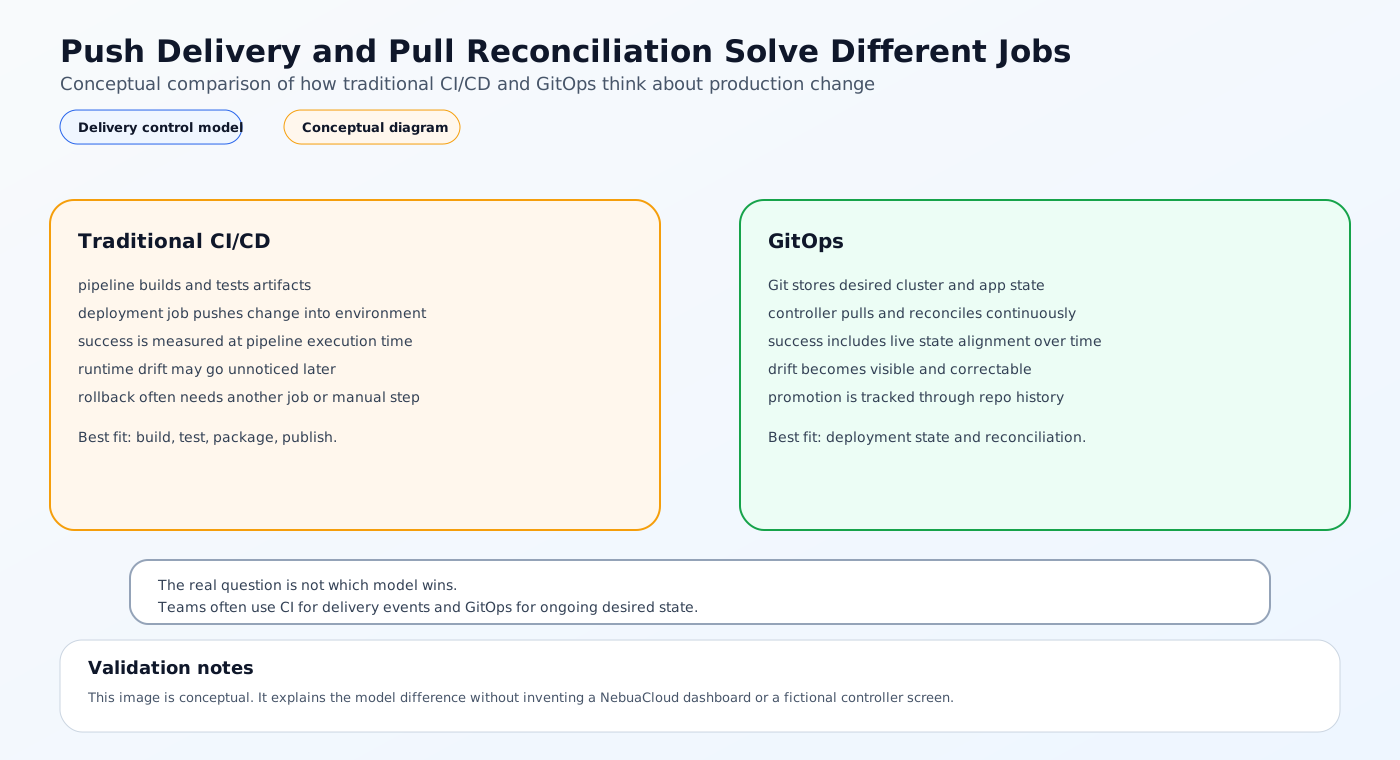
Traditional CI/CD is usually push-based
In traditional pipelines, a job pushes changes into the target environment after the build completes.
That can work well, but it often means the pipeline has direct responsibility for deploying and updating the runtime state.
GitOps is pull-based and declarative
In GitOps, the cluster or controller pulls the declared state from Git and enforces it.
That means the runtime system is not waiting for a pipeline to push every change. Instead, it continuously converges toward the repository state.
Source of truth
- Traditional CI/CD often treats the pipeline as the delivery mechanism and the deployment logic as code inside the pipeline.
- GitOps treats Git as the source of truth and the controller as the reconciler.
Drift handling
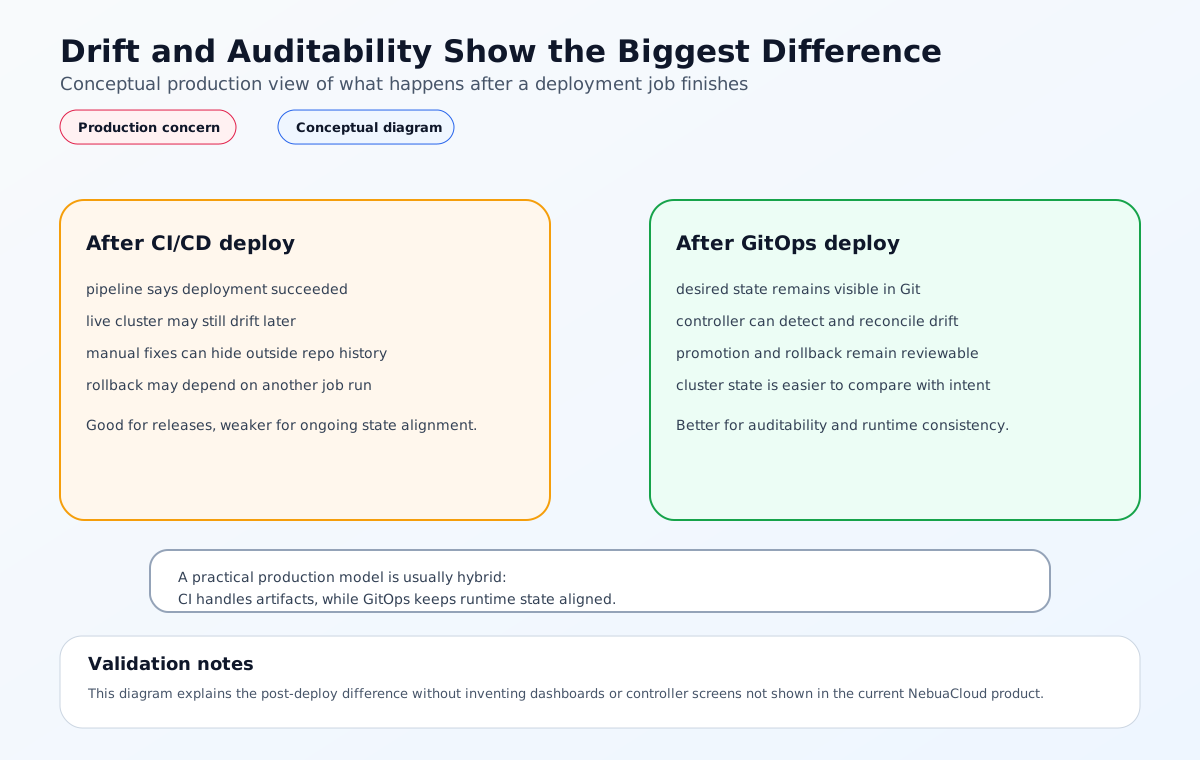
- Traditional CI/CD may deploy successfully but not notice if someone later changes the live cluster manually.
- GitOps detects that drift and brings the cluster back toward the declared state.
Operational visibility
- Traditional CI/CD gives visibility into pipeline execution.
- GitOps gives visibility into both the desired state and the actual cluster state.
That difference becomes very important once multiple environments or clusters are involved.
Current Industry Approaches
Most teams do not choose one extreme. They combine both models.
CI/CD for build and test
Many teams still use traditional pipelines for:
- Building container images
- Running unit and integration tests
- Security scanning
- Publishing artifacts to a registry
This part of the workflow is a good fit for CI because it is event-driven and artifact-focused.
GitOps for deployment and reconciliation
GitOps is often used to manage:
- Kubernetes manifests
- Helm values
- Cluster configuration
- Environment promotion
- Policy enforcement
This part of the workflow is a good fit for reconciliation because it is state-focused.
Hybrid CI/CD plus GitOps
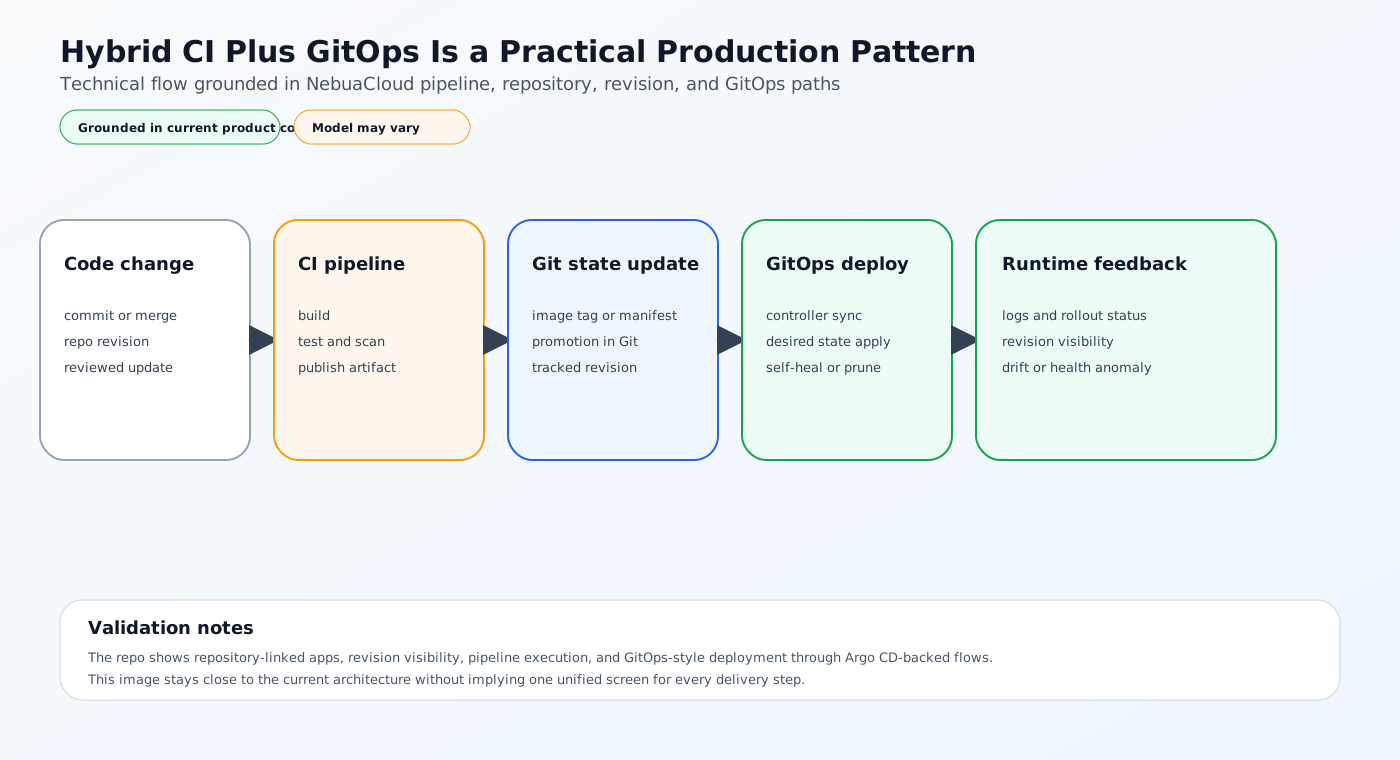
The most common production pattern is hybrid:
- CI builds and validates the artifact.
- CI updates Git with the new image tag or manifest change.
- GitOps controller deploys the change into the cluster.
This keeps the artifact pipeline fast while moving deployment control into Git.
Limitations and Tradeoffs
Neither model solves everything by itself.
Limitations of traditional CI/CD
Traditional CI/CD can become difficult when:
- Many environments need the same release
- Manual intervention is common
- Deployment state drifts from configuration state
- Rollbacks are hard to audit
- Multiple clusters are updated in inconsistent ways
The pipeline may finish successfully while the runtime environment still becomes inconsistent.
Limitations of GitOps
GitOps also has tradeoffs:
- It requires a disciplined repository structure
- It does not replace image building or testing
- It can be awkward for highly procedural changes
- It needs a controller and cluster access model
- Secrets and environment-specific data still need careful handling
GitOps is not a universal answer, but it is a strong model for Kubernetes state management.
Procedural operations still matter
Neither approach handles every runtime task perfectly.
Database migrations, temporary feature flags, blue-green cutovers, and operational incident response may require extra orchestration around the delivery system itself.
A Better Solution Approach
The most reliable delivery model usually separates concerns.
Use CI for artifact production
CI should handle:
- Build
- Test
- Scan
- Package
- Publish
Use GitOps for deployment state
GitOps should handle:
- Environment configuration
- Manifest promotion
- Drift control
- Rollout reconciliation
- Audit history
Use policy to enforce guardrails
Admission policies, manifest validation, and code review should catch unsafe changes before they reach production.
Use observability for runtime feedback
Pipeline success is not the same as application health. Teams still need:
- Metrics
- Logs
- Alerts
- Rollout visibility
- Drift detection
When those pieces are connected, delivery becomes much easier to reason about.
How NebuaCloud Fits Into This Model
Once teams adopt a hybrid model, the next challenge is operating it consistently across Kubernetes clusters, k3s environments, and multi-tenant infrastructure. That is where NebuaCloud fits naturally.
NebuaCloud is focused on Kubernetes management, GitOps workflows, multi-tenant infrastructure, and simplified deployment of production workloads. In a GitOps-oriented delivery model, that means the platform can help teams manage the operational side of deployment rather than stitching multiple tools together manually.
What this means in practice
NebuaCloud can help teams:
- Manage Kubernetes and k3s clusters from a central operational layer
- Use GitOps workflows to deploy changes consistently
- Support multi-tenant infrastructure with stronger boundaries
- Surface observability signals when state diverges or behavior changes
- Simplify promotion across environments and clusters
That makes it useful when CI already exists, but the team needs a more reliable way to manage runtime state and deployment consistency.
Practical Example: A Production Release Workflow
Imagine a team shipping a microservice to dev, staging, and production clusters.
Traditional CI/CD version
- CI builds a new image.
- A deployment job pushes the image to staging.
- A later job pushes the image to production.
- The pipeline keeps track of deployment logic.
- A rollback requires another pipeline execution or manual intervention.
GitOps version
- CI builds a new image.
- CI updates the image tag in a Git repository.
- GitOps controller reconciles staging.
- After validation, the same change is promoted in Git to production.
- The controller continuously keeps the live cluster aligned with Git.
Why the GitOps version is easier to audit
In the GitOps flow, the deployed state is visible in Git history. You can see:
- What changed
- Who approved it
- When it was promoted
- Which clusters are running the change
That is particularly useful when multiple Kubernetes or k3s clusters are involved.
Conclusion
GitOps and traditional CI/CD are not enemies. They solve different parts of the delivery problem.
Traditional CI/CD is strong at building and testing artifacts. GitOps is strong at managing desired state and keeping Kubernetes clusters aligned with that state over time.
For modern DevOps teams, the most practical approach is often a hybrid one: use CI to build and validate, then use GitOps to deploy and reconcile. That gives you speed without losing the auditability and consistency that production systems need.
For teams running Kubernetes and k3s at scale, NebuaCloud can provide a natural operational layer for GitOps, cluster management, multi-tenant infrastructure, and production workload delivery.
Try it with NebuaCloud -> deploy in minutes
Current Availability
Note: NebuaCloud currently provides real pieces of this model, including pipeline execution, repository-linked application sources, revision visibility, GitOps-backed application deployment, and GitOps-style reconciliation behavior for managed workloads.
The platform does not yet expose every comparison point in this article as a single end-to-end delivery product that fully replaces either traditional CI/CD tooling or every GitOps promotion workflow across all environments.
GitOps in this article refers to Git-based desired state and controller-driven reconciliation. Any future AI-assisted analysis would be a separate optional layer around telemetry or incident review, not part of the core GitOps loop.
This article should therefore be read as a practical operating model: some parts are already supported in the current NebuaCloud codebase, while others describe the broader direction the platform can support more completely over time.