How Does vCluster Improve Kubernetes Isolation?
Learn how vCluster improves Kubernetes isolation, why it helps multi-tenant platforms, how it compares to namespaces and separate clusters, and the tradeoffs involved.
How Does vCluster Improve Kubernetes Isolation?
vCluster improves Kubernetes isolation by giving each tenant, team, or environment its own virtual Kubernetes control plane while still sharing the underlying physical cluster. That changes the isolation model in a practical way: tenants interact with what feels like a separate cluster, but platform teams keep the infrastructure shared and centralized underneath.
That matters because isolation in Kubernetes is often a tradeoff between simplicity and safety. Namespaces are easy to operate but limited in scope. Separate clusters give strong boundaries but add overhead. vCluster sits between those options and improves isolation by separating the control plane experience from the physical infrastructure.
This article explains how vCluster improves Kubernetes isolation, what problem it solves in multi-tenant environments, how it compares to namespaces and dedicated clusters, and how it fits into a production platform built around GitOps, k3s, and shared infrastructure.
The Problem: Shared Kubernetes Clusters Leak Boundaries
The reason isolation becomes difficult is that Kubernetes is built to share a lot by default.
In a typical cluster, tenants may share:
- The same control plane
- The same worker nodes
- The same networking layer
- The same storage integrations
- The same observability stack
That is efficient, but it also means a mistake in one area can affect other workloads.
Why namespaces are not enough
Namespaces are useful, but they are only one part of the isolation model.
They do not fully solve:
- API-level separation
- Cluster-wide object visibility
- Shared add-on behavior
- Noisy-neighbor effects on nodes
- Operational access boundaries
This becomes a problem when different teams, customers, or environments need stronger separation than namespaces can provide.
What vCluster Changes
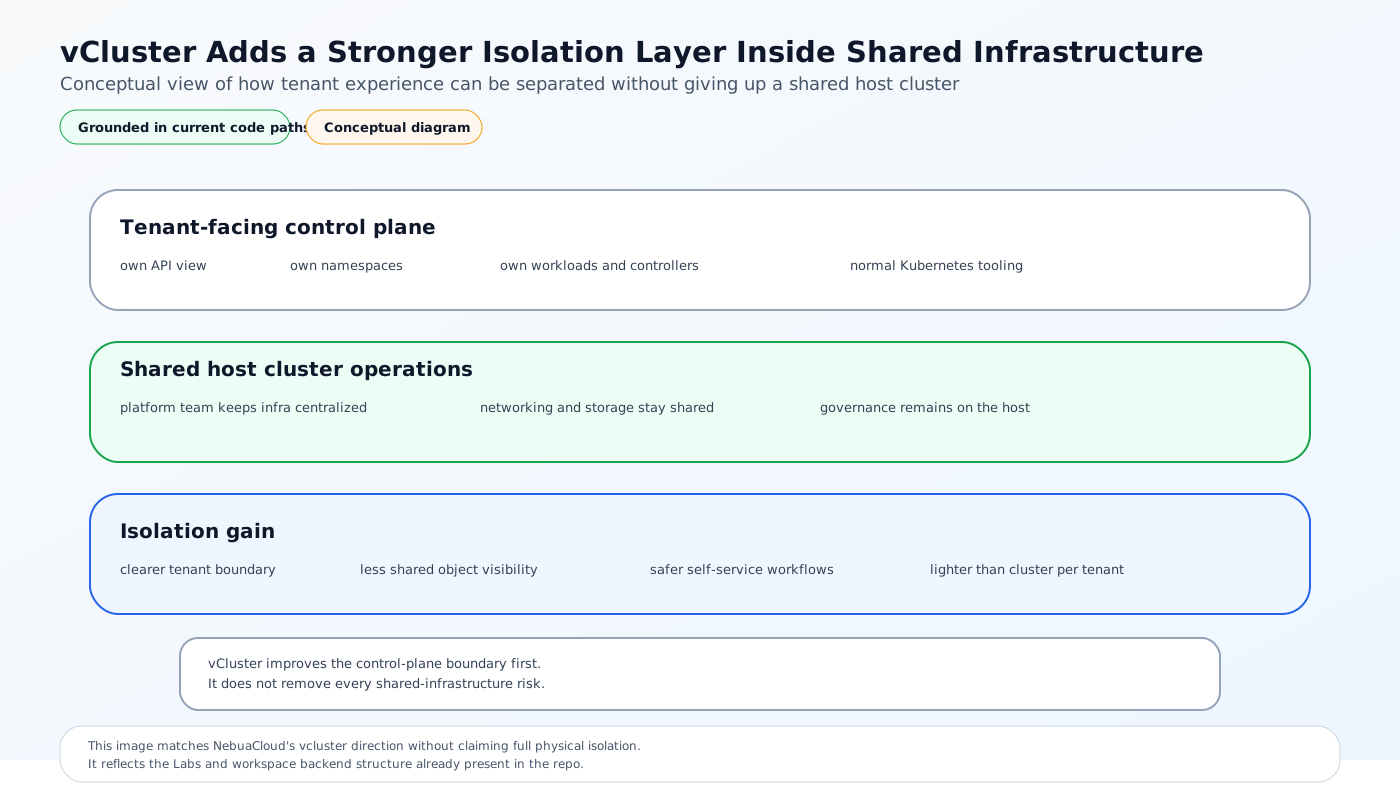
vCluster creates a virtual Kubernetes control plane inside a host cluster.
That means each tenant sees a Kubernetes environment that behaves more like a dedicated cluster:
- It has its own API server
- It can have its own namespaces and resources
- It can run its own Kubernetes controllers and workloads
- It can be managed with normal Kubernetes tooling
At the same time, the virtual cluster still runs on shared physical infrastructure.
Why that improves isolation
The isolation gain comes from separating the tenant experience at the control plane layer.
Instead of tenants sharing one Kubernetes API and one shared object space, they get:
- A more isolated Kubernetes control plane
- A clearer ownership boundary
- A reduced chance of interfering with other tenants
- A more self-service-friendly environment
This does not make vCluster a full replacement for physical isolation, but it does make the shared model much safer and more usable.
Where vCluster Improves Isolation Most
vCluster is most useful when you need to isolate tenants or teams without paying the full cost of a separate physical cluster.
1. Control plane isolation
Each tenant gets its own virtual control plane, which means tenant-specific Kubernetes objects are separated logically and operationally from the host cluster and from each other.
2. Self-service isolation
Developers can manage their own Kubernetes resources inside their virtual cluster without needing cluster-wide access to the host platform.
3. Safer shared infrastructure
The host cluster remains under platform team control, so shared infrastructure concerns stay centralized while tenants operate in their own environment.
4. Better fit for ephemeral environments
Preview environments, per-tenant sandboxes, and temporary development clusters often need more isolation than namespaces can provide, but not a full new cluster for every use case.
vCluster vs Namespace vs Separate Cluster
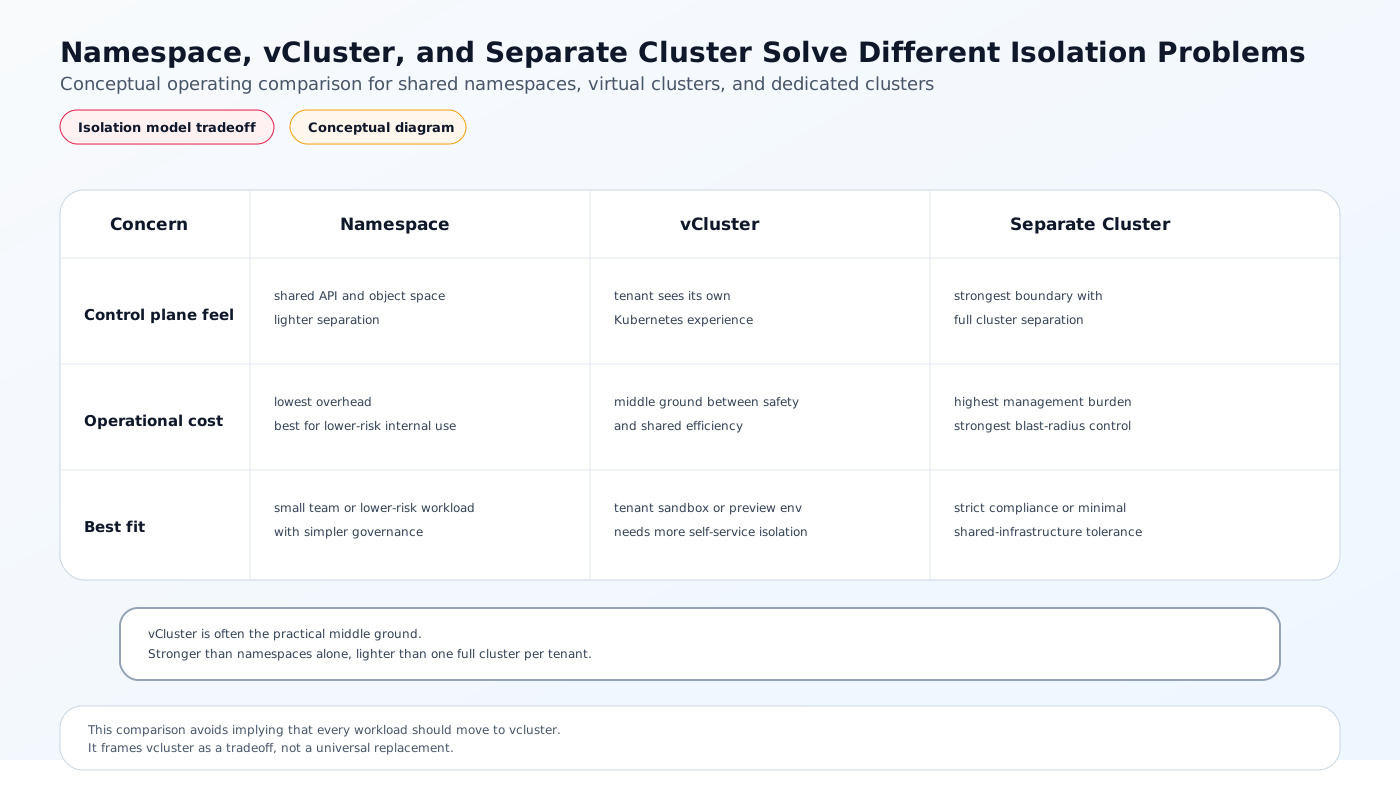
The easiest way to understand the value of vCluster is to compare it with the two most common alternatives.
Namespaces
Namespaces are lightweight and familiar.
They are good when:
- The risk is low
- The team is small
- You want simple separation
Their limitation is that they still share the same cluster control plane and often the same operational boundaries.
Separate clusters
Dedicated clusters offer the strongest physical isolation.
They are good when:
- Compliance is strict
- Tenants should not share infrastructure
- Blast radius must be minimal
The downside is cost and operational overhead.
vCluster
vCluster improves on namespaces by adding a dedicated control plane layer per tenant.
It improves on separate clusters by keeping the physical infrastructure shared.
That makes it useful when you want:
- Stronger isolation than namespaces
- Lower overhead than cluster-per-tenant
- A more independent Kubernetes experience for each tenant
Current Industry Standard Approaches
Most teams use vCluster as part of a broader isolation strategy rather than as the only control.
Namespace-based multi-tenancy
This remains the baseline approach in many platforms.
It usually combines:
- RBAC
- Resource quotas
- NetworkPolicy
- Admission policy
Node-level isolation
Some workloads get dedicated nodes or node pools.
This helps with:
- Noisy-neighbor reduction
- Scheduling predictability
- Performance isolation
Cluster-per-tenant
This is still the cleanest boundary when the platform needs maximum isolation.
Virtual cluster layers
vCluster-like patterns are used when the organization wants a middle ground between shared namespaces and full cluster sprawl.
Limitations and Tradeoffs
vCluster improves isolation, but it does not remove all shared-fate risks.
It still depends on the host cluster
If the underlying cluster has networking, storage, or capacity issues, the virtual clusters will feel the impact too.
Shared infrastructure still needs governance
You still need:
- Resource management
- Network boundaries
- Monitoring
- Backup and recovery planning
It adds a layer of abstraction
Teams need to understand both the virtual cluster and the host cluster.
It is not always necessary
For low-risk internal use cases, namespaces may already be sufficient.
A Better Solution Approach
The right isolation model depends on the workload and the risk profile.
Use namespaces when the platform is simple
This is fine for lower-risk internal workloads.
Use vCluster when teams need more independence
This is often the sweet spot for internal platforms, preview environments, and tenant sandboxes.
Use dedicated clusters for strict boundaries
Some workloads still need physical separation.
Design for operations from the start
Whatever model you choose, make sure it works with:
- GitOps
- Observability
- Policy enforcement
- Multi-cluster operations
How NebuaCloud Fits Into This Model
This is where NebuaCloud fits naturally.
NebuaCloud is focused on Kubernetes management, GitOps workflows, multi-tenant infrastructure, and simplified deployment of production workloads. In a vCluster-based design, that means the platform can help teams run isolated tenant environments without turning the shared infrastructure into a collection of disconnected systems.
What this means in practice
NebuaCloud can help teams:
- Manage Kubernetes and k3s clusters that host virtual clusters
- Support vCluster-like isolation for teams or customers
- Apply GitOps workflows consistently across tenant environments
- Use observability signals to detect anomalies across tenants
- Simplify production workload deployment in shared infrastructure
This is useful when the goal is not only to isolate tenants, but to keep those isolated environments manageable at scale.
Practical Example: A Platform With Three Teams
Imagine a shared platform supporting:
- Payments
- Analytics
- Support tools
Without vCluster
Each team shares the same namespace-based environment, and the platform team has to coordinate more changes manually.
With vCluster
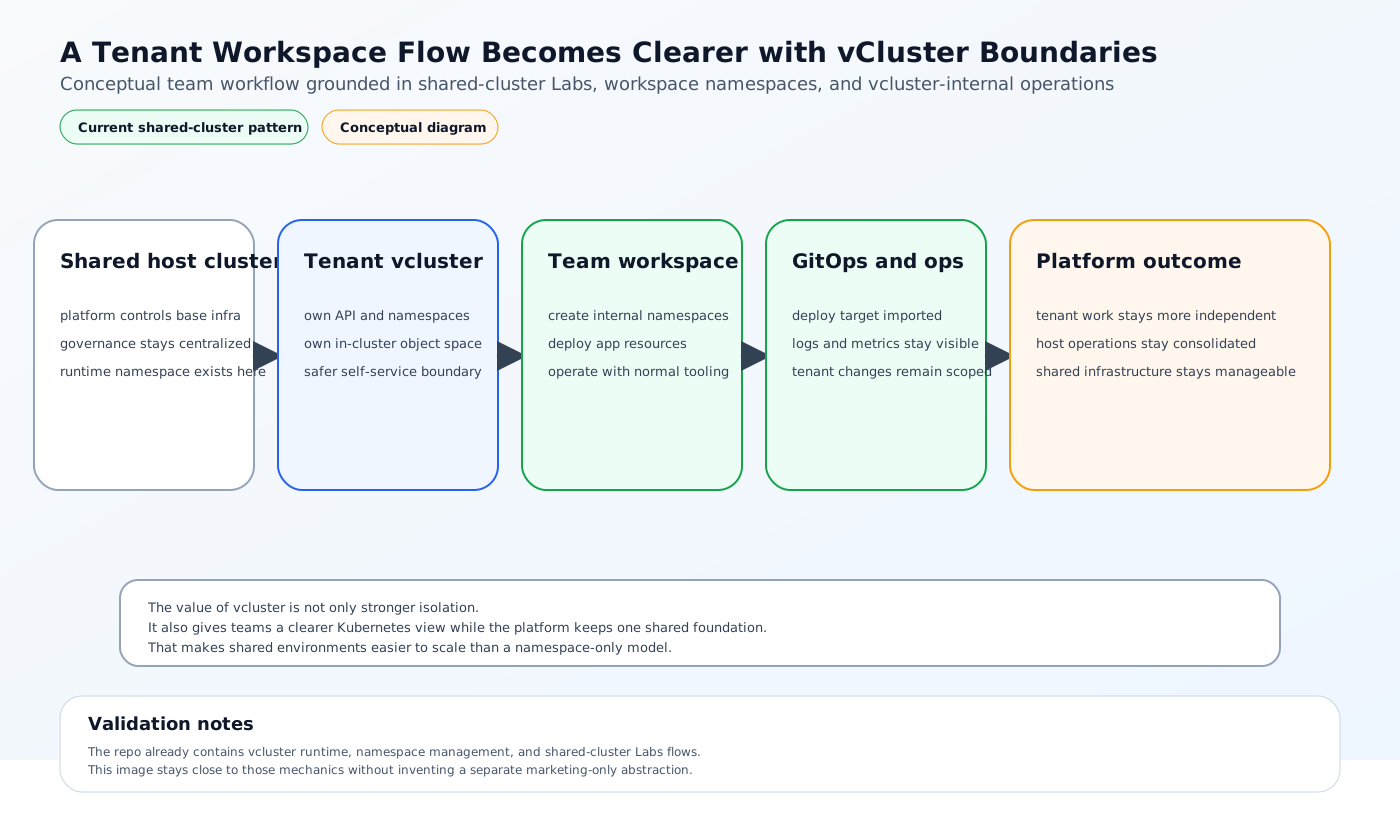
Each team gets its own virtual Kubernetes environment:
- Their own API view
- Their own namespaces
- Their own workloads and controllers
- Their own GitOps-managed deployment flow
The platform team still controls the physical cluster, but each team gets much stronger isolation and a more independent experience.
Conclusion
vCluster improves Kubernetes isolation by adding a virtual control plane layer on top of shared infrastructure. That gives teams stronger boundaries than namespaces alone, while avoiding the cost and operational overhead of creating a full physical cluster for every tenant.
For teams running Kubernetes and k3s in production, NebuaCloud can provide a natural operational layer for GitOps, observability, and multi-tenant infrastructure so vCluster-based isolation stays practical to operate.
Try it with NebuaCloud -> deploy in minutes
Current Availability
NebuaCloud already has strong real support for this isolation model in the current codebase. The product includes shared-cluster Labs behavior, a dedicated VClusterRuntimeBackend, vcluster-internal namespace management, workspace resolution tied to loginNamespace, and GitOps target handling that is aware of vcluster-backed deployment contexts.
Because of that, this article is more closely aligned with current product reality than several of the broader conceptual blogs. Even so, the article still describes an operating model rather than promising that every possible vCluster-based isolation workflow is fully productized in one single end-to-end interface today. Where the experience is still evolving, it should be understood as an area NebuaCloud is continuing to expand.