How Do You Design a Secure Multi-Tenant Kubernetes Architecture?
Learn how to design a secure multi-tenant Kubernetes architecture with namespaces, RBAC, network policy, isolation patterns, and production tradeoffs.
How Do You Design a Secure Multi-Tenant Kubernetes Architecture?
Secure multi-tenancy in Kubernetes is the practice of sharing cluster infrastructure across multiple teams, customers, or business units without letting one tenant compromise the safety, performance, or confidentiality of another. That sounds straightforward, but in production it is one of the hardest platform problems to get right.
Kubernetes gives platform teams many of the raw ingredients: namespaces, RBAC, resource quotas, network policy, admission controls, and node scheduling primitives. The challenge is that none of those controls alone creates a complete tenant boundary. A secure multi-tenant architecture is really a design decision about where to isolate, what to share, and how much operational overhead the team can support.
This article explains how secure multi-tenancy works in Kubernetes, the common architecture patterns teams use, the limitations of those patterns, and how to think about a production-ready model across Kubernetes and k3s.
The Problem: Shared Clusters Need Strong Boundaries
Multi-tenancy exists because many organizations want to reduce the cost and complexity of running separate clusters for every workload or team.
That choice can work well, but it introduces real risks:
- One tenant can consume too many resources
- One workload can access data it should not see
- A bad deployment can affect unrelated services
- Operational access can be too broad
- Shared infrastructure can become hard to govern
If those risks are not managed deliberately, a shared cluster can become less secure than separate environments.
Why Kubernetes makes this difficult
Kubernetes was designed to standardize scheduling and service delivery across a shared cluster.
That shared model is powerful, but it means:
- The control plane is common infrastructure
- Nodes may host workloads from many tenants
- Networking is often shared
- Observability and storage may also be shared
So secure multi-tenancy is not just about separation. It is about building predictable boundaries on top of shared systems.
The Main Security Boundaries in Multi-Tenant Kubernetes
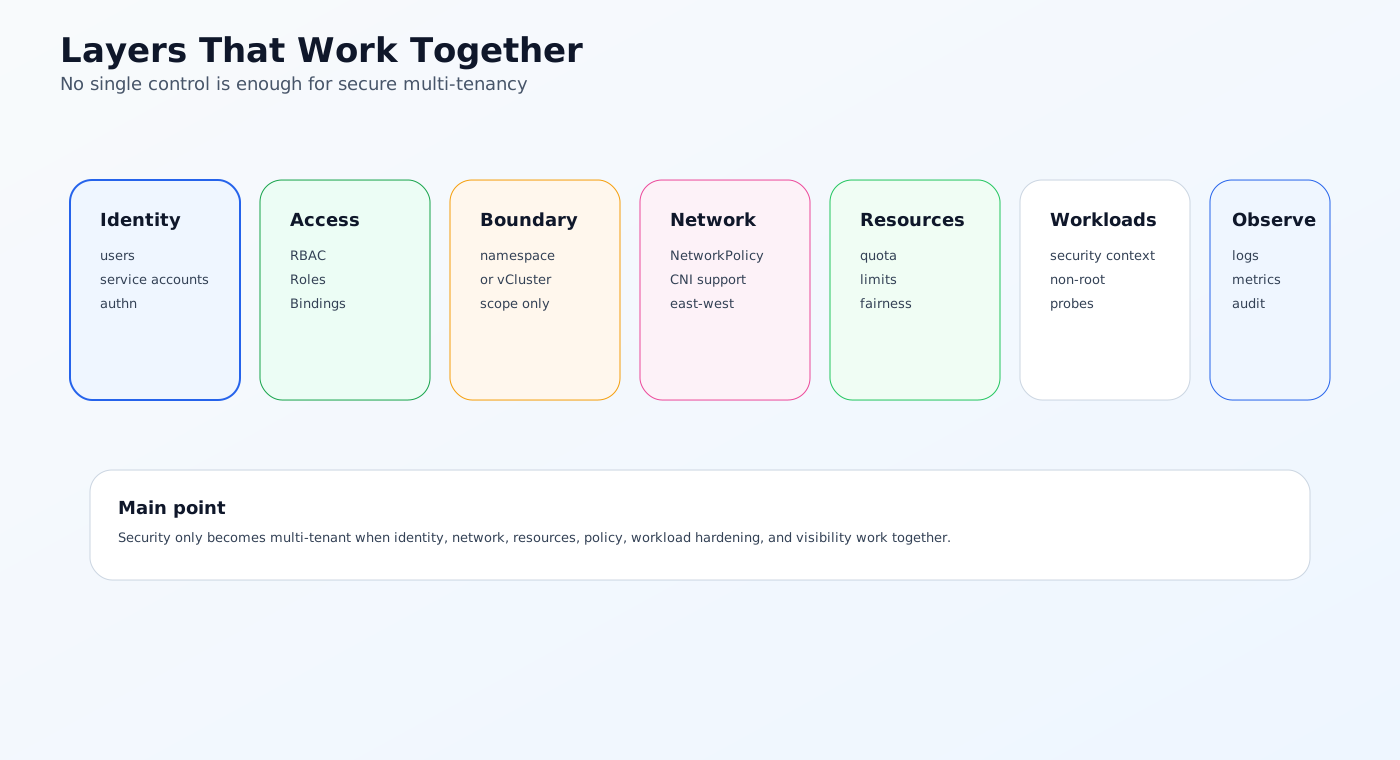
A secure multi-tenant design usually combines several layers of control.
1. Identity and access boundaries
Tenants should only be able to access what they own.
This usually means:
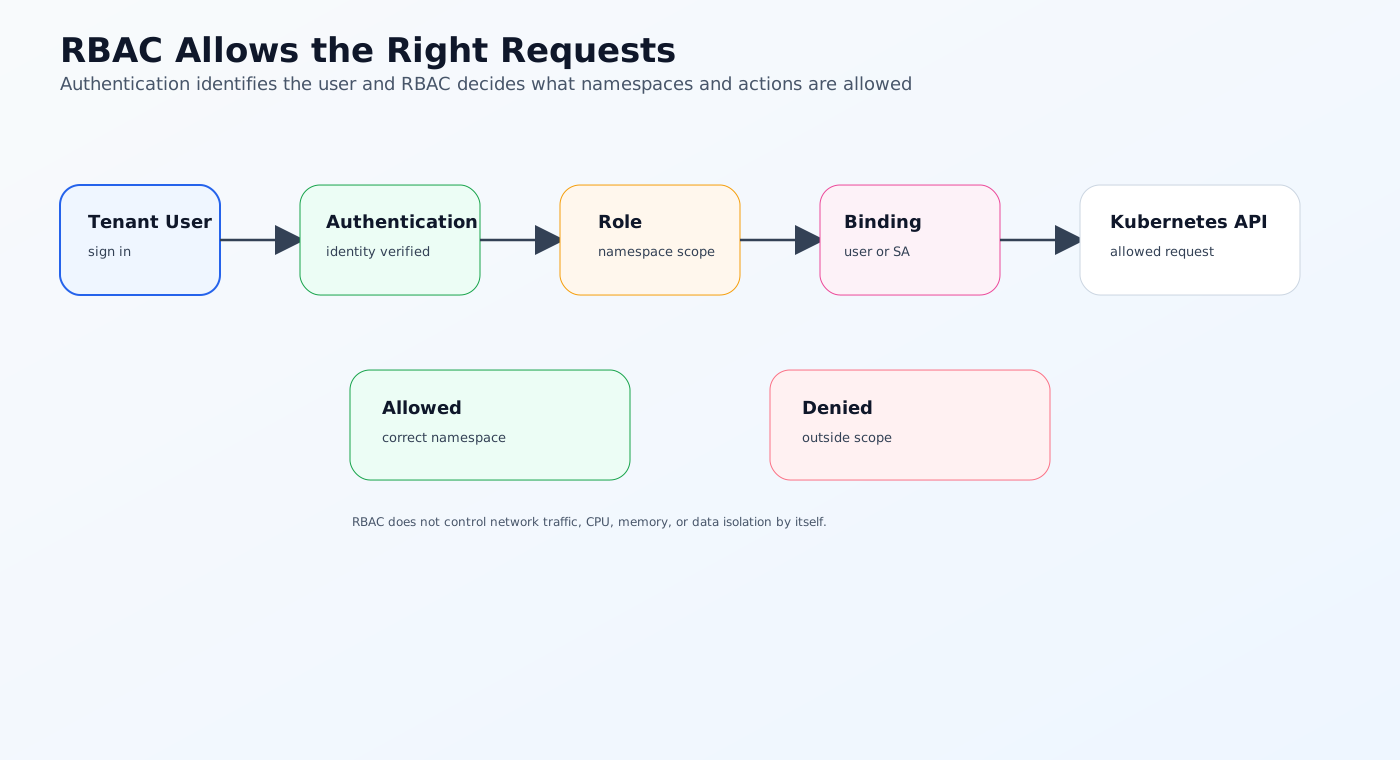
- RBAC scoped to a tenant or namespace
- Separate service accounts
- CI/CD or GitOps access limited to the correct environment
- Short-lived credentials where possible
RBAC controls who can perform actions. Roles usually scope permissions to one namespace, while ClusterRoles can reach cluster-scoped resources. RoleBindings and ClusterRoleBindings attach those permissions to users or service accounts. RBAC does not block network traffic, does not limit CPU or memory, and does not isolate data by itself.
2. Resource boundaries
Tenants should not be able to starve each other.
Use:
- Resource requests and limits
- Resource quotas
- Priority classes when needed
- Dedicated node pools for sensitive or noisy workloads
ResourceQuota limits aggregate consumption inside a namespace, and LimitRange sets defaults and caps for individual objects. Those controls help with fairness, but they do not replace security isolation or guarantee dedicated performance.
3. Network boundaries
NetworkPolicy is one of the most important controls in a shared cluster.
It prevents unnecessary east-west traffic and helps ensure that workloads only talk to approved services.
NetworkPolicies only work when a compatible CNI plugin enforces them. They do not replace RBAC, and they do not automatically protect traffic that enters from outside the cluster.
4. Policy boundaries
Admission controls help enforce platform standards before a workload is created.
Common rules include:
- No privileged containers
- Approved registries only
- Required labels and annotations
- Disallowed hostPath mounts
- Restricted Linux capabilities
Pod Security Standards, security contexts, and admission policies all help reduce workload risk. They complement tenant isolation, but no single setting creates a complete security boundary.
5. Operational boundaries
Tenants should be able to deploy and observe their own workloads without exposing the rest of the cluster unnecessarily.
That makes support, auditing, and incident response much easier.
Current Industry Standard Approaches
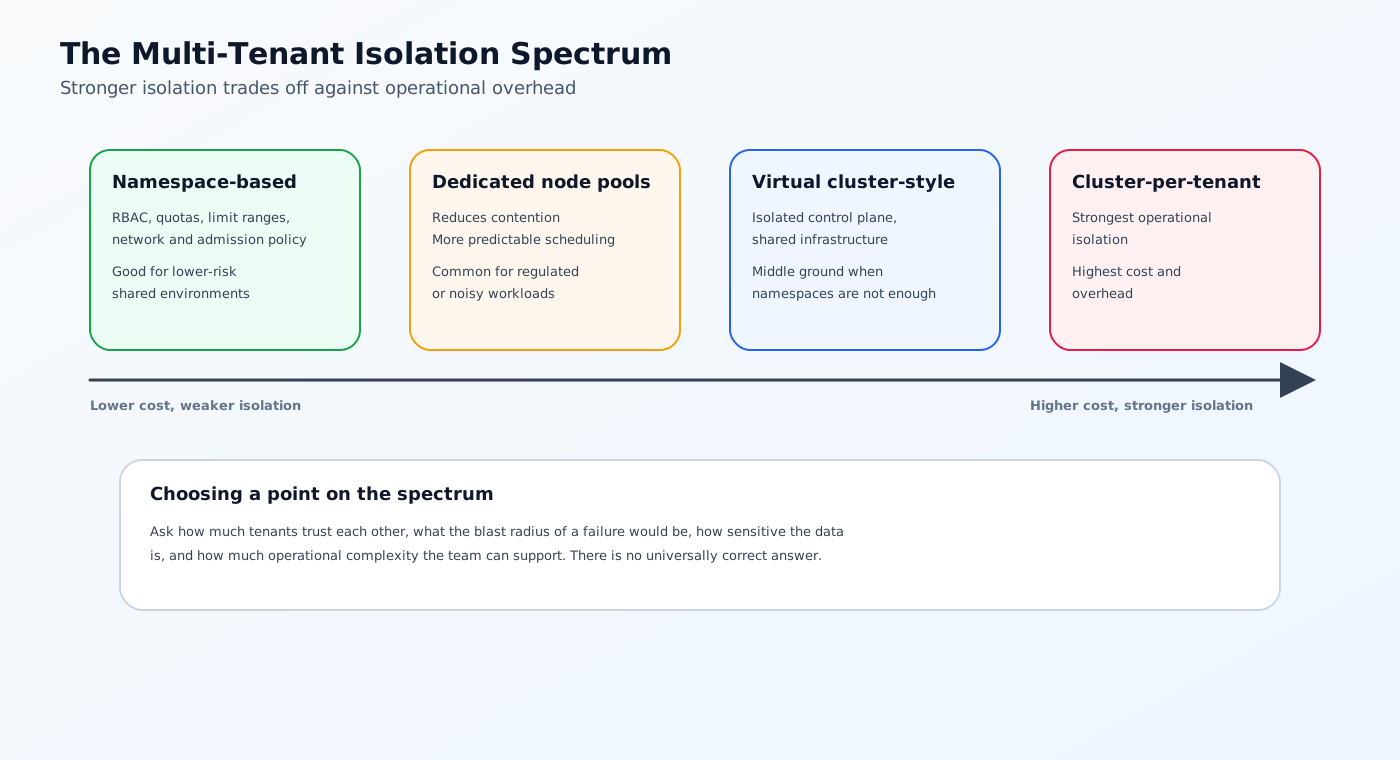
Most teams use one or more of the following patterns.
Namespace-based multi-tenancy
This is the most common entry point.
Each tenant gets a namespace and the platform applies:
- RBAC
- Quotas
- Limit ranges
- Network policies
- Admission policies
This is simple to automate and works well for lower-risk shared environments.
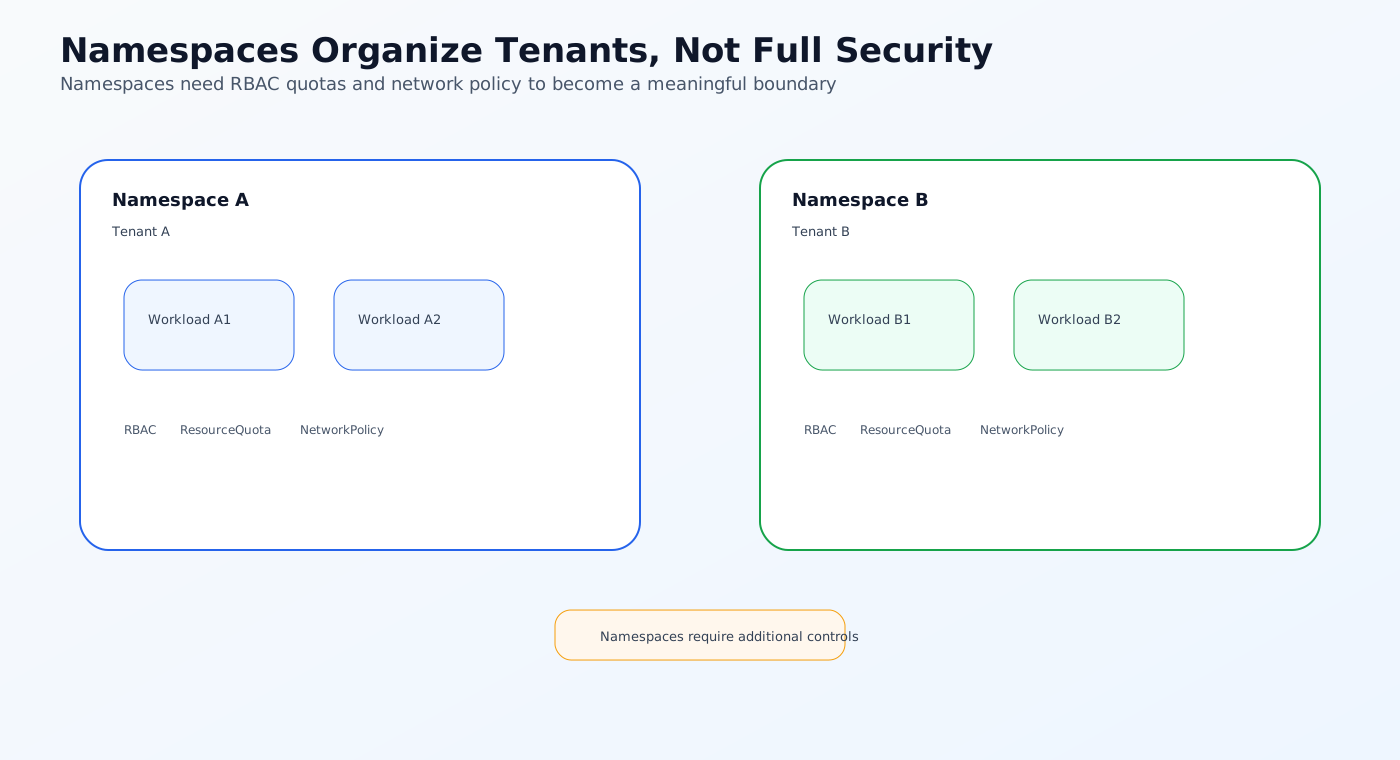
Namespaces organize resources and can serve as an administrative boundary, but they do not isolate cluster-scoped resources or create separate control planes.
Dedicated node pools
Some tenants or workloads get dedicated nodes.
This improves isolation by reducing contention and making scheduling behavior more predictable.
It is a common pattern for regulated workloads or workloads with different performance characteristics.
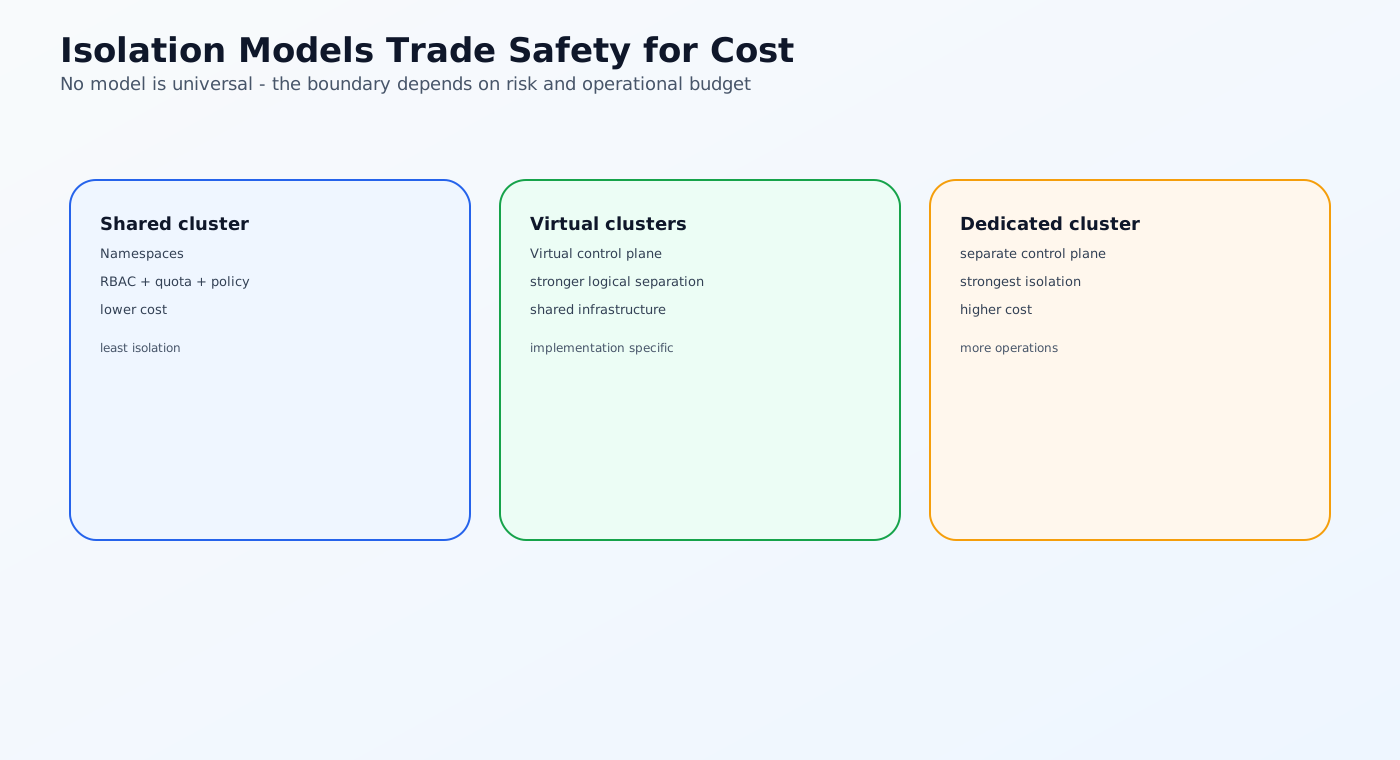
Cluster-per-tenant
The strongest isolation model is to give each tenant a separate cluster.
This removes many shared-fate problems, but it increases cost and operational overhead.
Virtual cluster-style isolation
Virtual clusters provide each tenant with an isolated Kubernetes control plane while sharing physical infrastructure underneath.
This is useful when:
- Namespaces are not enough
- Full cluster-per-tenant would be too expensive
- Self-service needs to stay simple
Virtual clusters can provide stronger logical separation than namespaces, but they are implementation-specific and are not equivalent to a physically dedicated cluster.
What Good Multi-Tenant Security Looks Like
Strong multi-tenancy is not just about preventing access. It is about shaping behavior across the platform.
1. Minimize trust between tenants
Assume tenants should not be able to influence each other directly.
2. Enforce least privilege everywhere
That includes:
- Human access
- CI access
- Service account permissions
- Namespace visibility
3. Apply network isolation consistently
Without consistent NetworkPolicy, lateral movement becomes much easier.
4. Make resource fairness explicit
Every tenant should know its budget and what happens when it exceeds it.
5. Design for operational clarity
Platform teams should be able to answer:
- Which tenant owns this workload?
- Which tenant caused this alert?
- Which workloads are allowed to talk to each other?
- Which resources are shared?
Limitations of Common Multi-Tenancy Models
Every model has tradeoffs.
Namespaces are not full isolation
Namespaces are useful, but they do not fully isolate:
- The control plane
- Node failures
- Shared add-ons
- Cluster-wide misconfigurations
Shared nodes can still create noisy-neighbor effects
One tenant can consume CPU, memory, storage, or bandwidth that affects others.
RBAC does not stop workload-level issues
Even when permissions are correct, a tenant can still deploy a misconfigured or resource-hungry workload.
More isolation means more operational overhead
Dedicated clusters or virtual clusters improve safety, but they increase the amount of infrastructure to manage.
k3s environments still need tenancy design
k3s reduces cluster overhead, but it does not remove the need for tenant boundaries, quotas, or policy.
Workload security reduces impact but does not create tenancy
Running as non-root, dropping Linux capabilities, using read-only filesystems, and applying seccomp or AppArmor profiles reduce blast radius, but they do not replace network isolation or access control.
A Better Solution Approach
The right architecture depends on the risk model.
Low-risk internal platforms
Namespaces, RBAC, quotas, and network policy may be enough.
Shared production platforms
You usually need stronger policy enforcement, observability, and dedicated capacity for sensitive workloads.
Customer-facing or regulated platforms
Cluster-per-tenant or virtual cluster-style isolation is often more appropriate.
Ask these questions before choosing a model
- Do tenants trust each other?
- What is the blast radius of a failure?
- How much data sensitivity exists?
- How much operational complexity can the team support?
How NebuaCloud Fits Into This Model
This is where NebuaCloud fits naturally.
NebuaCloud is focused on Kubernetes management, GitOps workflows, multi-tenant infrastructure, and simplified deployment of production workloads. In a secure multi-tenant design, that means the platform can help teams apply stronger boundaries without making shared infrastructure difficult to operate.
What this means in practice
NebuaCloud can help teams:
- Manage Kubernetes and k3s clusters with tenancy-aware operations
- Apply GitOps workflows consistently across tenants
- Use observability signals to detect tenant-specific anomalies
- Simplify production deployment in shared environments
That is useful when the goal is to keep tenants isolated enough for safety, while still preserving the operational efficiency of shared infrastructure.
NebuaCloud also exposes organizations, roles, two-factor authentication, workspaces, environments, namespaces, audit logs, cluster context switching, and cluster-level workload visibility. The codebase also shows optional operator-based policy enforcement and bounded remediation, plus lab and namespace selection flows that support the platform's multi-tenant operating model.

Practical Example: A Secure Multi-Tenant Platform
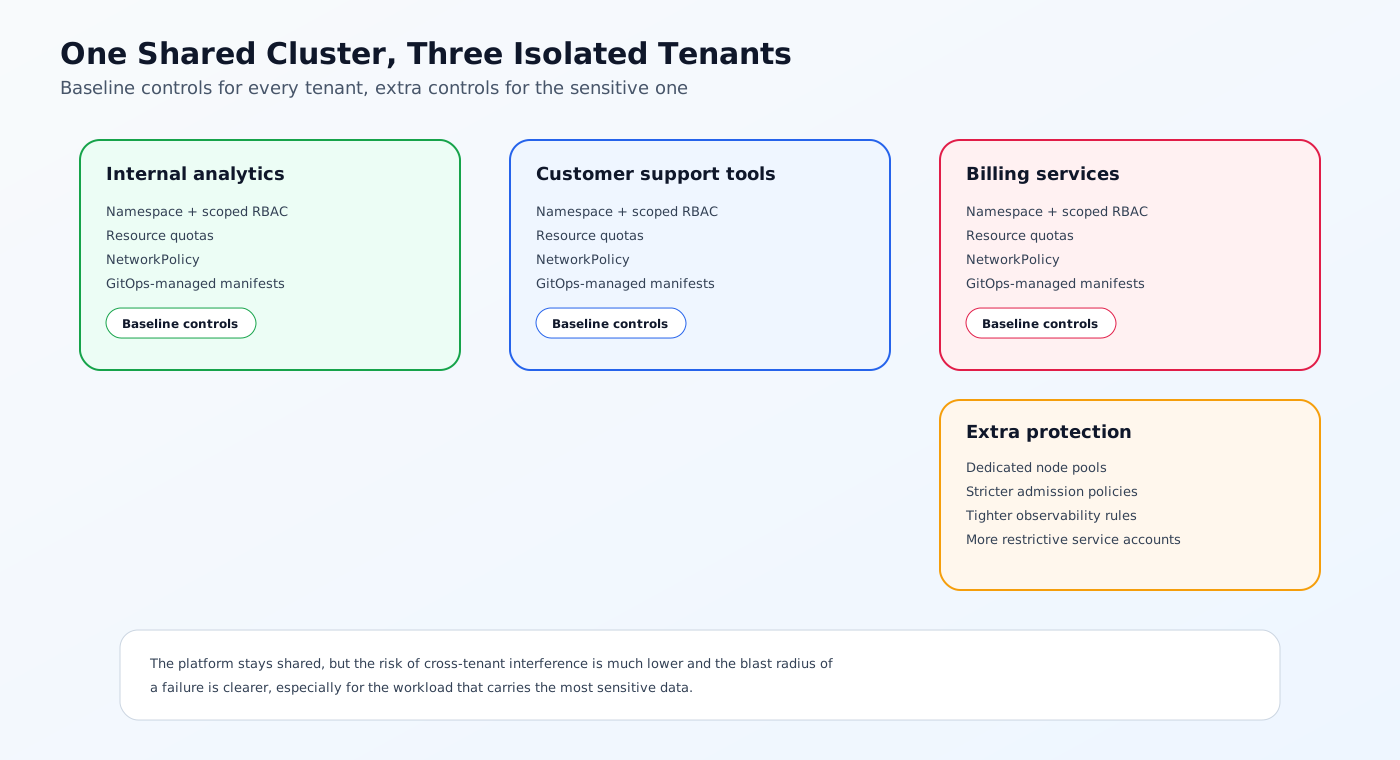
Imagine a platform with three tenants:
- Internal analytics
- Customer support tools
- Billing services
Baseline controls
Each tenant gets:
- Its own namespace
- Scoped RBAC
- Resource quotas
- Limit ranges
- NetworkPolicy
- GitOps-managed manifests
Additional protections for sensitive workloads
The billing service also gets:
- Dedicated node pools
- Stricter admission policies
- Tighter observability rules
- More restrictive service account access
Operational result
The platform is still shared, but the risk of cross-tenant interference is much lower and the blast radius of failure is clearer.
Conclusion
Secure multi-tenant Kubernetes architecture is not about finding one feature that solves isolation. It is about combining identity, resource, network, policy, and operational boundaries into a model that fits the risk level of the platform.
Namespaces are a useful starting point, but they are not complete isolation. For production environments, teams often need stronger separation patterns such as dedicated node pools, cluster-per-tenant, or virtual cluster-style isolation.
For teams running Kubernetes and k3s in production, NebuaCloud can provide a natural operational layer for GitOps, observability, and multi-tenant infrastructure so shared clusters stay secure and manageable.
Try it with NebuaCloud -> deploy in minutes
Current Availability
NebuaCloud already has real support for multi-tenant isolation in the current codebase, including shared-cluster Labs behavior, vcluster-backed workspace isolation, namespace and workload-level boundaries, and GitOps target handling that is aware of tenant-specific deployment contexts.
At the same time, some of the deeper controls described in this article, such as fully automated dedicated node-pool assignment per tenant or a complete policy-enforcement suite, are not all exposed today as one finished end-to-end NebuaCloud product workflow. Where those capabilities are not directly available, they should be understood as future platform direction rather than current complete functionality.