Is Self-Healing Infrastructure a Myth or Reality?
Learn what self-healing infrastructure really means in Kubernetes, what is actually possible today, and how automation, AIOps, and GitOps fit together in production.
Self-healing infrastructure is real, but the phrase is easy to overstate. In production, it usually means the platform can detect a failure and apply a predefined corrective action with little or no manual intervention. That is useful, but it is not the same as a system that understands every incident and fixes any problem on its own.
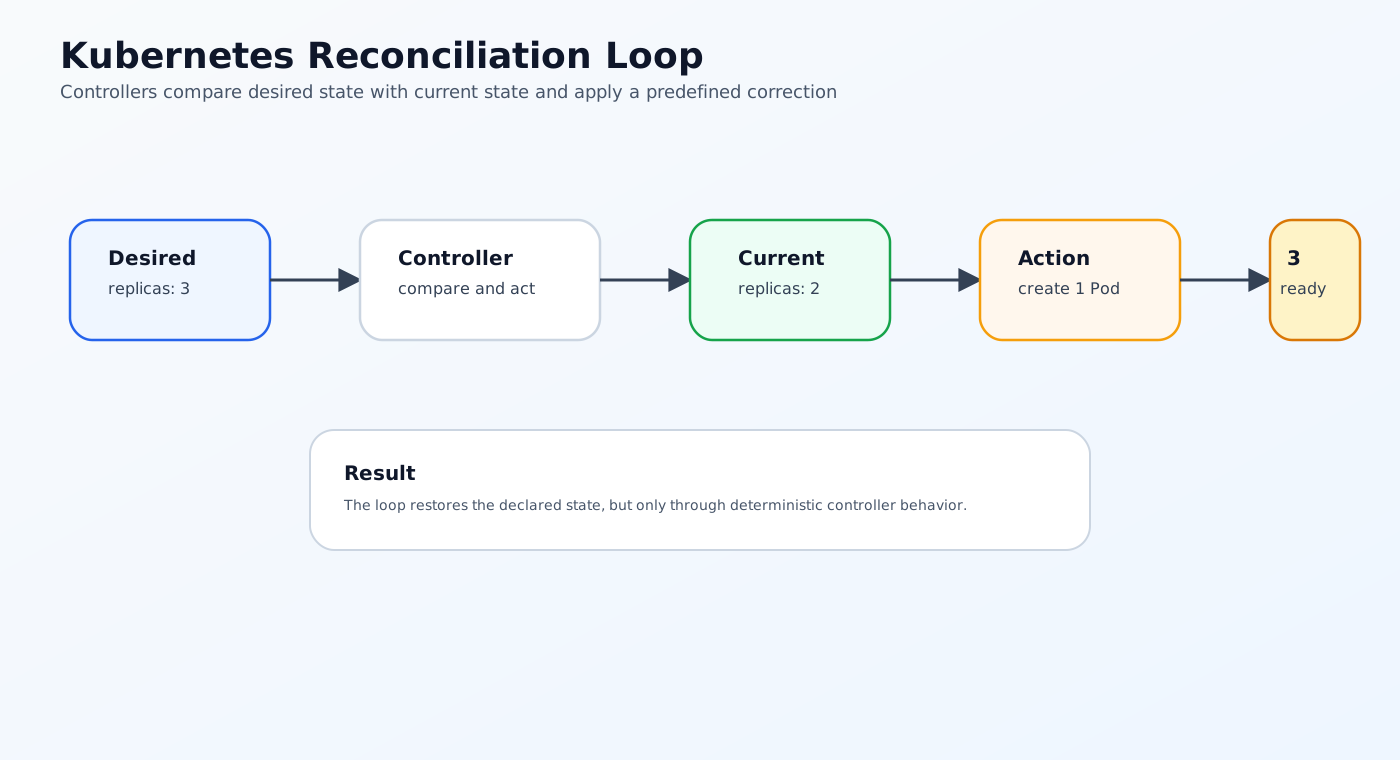
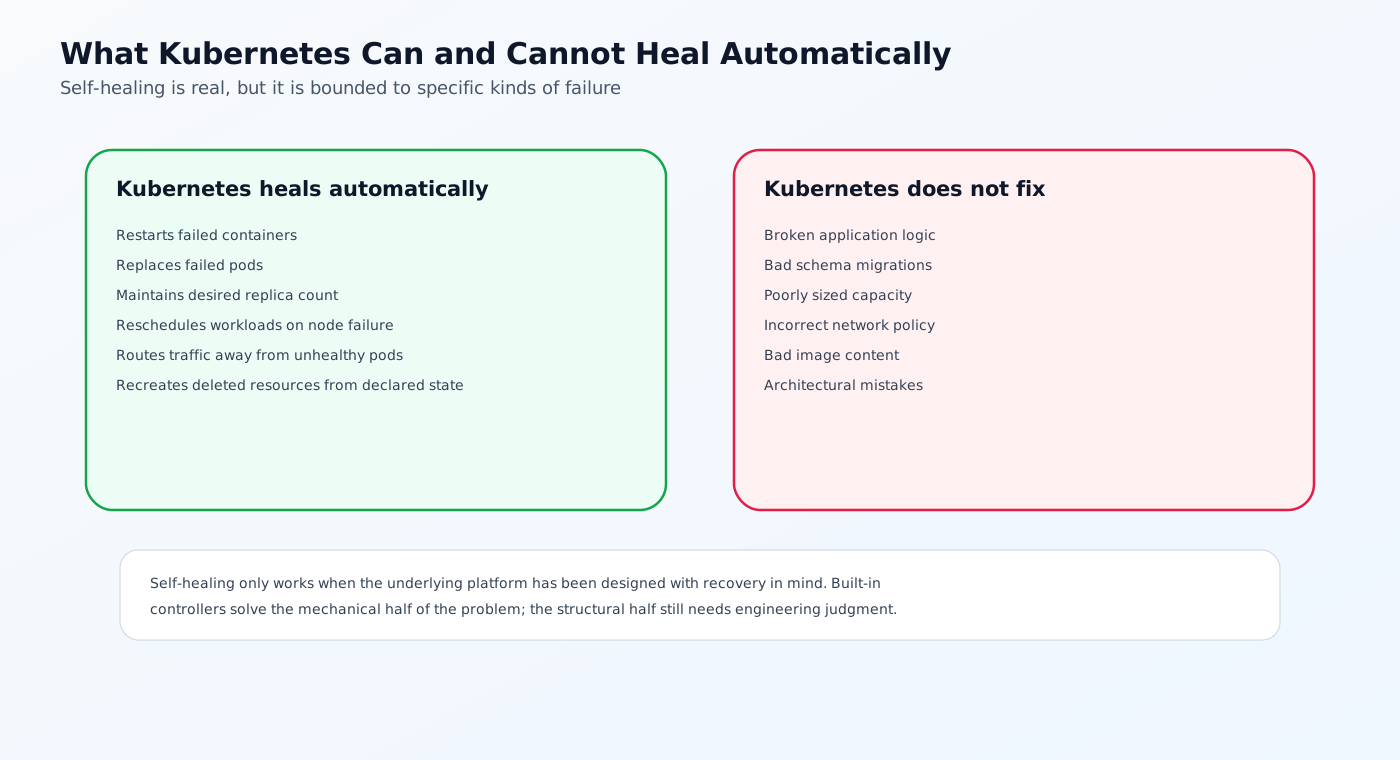
In Kubernetes, self-healing is mostly a deterministic reconciliation model: controllers compare the desired state with the current state and act when they see a difference. That can restart containers, replace Pods, reschedule workloads, and restore replica counts. It cannot automatically fix broken application logic, corrupt data, invalid credentials, or every root cause behind an outage.
This article explains what self-healing really means, where Kubernetes helps, where it stops, and how NebuaCloud fits around the parts that are actually confirmed in the codebase.
The Problem: Infrastructure Fails in Different Ways
Not every failure can be healed automatically.
Some issues are mechanical:
- A container crashes
- A Pod is evicted
- A node becomes unavailable
- A rollout introduces a bad version
Other issues are structural:
- A database schema change fails
- A storage backend is unavailable
- A network policy blocks traffic
- A workload is misconfigured
- Capacity planning was wrong from the start
The problem is that teams often expect one automation model to handle all of these cases. That is where the myth begins.
Why the term is easy to overstate
The phrase self-healing can sound like a system that repairs any failure without human involvement. That is not how production infrastructure usually works.
What is actually possible is more specific:
- Restart failed processes
- Replace unhealthy Pods
- Reschedule workloads
- Roll back a bad deployment
- Scale out when demand rises
- Reconcile drift between declared and live state
Those are real forms of recovery, but they are bounded and depend on good design.
What Self-Healing Infrastructure Means in Kubernetes
Kubernetes is one of the clearest examples of self-healing because its controllers already perform predefined recovery actions.
Built-in healing behaviors
Within the limits of the configuration, Kubernetes can:
- Restart failed containers according to
restartPolicy - Replace failed Pods owned by controllers
- Maintain the desired replica count
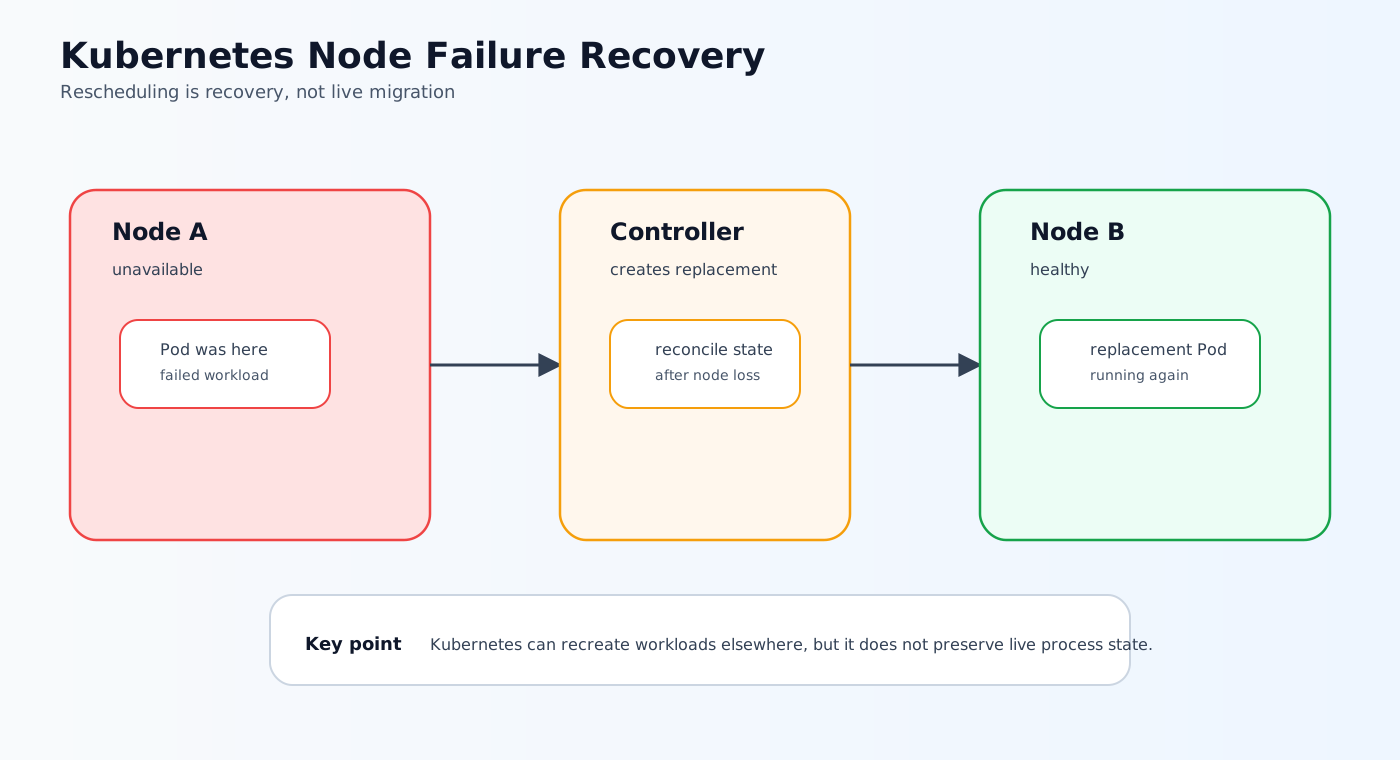
- Reschedule workloads when a node fails
- Remove unready Pods from Service endpoints
- Run rolling updates and rollbacks
- Reconcile current state back toward desired state
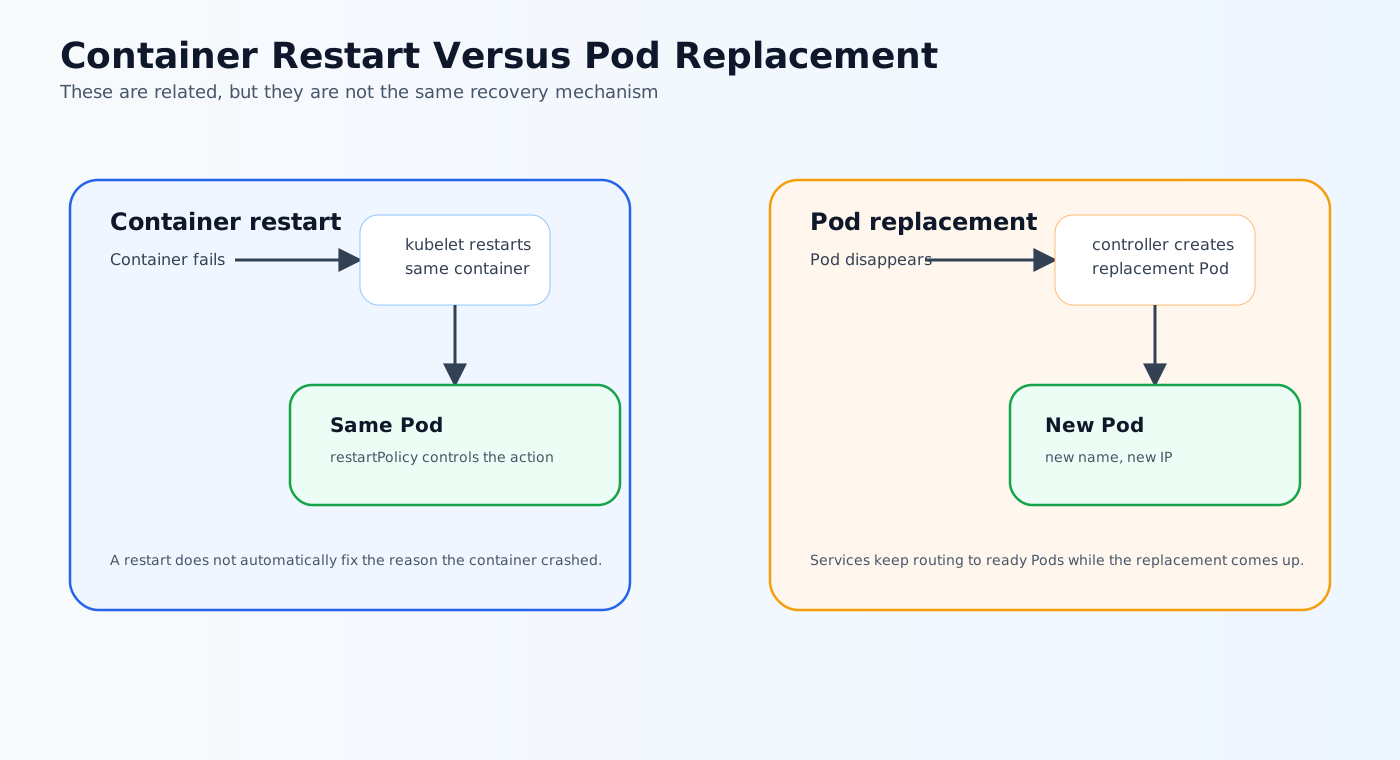
These behaviors are deterministic and driven by controllers, health checks, and declarative configuration.
Health checks are part of the control loop
Kubernetes uses probes to decide what to do next:
- Liveness probe: tells Kubernetes whether the container should be restarted
- Readiness probe: tells Kubernetes whether the Pod should receive traffic
- Startup probe: protects slow-starting applications before liveness checks begin
Probes are important, but they are not a guarantee of complete health. A bad probe can cause restart loops, rollout failures, or traffic being removed too early.
What Kubernetes Cannot Heal Automatically
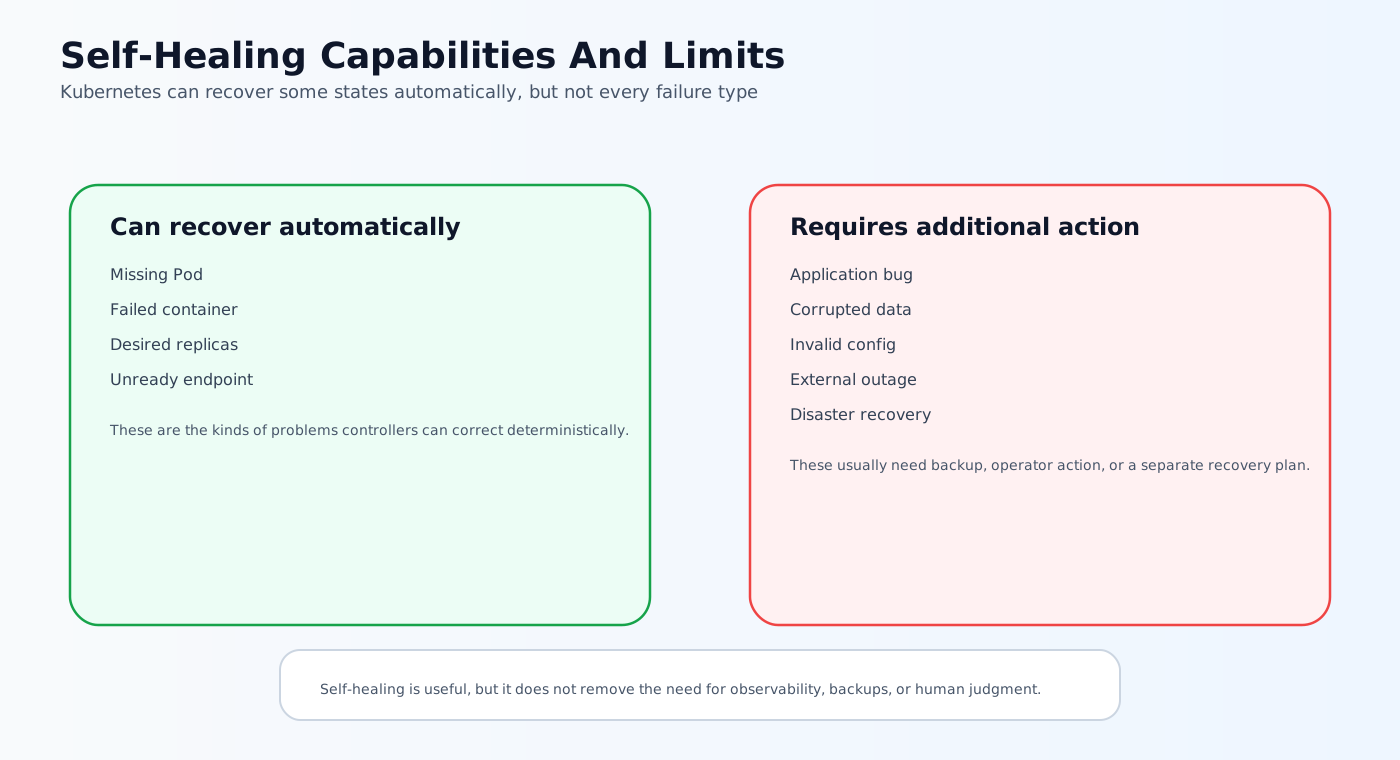
Kubernetes does not automatically fix:
- Broken application logic
- Corrupted data
- Lost data without a restore source
- Logically wrong configuration
- Missing external dependencies
- Invalid credentials
- Root cause analysis
- Code changes that are needed to resolve a bug
- Cross-cluster recovery by itself
- Full disaster recovery without extra tooling
- Any incident without rules or automation around it
That is why self-healing should be understood as reconciliation, not general intelligence.
Kubernetes self-healing is reconciliation, not general intelligence. Controllers continuously compare the desired state with the current state and perform predefined corrective actions, such as recreating missing Pods.
The Main Layers of Self-Healing
The most useful way to think about self-healing is in layers.
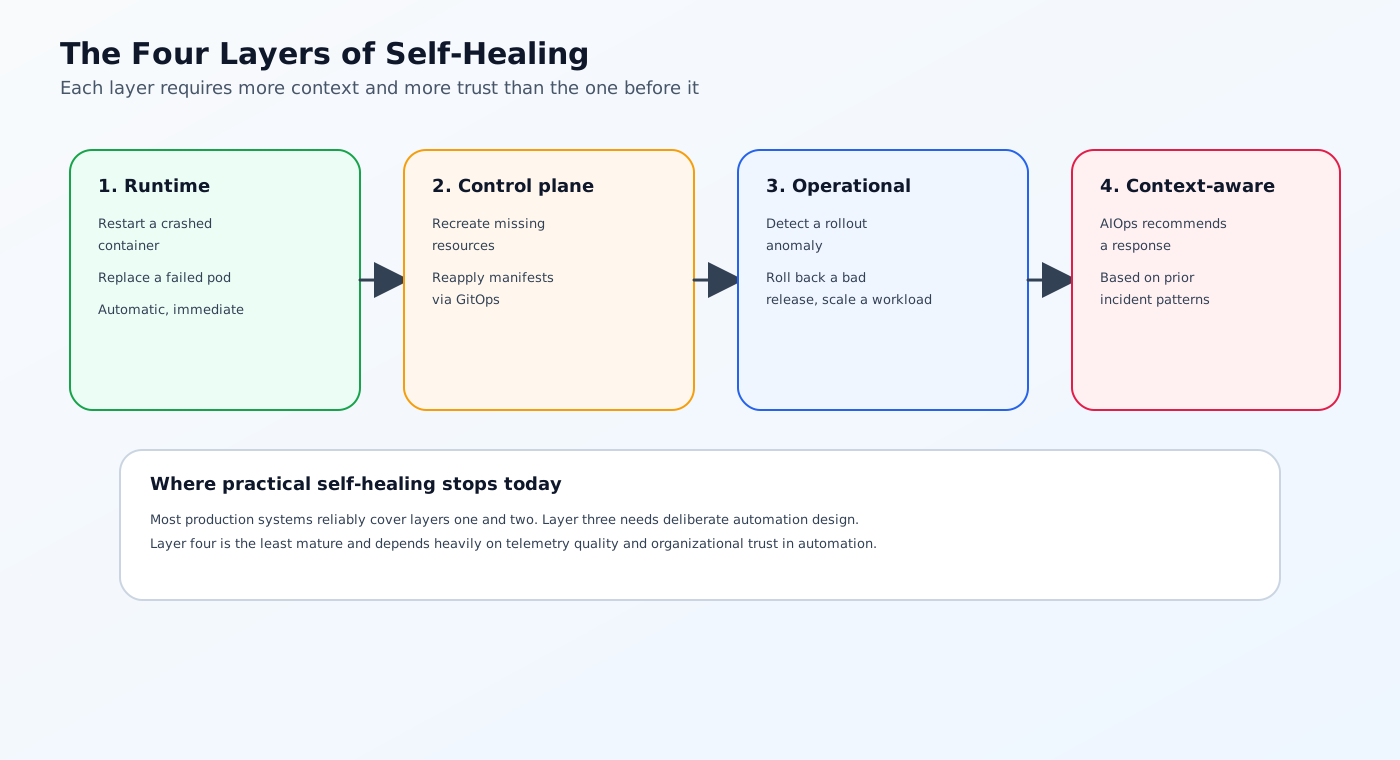
1. Runtime healing
This is the most basic layer.
Examples include:
- Restarting a crashed container
- Replacing a failed Pod
- Recovering from a node failure
These actions are usually automatic and deterministic.
2. Control-plane healing
This layer involves the system maintaining desired state.
Examples include:
- Recreating missing resources
- Restoring replica counts
- Reapplying manifest changes through GitOps
3. Operational healing
This layer combines observability, automation, and decision-making.
Examples include:
- Detecting a rollout anomaly
- Rolling back a bad release
- Scaling a workload
- Rebinding a workload to healthy nodes
4. Context-aware healing
This is where optional AIOps can help.
The system can analyze signals and recommend or trigger a predefined response based on patterns from previous incidents and telemetry. That layer is separate from native Kubernetes reconciliation.
Current Industry Standard Approaches
Most teams build self-healing in stages rather than all at once.
Kubernetes controllers and probes
The basic stack includes:
- Deployments
- ReplicaSets
- StatefulSets where needed
- Liveness probes
- Readiness probes
- Startup probes
These controllers and probes handle the most common forms of failure.
GitOps reconciliation
GitOps helps the platform return to the declared desired state when manual changes or drift occur.
That is a real recovery mechanism for configuration drift, but it does not fix application bugs or restore lost data.
Autoscaling
Horizontal and cluster autoscaling help infrastructure recover from demand spikes by adding capacity automatically.
That is capacity management, not incident recovery.
Alerting and runbook automation
Many teams pair alerts with scripts, Jobs, or playbooks that perform bounded recovery actions.

AIOps-driven detection
Some platforms correlate signals, detect anomalies, and suggest a safe next step.
That can be useful, but it is not part of Kubernetes itself.
Limitations of Common Approaches
Self-healing is real, but it is not universal.
It depends on the failure type
Pod restarts are easy to automate. Broken data state is much harder.
It depends on good observability
If the system cannot see the failure clearly, it cannot choose a good response.
It can hide deeper problems
If Pods keep restarting, the platform may look healthy while the underlying application problem remains unsolved.
It can cause recovery loops
Bad automation can repeatedly restart or reschedule workloads without addressing the root cause.
Multi-cluster environments need consistency
Healing is harder when the same application behaves differently across clusters or tenants.
A Better Solution Approach
The practical version of self-healing is not let the system do everything. It is automate the safe parts and keep humans in the loop for the rest.
1. Design for failure first
Applications should assume Pods, nodes, and deployments can fail.
2. Use declarative desired state
GitOps gives the system a clean target to reconcile toward.
3. Add observability
Metrics, logs, traces, and events should make it obvious what changed.
4. Bound automation
Self-healing should have policies, thresholds, and rollback limits.
5. Keep humans responsible for structural issues
If the problem is architectural or data-related, the platform should escalate rather than blindly retry.
How NebuaCloud Fits Into This Model
This is where NebuaCloud fits naturally.
NebuaCloud is focused on Kubernetes management, GitOps workflows, multi-tenant infrastructure, and simplified deployment of production workloads. In a self-healing model, that means the platform can help teams connect detection, reconciliation, and operational context.
What this means in practice
NebuaCloud can help teams:
- Manage Kubernetes and k3s clusters with a consistent operational layer
- Use GitOps to reconcile drift and restore desired state
- Apply observability signals to detect anomalies faster
- Work with multi-cluster and namespace-aware layouts
- Restart and scale database workloads through explicit platform actions
That makes it a fit for teams that want safe recovery where Kubernetes already knows what to do, while keeping a human or rule-based layer in charge of the rest.
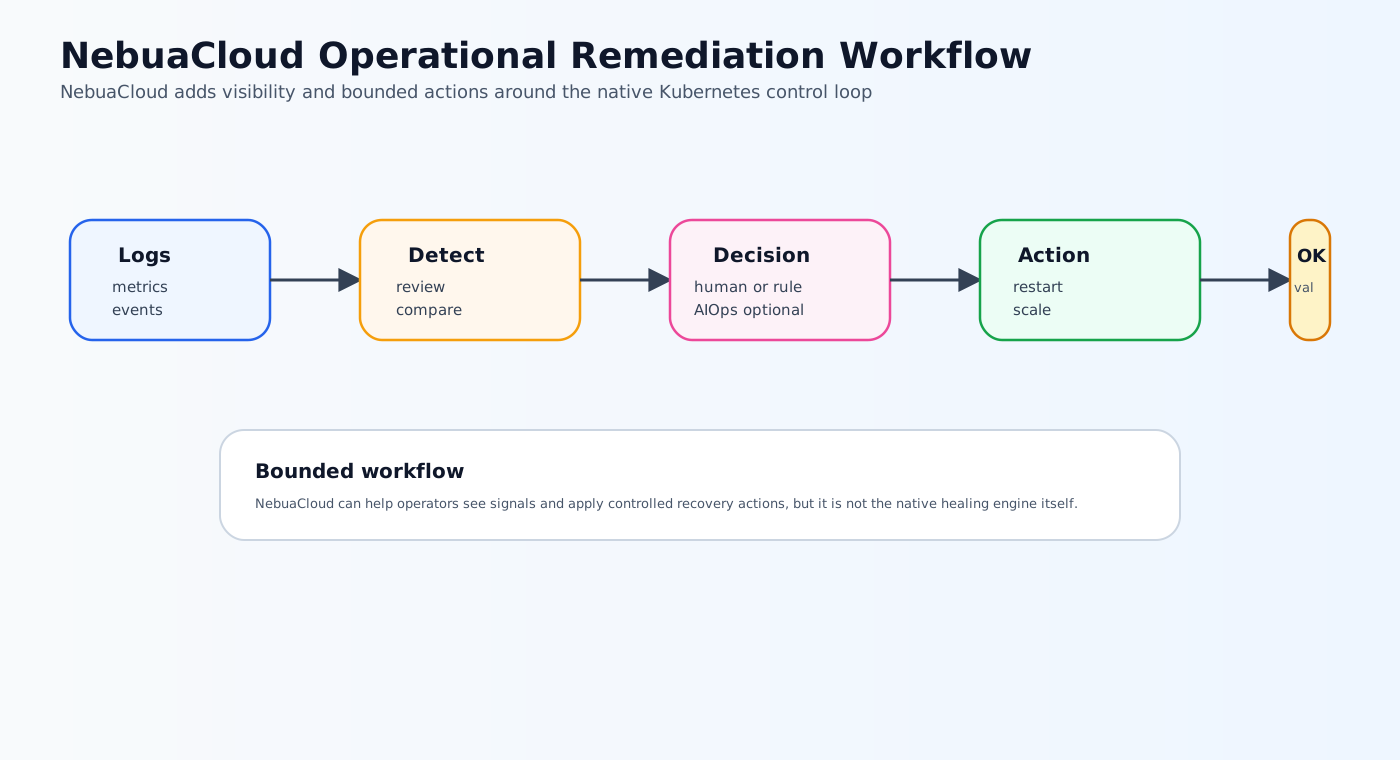
NebuaCloud also exposes organizations, roles, two-factor authentication, workspaces, environments, namespaces, audit logs, cluster context switching, logs, monitoring, and database restart and scale actions. The codebase also shows GitOps-backed deployment and redeploy flows. Fully autonomous incident detection and remediation are not currently available as native platform features.
Practical Example: A Bad Deployment in Kubernetes
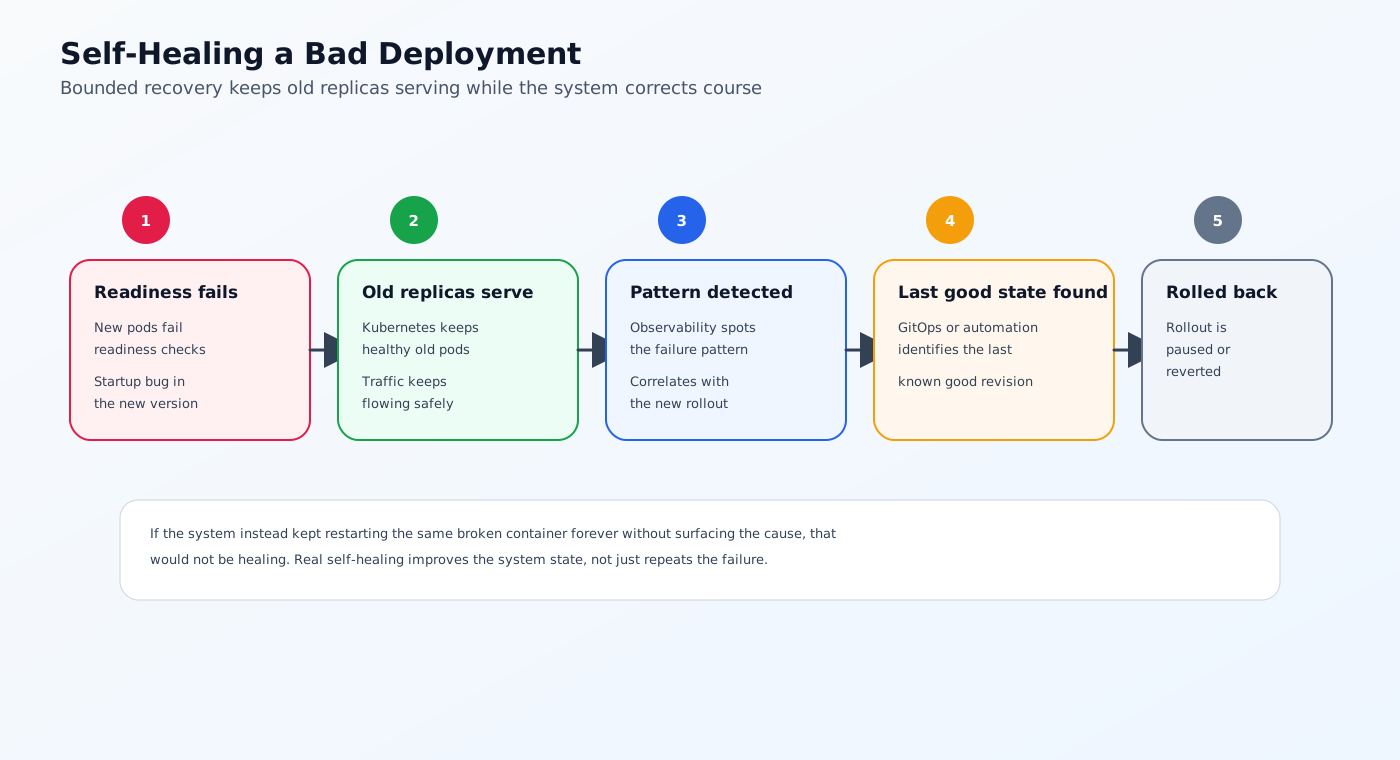
Consider a Deployment that rolls out a version with a startup bug.
What happens in a self-healing setup
- New Pods start failing readiness checks.
- Kubernetes keeps the old healthy replicas serving traffic.
- Observability detects the failure pattern.
- GitOps or automation identifies the last known good state.
- The system rolls back or pauses the rollout.
What would not be self-healing
If the system keeps restarting the same broken container forever without surfacing the cause, that is not healing. That is just retrying.
Real self-healing should improve the system state, not only repeat the failure.
Availability in NebuaCloud
NebuaCloud currently provides workload visibility, logs, monitoring, multi-cluster management, GitOps-oriented deployment and redeploy flows, and explicit database restart and scale actions. Fully autonomous incident detection and remediation are not currently available as native platform features. These capabilities may be introduced in future updates.
Conclusion
Self-healing infrastructure is not a myth, but it is also not magic. In Kubernetes and cloud environments, it is real when it means bounded recovery, reconciliation, and safe automation. It works well for operational failures such as crashed Pods, unhealthy nodes, and bad rollouts, but it does not remove the need for engineering judgment, observability, and control.
For teams running Kubernetes and k3s in production, NebuaCloud can provide a natural operational layer for GitOps, observability, and multi-tenant infrastructure so self-healing stays practical rather than aspirational.
Try it with NebuaCloud -> deploy in minutes
Current Availability
NebuaCloud already provides the runtime and control-plane healing layers described in this article today, including Kubernetes-native pod recovery, GitOps reconciliation, and resource metrics that make drift and unhealthy workloads visible.
The context-aware, AIOps-style healing layer described toward the end of this article illustrates the direction of the platform and is not yet available in the current release. GitOps reconciliation here remains a Git-based control loop; any future AI-assisted analysis would sit alongside it as a separate optional layer, not a replacement for it.