How Do Stateful Workloads Work in Kubernetes?
Learn how stateful workloads work in Kubernetes, including StatefulSets, persistent volumes, storage classes, backups, failover, and production tradeoffs.
How Do Stateful Workloads Work in Kubernetes?
Stateful workloads are where Kubernetes stops feeling like a simple container scheduler and starts feeling like an operating platform. Stateless applications can usually be replaced anywhere. Stateful workloads cannot. They care about identity, storage, recovery, and the order in which things happen.
That difference matters for databases, queues, caches with persistence, and coordination services. If the platform treats them like disposable web Pods, the result is usually data loss, unstable recovery, or operational complexity that is harder than it needs to be.
This article explains what stateful workloads are, how StatefulSet, PVCs, and storage classes work together, what Kubernetes does and does not handle automatically, and how NebuaCloud fits into the operational picture.
The Problem: Stateful Workloads Care About Identity and Data
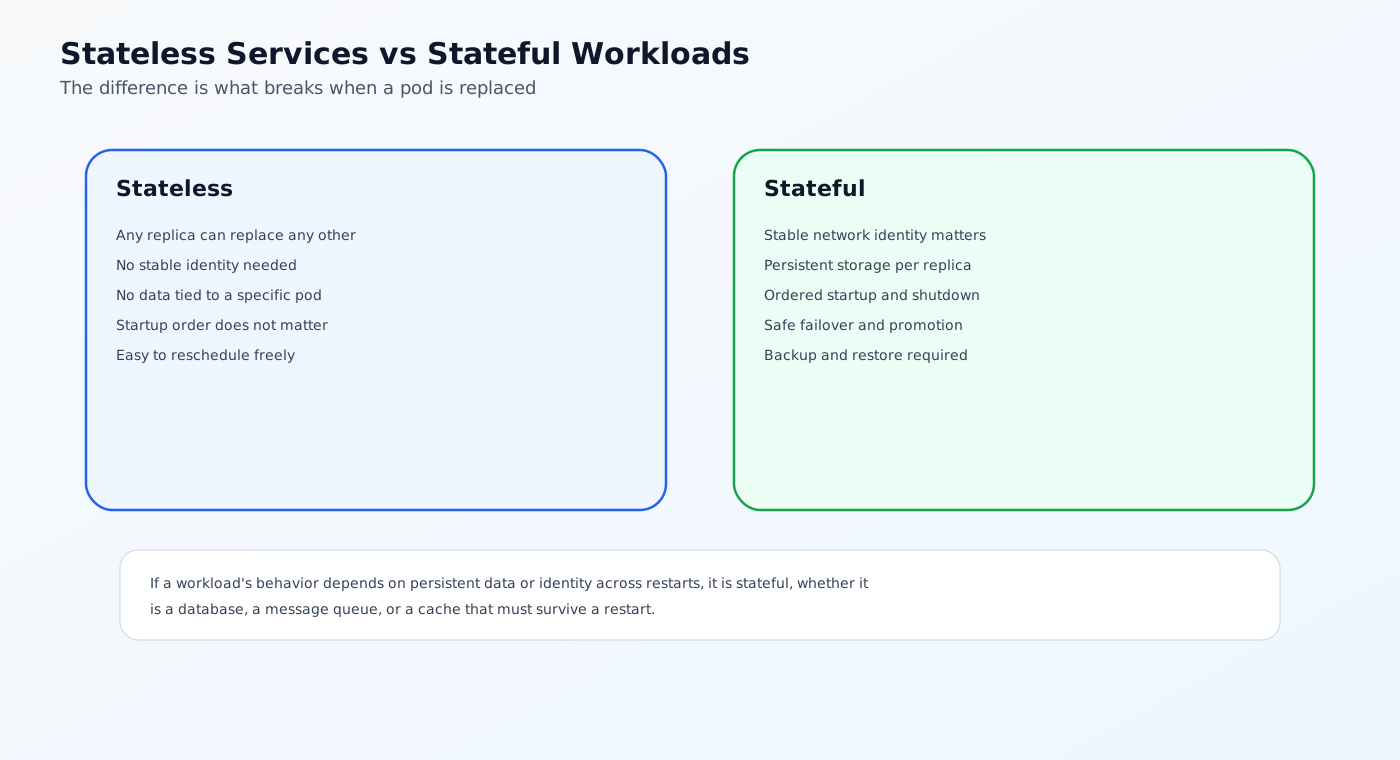
Stateless services are easy to reason about because any replica can usually replace any other replica.
Stateful workloads are different. They often need:
- Stable network identity
- Persistent storage
- Ordered startup or shutdown
- Safe failover
- Backup and restore
- Careful upgrade sequencing
If one of those pieces is missing, the workload may still run, but it may not recover safely after a failure.
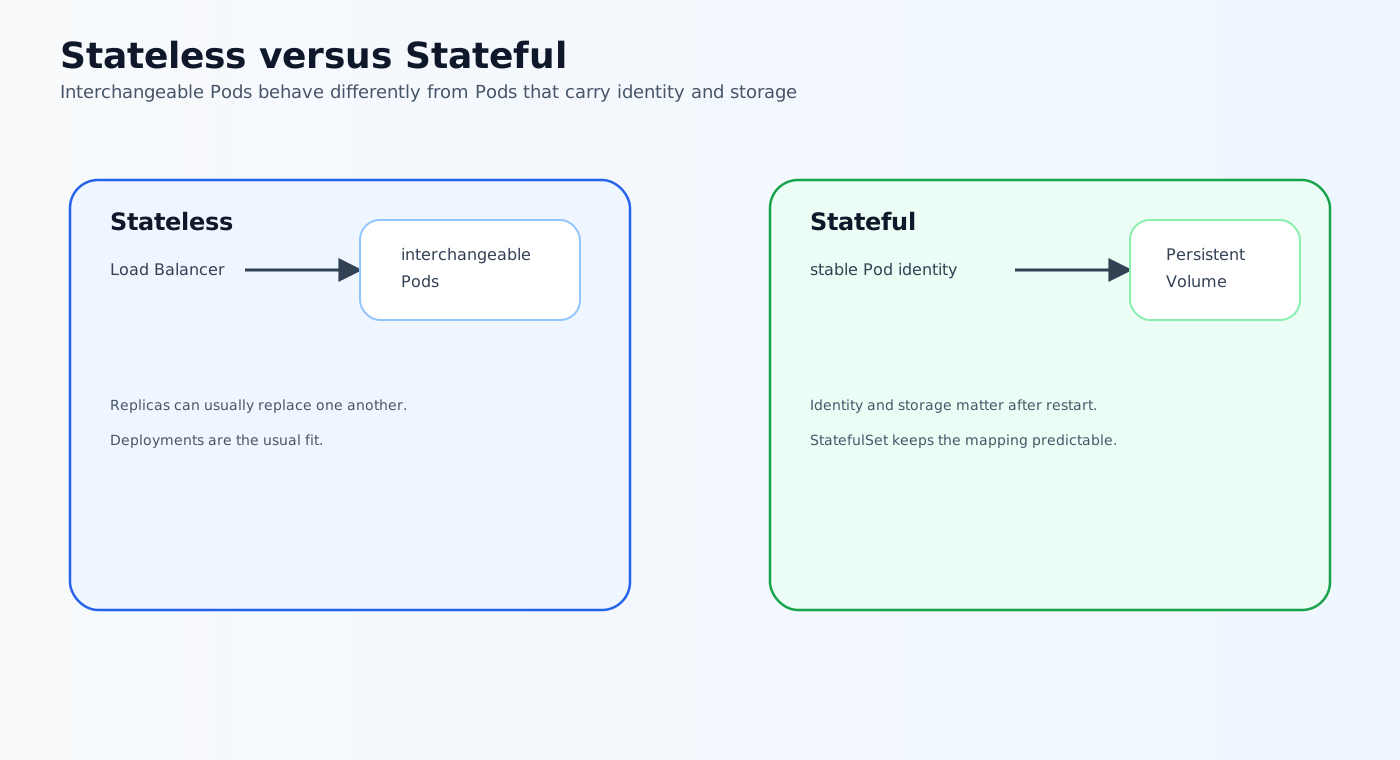
Stateless versus stateful
A stateless workload does not depend on local persistent state to answer the next request. Replicas are usually interchangeable, which makes Deployments a natural fit.
A stateful workload depends on persistent data, stable identity, or ordered behavior. Kubernetes can manage the lifecycle and storage attachment of its Pods, but the application remains responsible for database-level replication, consistency, and recovery.
What Counts as a Stateful Workload?
A workload is stateful when its behavior depends on persistent data or identity across restarts.
Common examples include:
- PostgreSQL
- MySQL
- Redis with persistence
- Kafka
- RabbitMQ
- Elasticsearch
- Zookeeper
- etcd
State is not just about databases
People often think of state as database storage, but it can also mean:
- Session data
- Message offsets
- Cluster membership
- Cache content that must survive restarts
- Coordination data
That is why stateful workload design matters across many types of infrastructure services, not just databases.
Kubernetes Primitives That Matter Most
Several Kubernetes objects and concepts are especially important when you run stateful services.
StatefulSet
StatefulSet is the main Kubernetes primitive for workloads that need stable identity.
It provides:
- Stable Pod names
- Ordered deployment and scaling behavior
- Stable network identity
- Persistent storage association per replica
That is a major difference from Deployments, which are better suited to stateless applications.
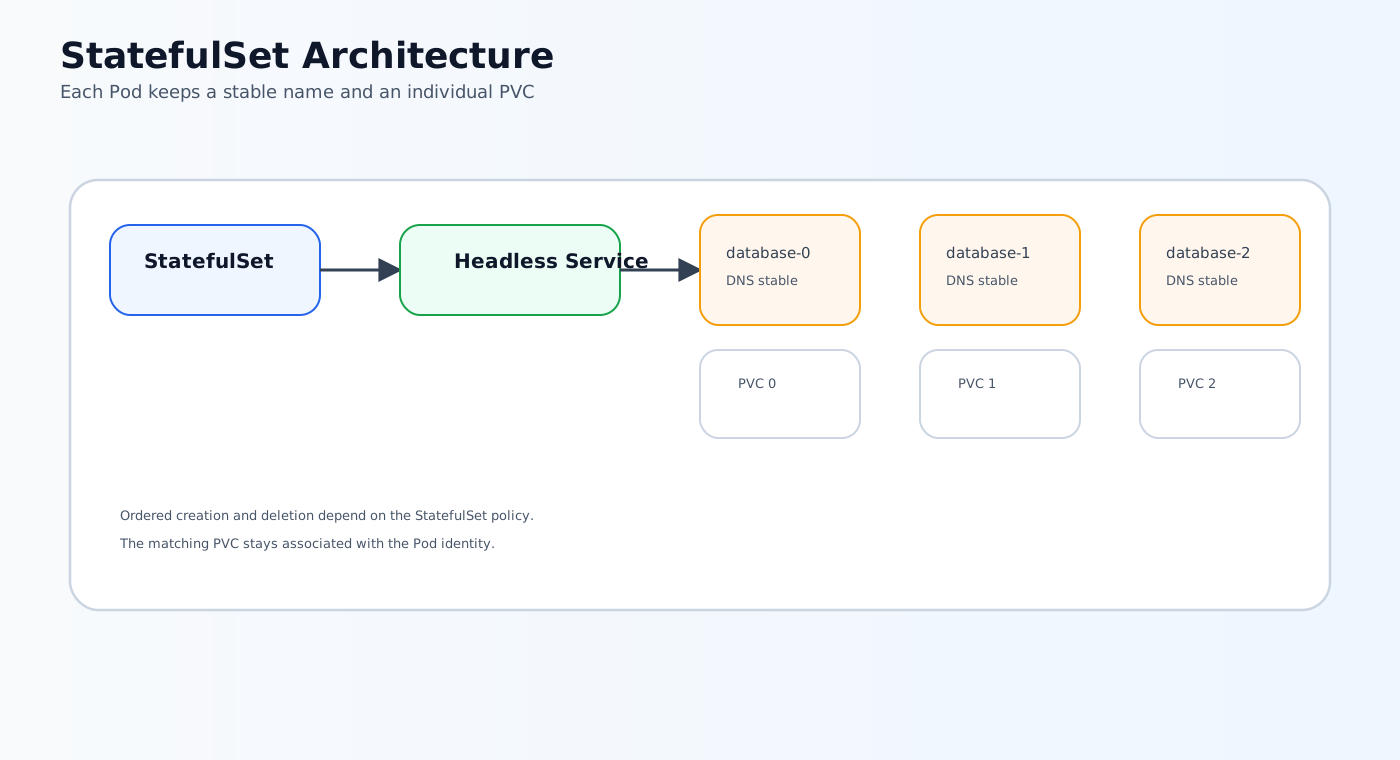
StatefulSet gives the platform identity and lifecycle discipline. It does not create database replication, leader election, sharding, or application-aware recovery by itself.
PersistentVolume, PersistentVolumeClaim, and StorageClass
Persistent storage is what lets data survive Pod replacement.
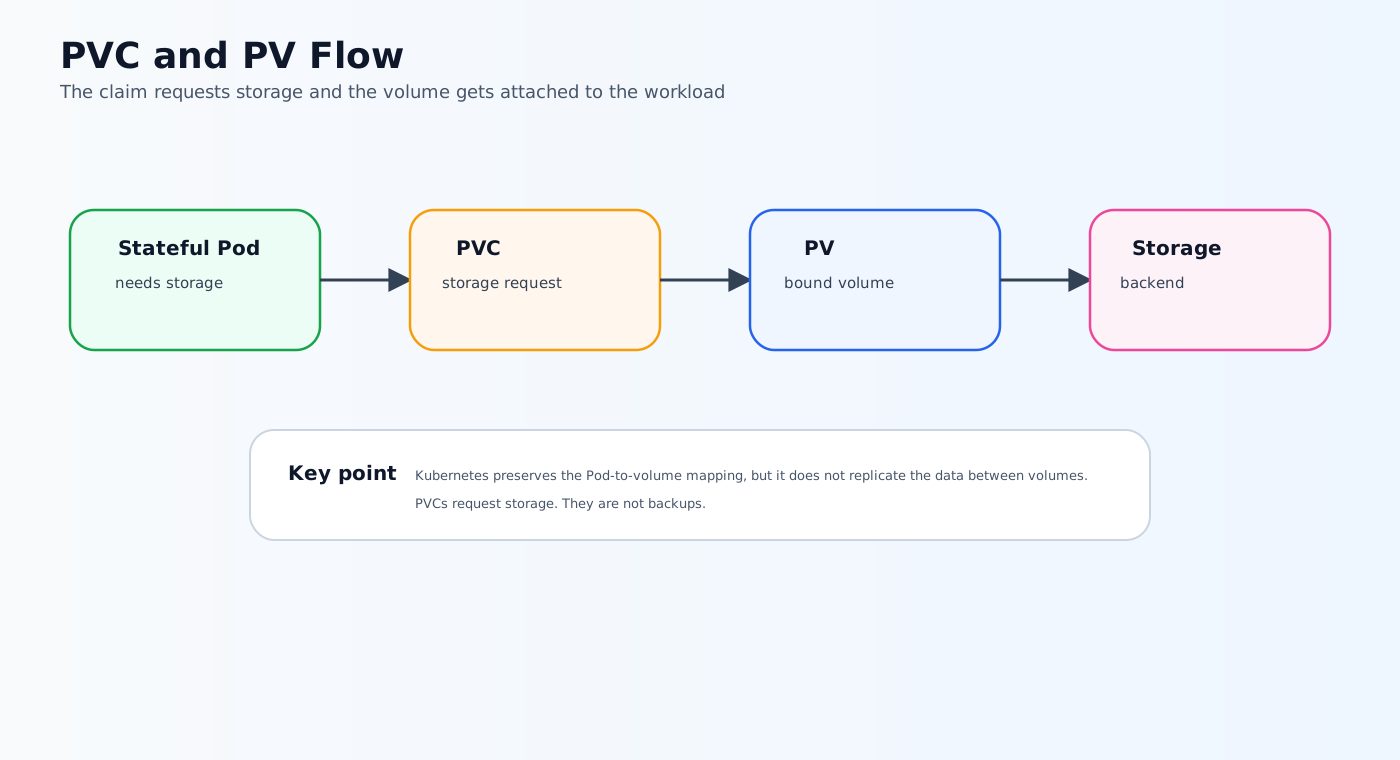
- PersistentVolume represents storage capacity available to the cluster
- PersistentVolumeClaim is a request for storage made by a workload
- StorageClass describes how storage is provisioned
StorageClass can define provisioning behavior and reclaim policy, but it does not guarantee that every cluster has compatible storage available.
volumeClaimTemplates
StatefulSet commonly uses volumeClaimTemplates so each replica gets its own PVC.
That means:
- Each Pod gets its own storage claim
- Pods do not share one common volume by default
- Kubernetes preserves the Pod-to-volume association
- Kubernetes does not replicate the application data between volumes
Headless Service
StatefulSets often use a headless Service so each Pod has a stable DNS identity.
That is important for replica discovery and peer-to-peer communication.
Common Stateful Workload Patterns
Most teams use one of a few patterns depending on the workload and the level of operational maturity.
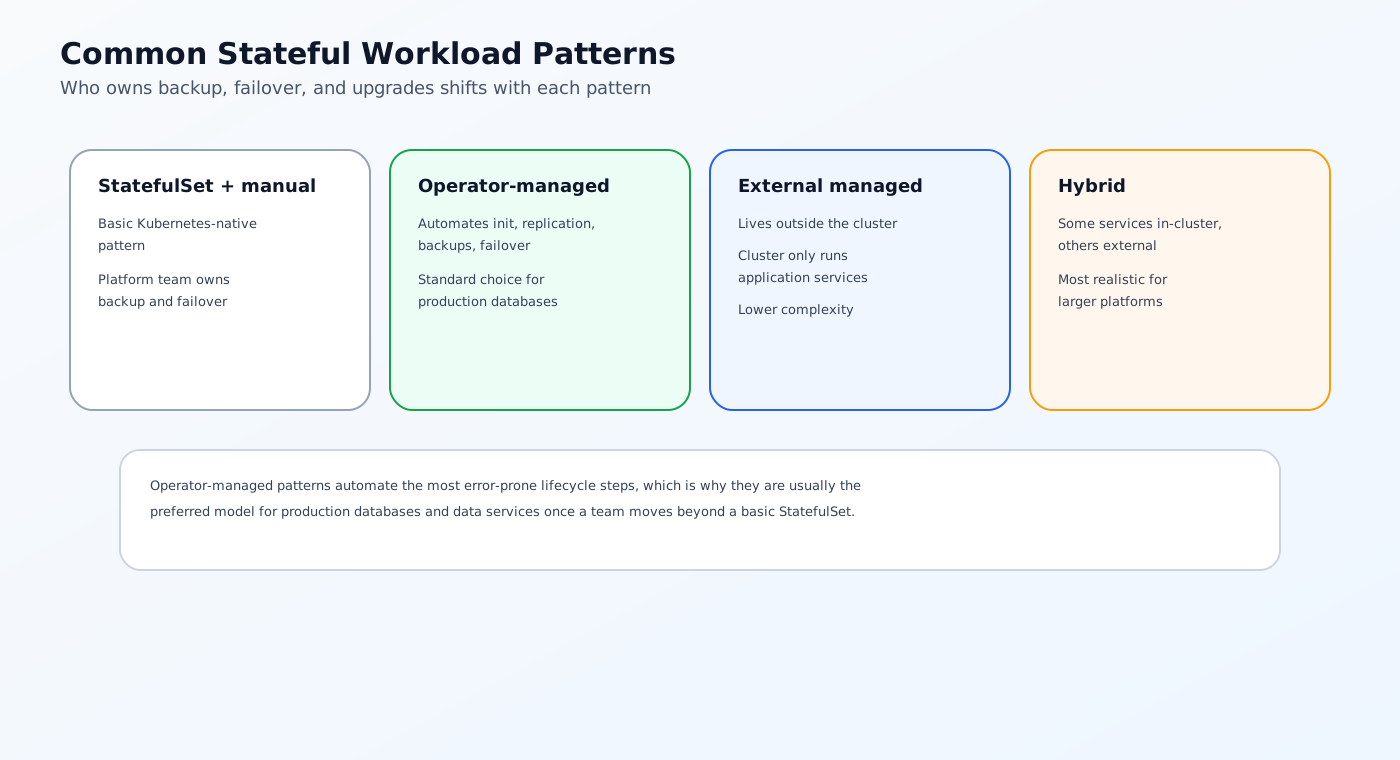
1. StatefulSet with persistent storage
This is the basic Kubernetes-native pattern.
It works well when:
- The workload needs stable Pod identity
- You want Pod-to-volume association to remain predictable
- You are comfortable managing backup and failover yourself or through another tool
2. Operator-managed stateful application
For many production databases and data services, an operator is the preferred model.
The operator can automate:
- Initialization
- Replication setup
- Backups
- Failover actions
- Rolling upgrades
- Health checks
That is often the safest way to run stateful services in Kubernetes because the application-specific logic stays explicit.
3. Managed data service outside the cluster
Some teams keep stateful systems outside Kubernetes entirely and let the cluster only run application services.
This is common when the team wants lower operational complexity.
4. Hybrid model
Some services live inside Kubernetes and others do not.
That is often the most realistic approach for larger platforms.
What Good Stateful Workloads Look Like in Production
A production-ready stateful workload is designed around failure, not just deployment.
1. Storage is durable and sized correctly
The storage class must match the workload’s latency, IOPS, and durability requirements.
2. The workload has an explicit recovery model
The team should know what happens when:
- A Pod crashes
- A node disappears
- A volume becomes unavailable
- A replica falls behind
3. Backups are tested, not assumed
Backup jobs matter, but restore drills matter more.
4. Failover is understood
If the workload has a primary and replica pattern, the team should know how promotion happens.
5. Resource requests and limits are set
Stateful workloads are often sensitive to memory pressure and disk behavior.
6. Upgrades are planned
Stateful systems often need version-aware upgrades and migration steps.
Scheduling, Availability, and Updates
Kubernetes gives a few extra tools that help stateful workloads behave well.
- Anti-affinity can reduce the chance that replicas land on the same node
- Topology spread can distribute Pods across zones or failure domains
- PodDisruptionBudget limits voluntary interruptions
- Rolling updates must be handled carefully for databases with quorum or primary/replica roles
StatefulSet can help with ordered updates, but a rolling update does not guarantee application consistency.
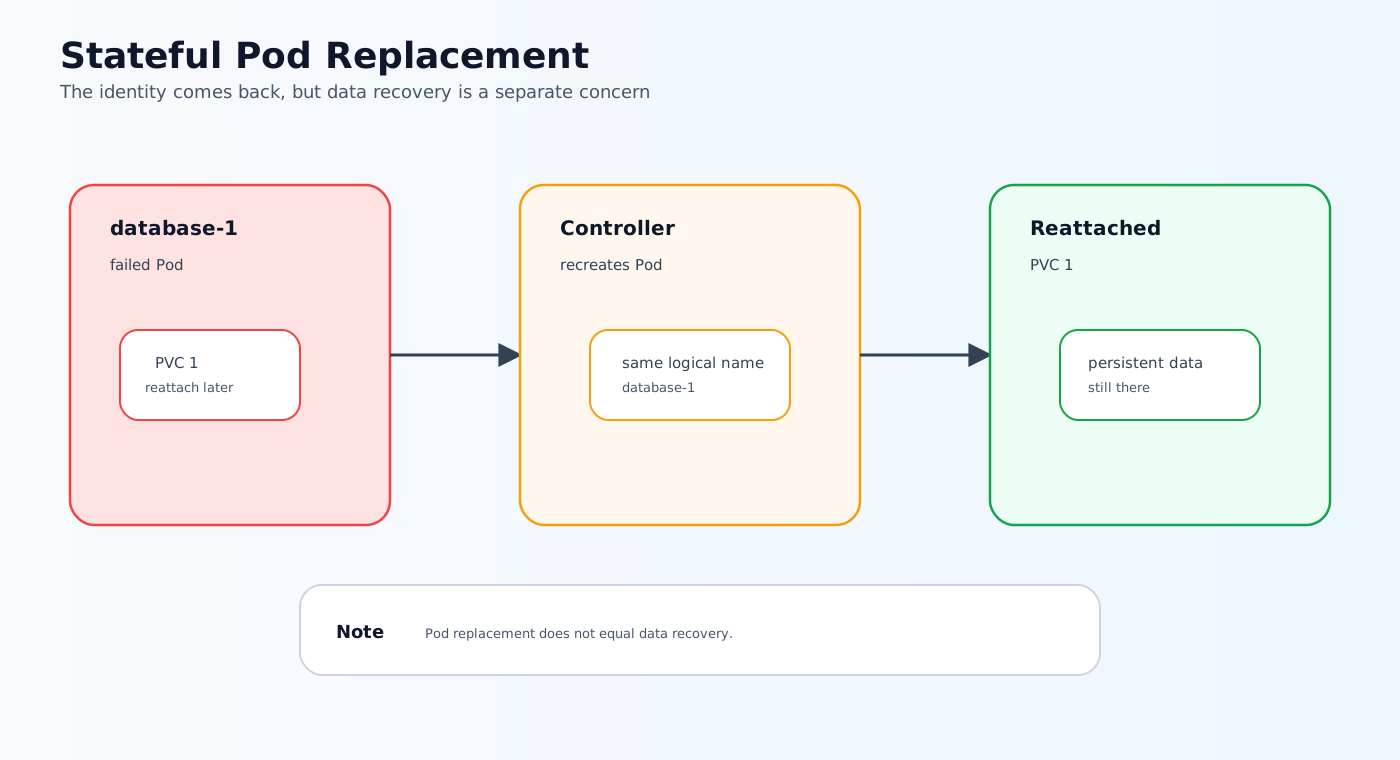
Replacement keeps identity, not necessarily data
If a StatefulSet Pod is recreated, Kubernetes can preserve its logical identity and reattach the matching PVC. That helps the workload come back in a predictable way, but it does not repair corrupt data or recreate missing application state by itself.
Backups, Replication, and Disaster Recovery
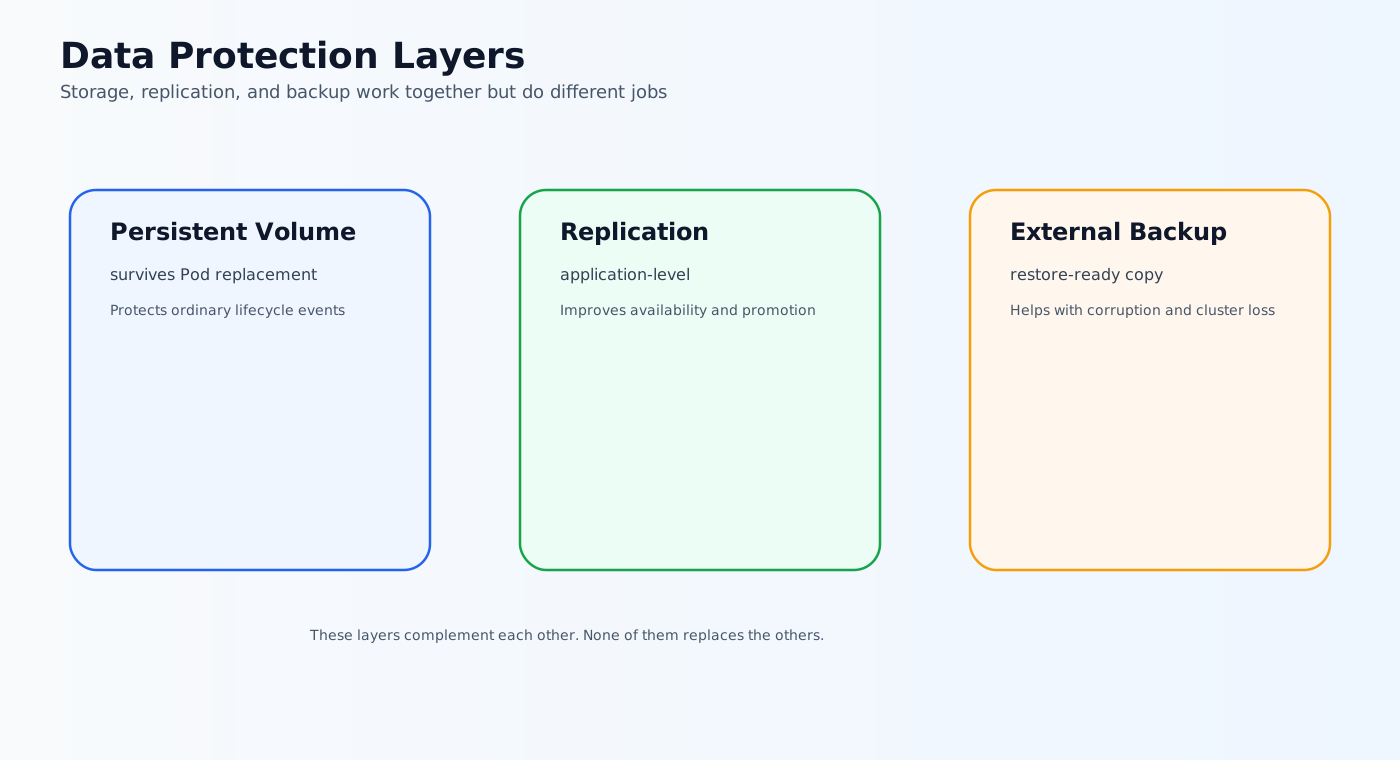
These mechanisms are related, but they are not interchangeable.
- Persistent storage protects data from ordinary Pod replacement
- Replication improves availability
- Backups and tested restore procedures provide recovery from corruption or cluster loss
Replication is application-specific. A StatefulSet does not magically make a database highly available.
Snapshot is not always a full backup
A volume snapshot can help, but it is not always a consistent application-level backup for a live database.
Recovery planning
The safest approach is usually:
- Persistent storage for day-to-day Pod replacement
- Application replication for availability
- Backups and restore drills for corruption or disaster recovery
Current Industry Standard Approaches
Most teams use a mix of these patterns.
StatefulSet plus manual operations
This is the simplest Kubernetes-native approach, but it places more responsibility on the platform team.
Operator-managed databases or queues
This is the standard choice for many production data services because it automates the most error-prone lifecycle steps.
External managed services
This reduces the burden on the Kubernetes platform, though it may reduce consistency or portability.
Dedicated node pools or clusters
Some teams isolate stateful workloads by scheduling them on dedicated nodes or separate clusters.
This reduces noisy-neighbor risk and improves operational clarity.
Limitations and Tradeoffs
Running stateful workloads on Kubernetes is possible, but it comes with tradeoffs.
Storage behavior matters a lot
If the storage layer is slow or unstable, the workload will suffer even if the Pod looks healthy.
Stateful recovery is not always automatic
Some workloads still need human coordination during failover or upgrade events.
StatefulSet does not solve the whole problem
It helps with identity and storage mapping, but it does not automate backup strategy or business-level recovery.
Not every stateful workload should live in Kubernetes
For some teams, the right answer is still a managed database or external service.
k3s still needs the same stateful discipline
k3s lowers cluster overhead, but stateful services still need careful storage and recovery planning.
How NebuaCloud Fits Into This Model
This is where NebuaCloud fits naturally.
NebuaCloud is focused on Kubernetes management, GitOps workflows, multi-cluster infrastructure, and production visibility. In a stateful-workload model, that means the platform can help teams manage the operational side of Kubernetes more consistently so databases, queues, and other persistent services do not become special cases.
What this means in practice
NebuaCloud can help teams:
- Deploy Kubernetes stacks that include StatefulSets through Application Stacks
- Apply GitOps workflows to runtime manifests and storage configuration
- Manage databases with explicit restart, scale, and connection visibility actions
- Use logs and monitoring to spot storage pressure or unhealthy replicas earlier
- Orchestrate backups and recovery workflows at the cluster level
That is especially useful when stateful workloads need to be part of a repeatable platform rather than hand-managed exceptions.
Practical Example: Running PostgreSQL as a Stateful Workload
Consider PostgreSQL as a representative stateful service.
A safer pattern
- Choose a storage class with predictable performance.
- Deploy PostgreSQL through an operator or StatefulSet.
- Attach persistent volumes to each replica or instance.
- Configure backups and test restores.
- Set readiness probes so traffic only reaches healthy Pods.
- Define resource requests and limits so the scheduler places the workload correctly.
- Plan upgrades and failover explicitly.
Why this works better
The database remains tied to its durable storage and recovery plan instead of relying on Pod life alone.
That makes failures more predictable and recovery less dependent on manual intervention.
Conclusion
Stateful workloads in Kubernetes are possible, but they need a different operating model than stateless services. The key ideas are stable identity, persistent storage, reliable recovery, and a clear failover strategy. StatefulSets, PVCs, storage classes, and operators are the building blocks, but the real work is in the operational discipline around them.
For teams running Kubernetes and k3s in production, NebuaCloud can provide a natural operational layer for GitOps, observability, and multi-cluster infrastructure so stateful workloads stay manageable and recoverable.
Try it with NebuaCloud -> deploy in minutes
Current Availability
NebuaCloud already has real building blocks around this topic in the current codebase, including persistent storage configuration, workload deployment paths, resource metrics, stateful workload visibility in the dashboard, and basic cluster-level backup and restore.
At the same time, the full operator-driven failover, automated replica management, and a complete application-aware backup/restore workflow described in this article are not yet exposed as one finished end-to-end NebuaCloud product capability today. Where those features are not directly available, they should be understood as future platform direction rather than current complete functionality.