What Is vCluster and Why Do Teams Use It?
Learn what vCluster is, why teams use virtual clusters for Kubernetes multi-tenancy, how it compares to namespaces and separate clusters, and the tradeoffs involved.
What Is vCluster and Why Do Teams Use It?
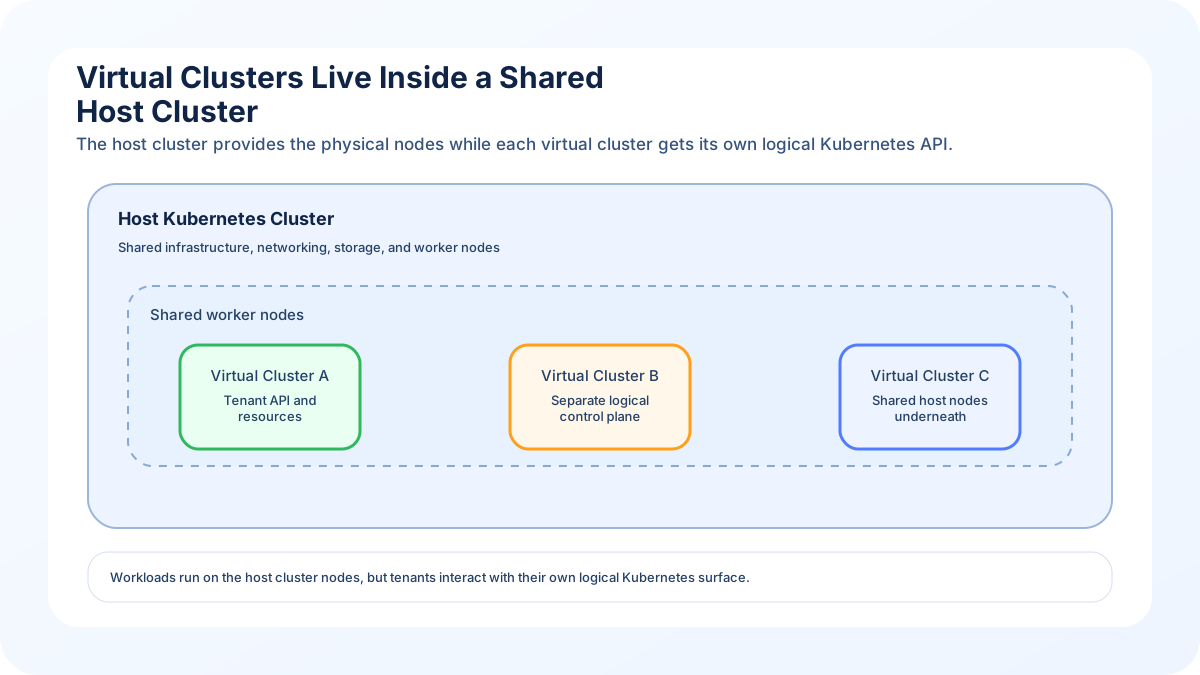
vCluster gives a team or tenant its own logical Kubernetes API and control-plane experience while workloads still run on the nodes of a shared host cluster. That makes it feel closer to a dedicated cluster than a plain namespace, but it does not turn shared infrastructure into a fully separate physical cluster.
That distinction matters because Kubernetes multi-tenancy is usually a set of tradeoffs. Namespaces are lightweight but limited. Dedicated clusters are stronger but more expensive. vCluster sits in the middle by adding a separate logical Kubernetes surface on top of shared infrastructure.
This article explains what vCluster is, how it works, how it differs from namespaces and dedicated clusters, and where NebuaCloud currently fits in that picture.
What vCluster Actually Is
A virtual Kubernetes cluster is a separate logical Kubernetes API layered on top of a host cluster.
In practice, that means:
- The host cluster provides nodes, networking, storage, and physical capacity
- The virtual cluster exposes its own Kubernetes API surface
- The tenant can have its own namespaces, roles, and resources
- Some resources are translated or synced to the host cluster
- Workloads still run on shared worker nodes
A virtual Kubernetes cluster provides a separate logical Kubernetes API and control-plane experience while workloads continue to run on the nodes of a shared host cluster.
vCluster is not the same thing as:
- A virtual machine
- A plain namespace
- A fully independent physical cluster
- A cluster that does not depend on the host
- A native feature built into every Kubernetes installation
Why Teams Use vCluster
Teams usually choose vCluster when namespaces are not enough but a dedicated cluster would be too heavy.
Common reasons include:
- More tenant autonomy
- Stronger logical separation
- Better self-service for platform users
- Less cluster sprawl than cluster-per-tenant
- A cleaner experience for preview or sandbox environments
vCluster helps when you want each tenant to feel like they own a Kubernetes environment, while the platform team still keeps the underlying infrastructure centralized.
Namespaces, vCluster, and Dedicated Clusters
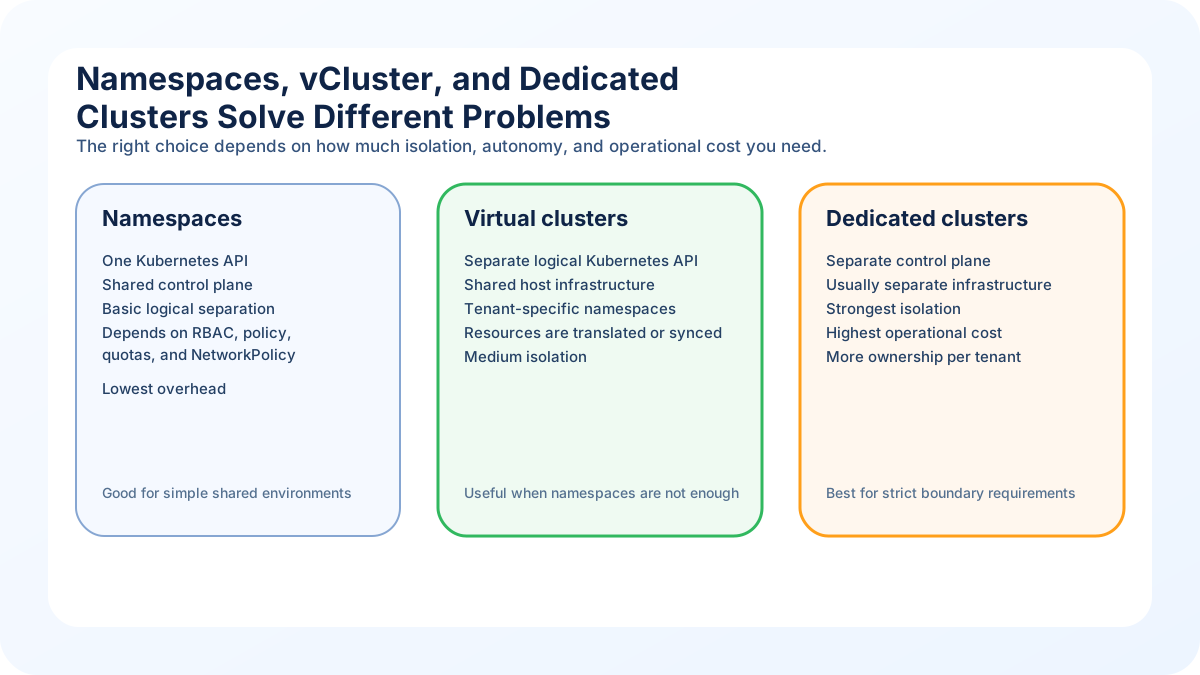
These three models solve different problems.
Namespaces in a shared cluster
Namespaces share the same Kubernetes API and the same control plane.
They are useful for:
- Basic logical separation
- Lower operational cost
- Simple shared environments
They still depend on:
- RBAC
- Network Policies
- Resource quotas
- Admission and policy controls
Namespaces are helpful, but they are not a complete security boundary by themselves.
Virtual clusters
Virtual clusters provide a separate logical Kubernetes API on shared infrastructure.
They are useful when you want:
- More independence than namespaces
- A tenant-specific Kubernetes experience
- Shared nodes and shared infrastructure underneath
They still depend on the host cluster and inherit its availability, networking, and capacity constraints.
Dedicated clusters
Dedicated clusters separate both the control plane and, usually, the underlying cluster environment.
They are the strongest option when you need:
- Maximum isolation
- Clear blast-radius boundaries
- Strong compliance or tenant separation
The tradeoff is higher operational cost.
How vCluster Works
The useful mental model is simple: the tenant talks to a virtual API, and the platform translates or syncs the right pieces to the host cluster.
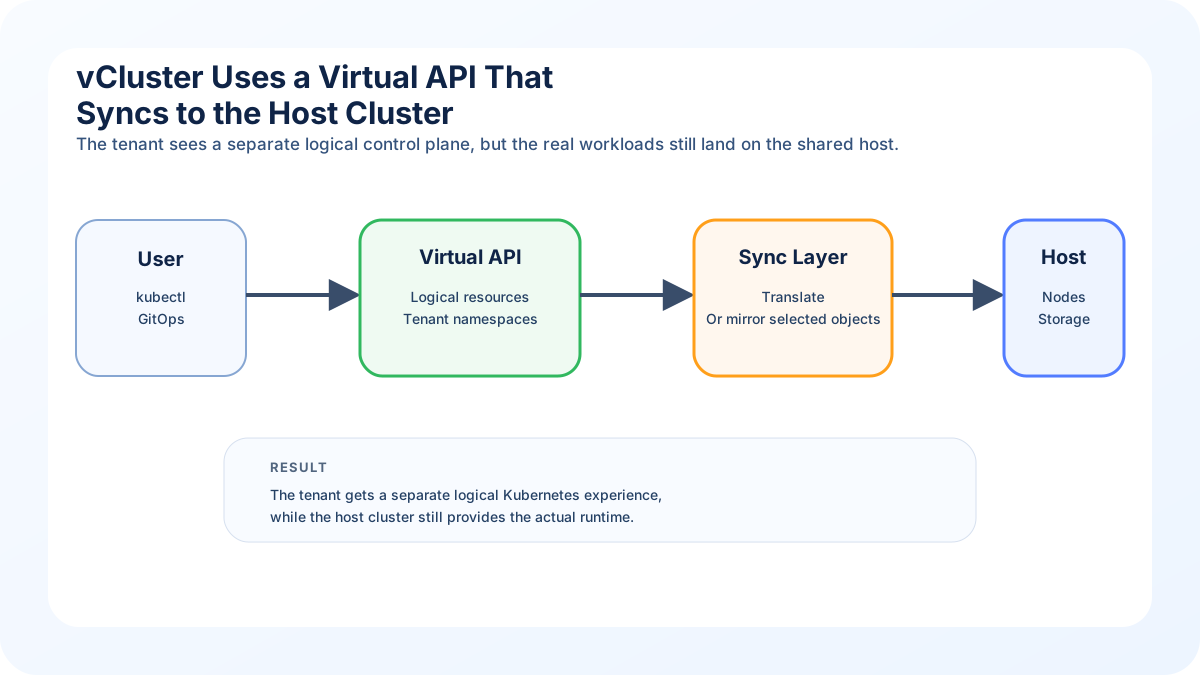
That usually means:
- The user interacts with a virtual Kubernetes API
- The virtual cluster stores its own logical state
- A sync layer maps selected resources to the host cluster
- The host cluster runs the actual workloads on its nodes
This is why vCluster improves logical isolation, but does not eliminate the shared-fate risk of the host cluster.
Host Cluster vs Virtual Cluster
It helps to keep the roles separate.
Host cluster
The host cluster provides:
- Nodes
- Network fabric
- Storage integrations
- Shared capacity
- The underlying runtime for all workloads
Virtual cluster
The virtual cluster provides:
- A separate logical API
- Its own namespace and resource view
- Tenant-specific access boundaries
- An experience that feels cluster-like
It does not necessarily get its own physical worker nodes.
Where vCluster Fits in Kubernetes Architecture
vCluster is best understood as a platform pattern, not as a replacement for every other isolation mechanism.
It usually works alongside:
- RBAC
- Network Policies
- Quotas and limits
- GitOps
- Observability and audit logging
Limitations and Tradeoffs
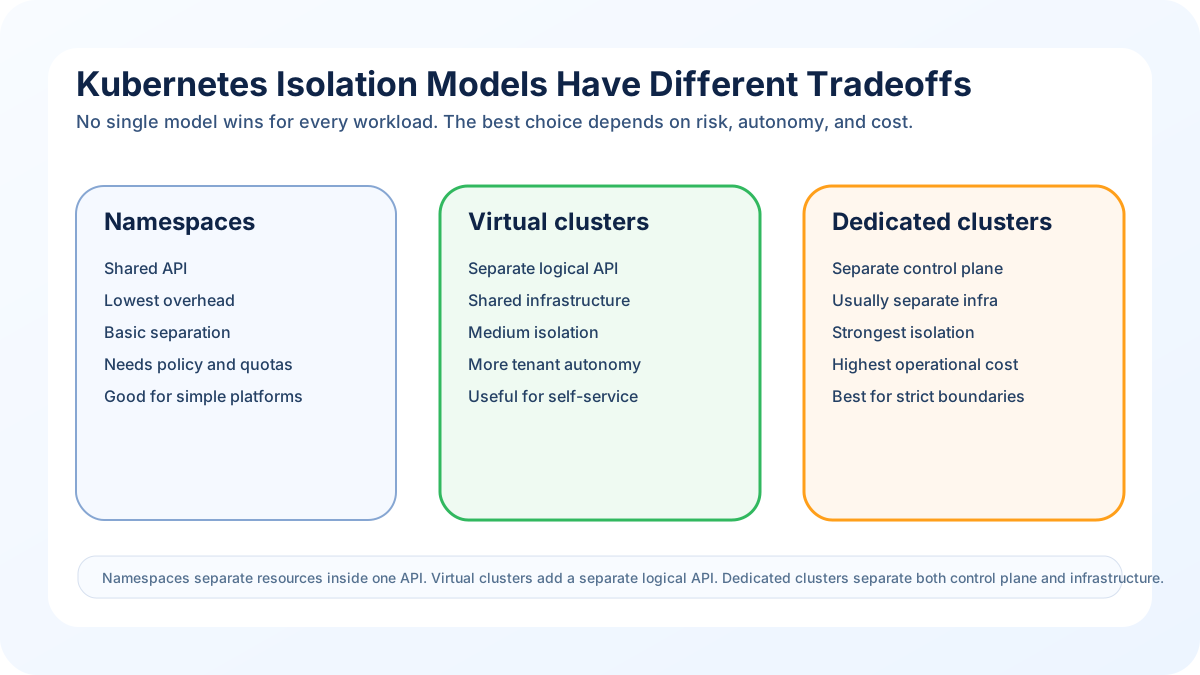
vCluster improves logical isolation, but it does not remove operational responsibility.
You still need to think about:
- Host cluster availability
- Storage design
- Networking behavior
- Admission policies
- Resource consumption
- Monitoring and alerting
- Upgrade strategy
It is also important to remember that not every workload needs virtual clusters. For some teams, namespaces plus policy are enough. For other teams, dedicated clusters are still the better choice.
How NebuaCloud Fits Into This Model
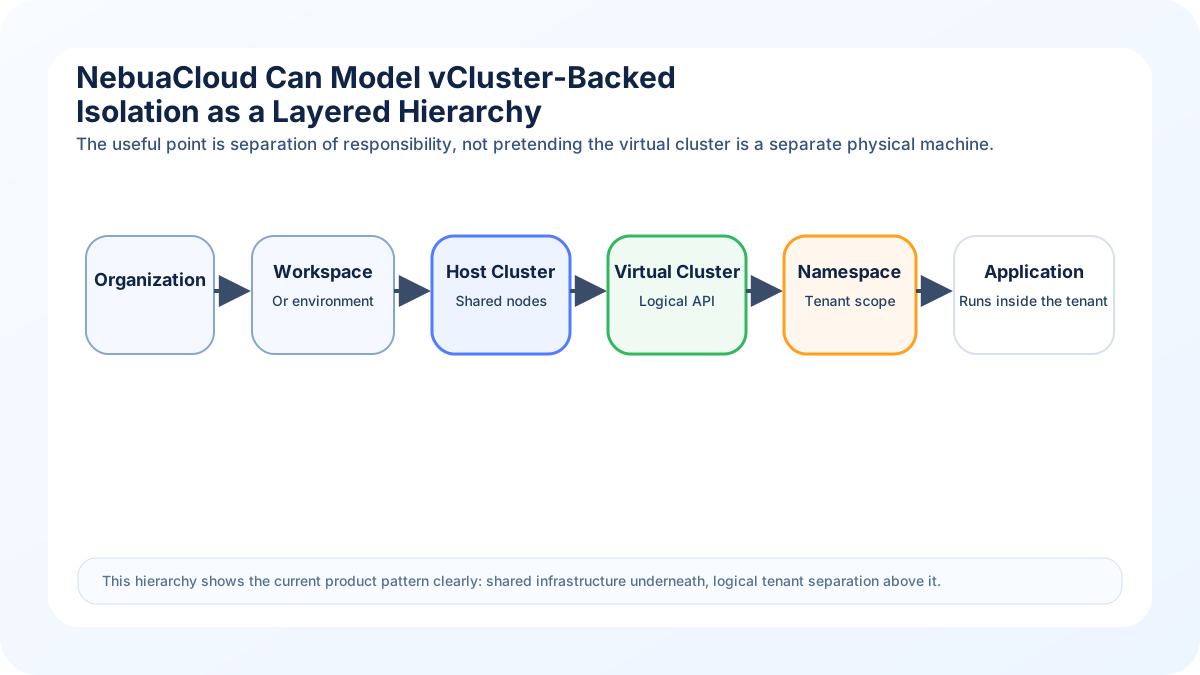
NebuaCloud already has real vCluster-backed support in the current codebase, especially in the Labs and workspace runtime path.
The repository includes:
- A
VClusterRuntimeBackend - Workspace resolution that can target a vcluster-backed backend
- Namespace management that understands vcluster-internal namespaces
- GitOps target handling that is aware of vcluster-backed contexts
That means the article can describe a real operating model instead of a hypothetical one. At the same time, it should not overpromise that every possible vCluster workflow is exposed as one universal end-to-end feature everywhere in the product.
What This Means in Practice
For a platform team, the useful pattern is:
- Keep the host cluster in control of shared infrastructure
- Give each tenant or workspace a separate logical Kubernetes API
- Keep tenant namespaces and workloads inside that virtual boundary
- Use GitOps, policy, and observability around the model
That creates a more independent tenant experience without pretending the host cluster no longer matters.
Conclusion
vCluster is a practical middle ground between namespaces and dedicated clusters. It gives teams a stronger logical boundary, a more independent Kubernetes experience, and a better fit for self-service platforms, while still relying on shared infrastructure underneath.
In NebuaCloud, that idea is not just theoretical. The current codebase already includes vcluster-aware runtime behavior for Labs and related workspace flows, so the article can describe a real pattern rather than a future-only concept.
Try it with NebuaCloud -> deploy in minutes
Current Availability
NebuaCloud already has real support for vCluster-based environments in the current codebase, including shared-cluster Labs behavior, a dedicated VClusterRuntimeBackend, vcluster-internal namespace management, and GitOps target handling that is aware of vcluster-backed deployment contexts.
Where this article moves into broader isolation architecture, such as dedicated node pools per tenant or a complete policy-enforcement suite, those capabilities are not all exposed today as one finished end-to-end NebuaCloud product workflow and should be understood as platform direction rather than current complete functionality.