What Is AIOps in Cloud Infrastructure?
Learn what AIOps means in cloud infrastructure, how it helps with Kubernetes operations, and where it fits with observability, automation, and self-healing systems.
AIOps is the use of analytics, statistics, and machine learning to analyze operational telemetry and help teams detect patterns, correlate events, and support incident response. It can ingest metrics, logs, traces, Kubernetes events, deployment history, and configuration changes, then turn that data into signals, recommendations, or bounded actions.
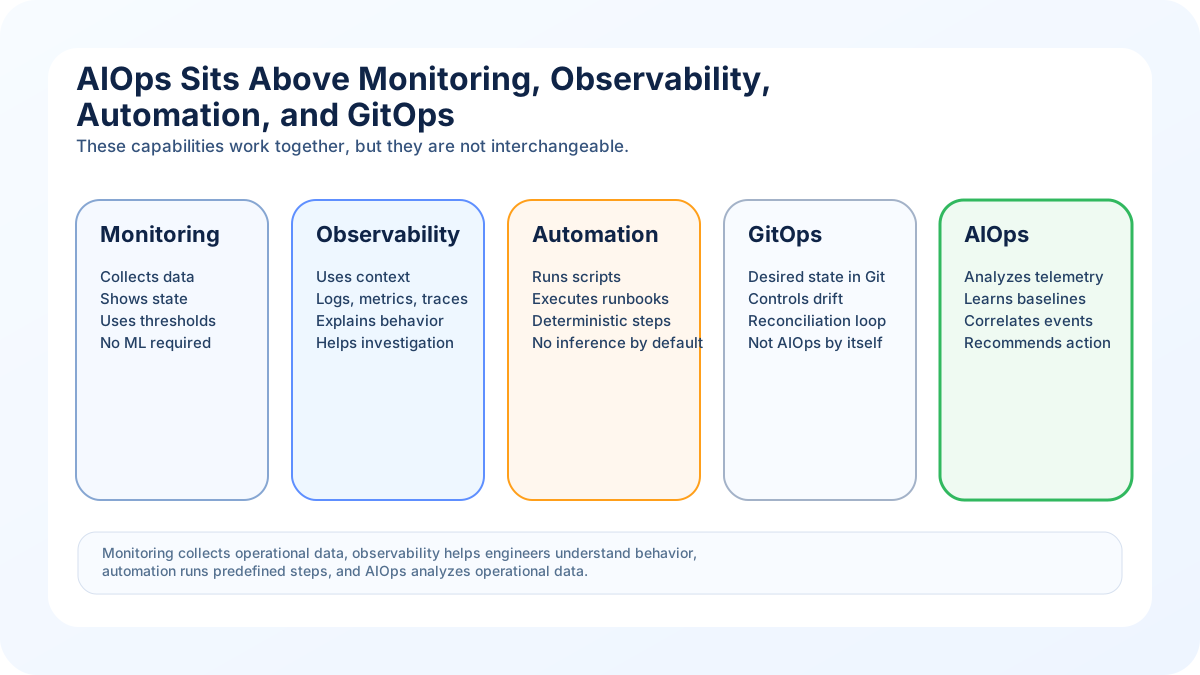
That sounds close to ordinary monitoring, but it is not the same thing. Monitoring collects data, observability helps engineers understand behavior, automation runs predefined steps, and GitOps keeps declared state in Git. AIOps sits above those layers and tries to reason over the operational data they produce.
It is also easy to overstate. AIOps does not automatically mean autonomous infrastructure, zero downtime, or error-free diagnosis. It does not replace monitoring, observability, or GitOps, and it does not mean there is AI inside Kubernetes by default.
What AIOps Means in Practice
AIOps can help with:
- ingesting operational data at scale
- learning baselines from historical behavior
- detecting anomalies or unusual patterns
- correlating related alerts and events
- prioritizing incidents
- suggesting possible causes
- forecasting capacity pressure
- assisting an engineer during investigation
- triggering controlled actions that were already approved
AIOps applies analytics and machine learning to operational telemetry to help detect patterns, correlate events and support incident response. It does not guarantee autonomous or error-free infrastructure operations.
What AIOps Is Not
AIOps is not automatically:
- full infrastructure autonomy
- a replacement for engineers
- a promise that every incident will be prevented
- a guarantee that every diagnosis is correct
- a substitute for monitoring or observability
- a substitute for GitOps
- an automatic fix for application bugs
The safest way to think about it is as a decision-support layer, not a magic control plane.
Monitoring, Observability, Automation, GitOps, and AIOps
These terms are often used together, but they mean different things.
Monitoring
- collects data from systems
- shows current state and trends
- uses dashboards and thresholds
- does not need machine learning
Observability
- combines metrics, logs, traces, and context
- helps explain why something happened
- supports investigation beyond fixed thresholds
- does not automatically mean AIOps
Rules-based alerts
- use deterministic conditions
- fire when thresholds or conditions are met
- do not need machine learning
Automation
- executes predefined steps
- may be triggered manually or by rules
- is not automatically AI
GitOps
- manages desired state through Git
- controls change in a deterministic way
- can reconcile drift
- does not analyze telemetry by itself
AIOps
- analyzes operational telemetry
- learns or uses baselines
- correlates signals
- produces recommendations or controlled actions
Kubernetes Self-Healing Is Not the Same as AIOps
Kubernetes already has deterministic control loops.
Controllers, health checks, and the scheduler can:
- restart containers
- replace Pods
- keep replicas running
- remove unhealthy Pods from service
- perform rolling updates
- reconcile desired state
Those mechanisms are not AI. They are control-loop behavior.
GitOps reconciliation is also deterministic. It can correct drift, but it does not by itself analyze metrics, logs, or traces.
That distinction matters because it is common to describe ordinary automation as if it were AIOps. It is not.
What NebuaCloud Actually Supports Today
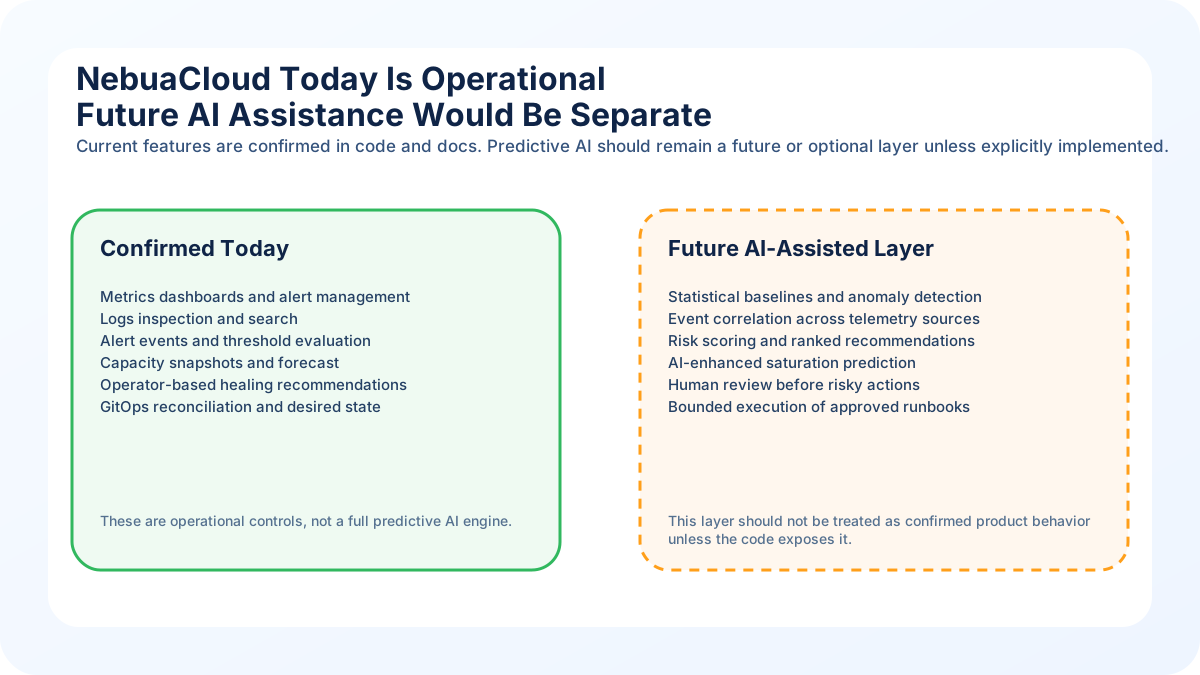
The current NebuaCloud codebase and docs confirm operational telemetry, alerting, capacity planning, and bounded remediation paths. What they do not confirm is a fully productized predictive AI engine for operational failure detection.
Confirmed today:
- real-time metrics and dashboard views
- logs inspection and search
- alert creation, listing, update, deletion, and generated alert events
- threshold evaluation against cluster metrics
- capacity snapshots and a forecast based on historical snapshots
- healing recommendations exposed by the operator path
- GitOps-style desired-state workflows
Not confirmed as a standard current feature:
- ML-based anomaly detection over operational telemetry
- automated incident correlation engine
- predictive failure scoring
- autonomous AI remediation across the platform
The code does include practical operational pieces that an AIOps layer could use as inputs, but that is different from shipping a complete AIOps product today.
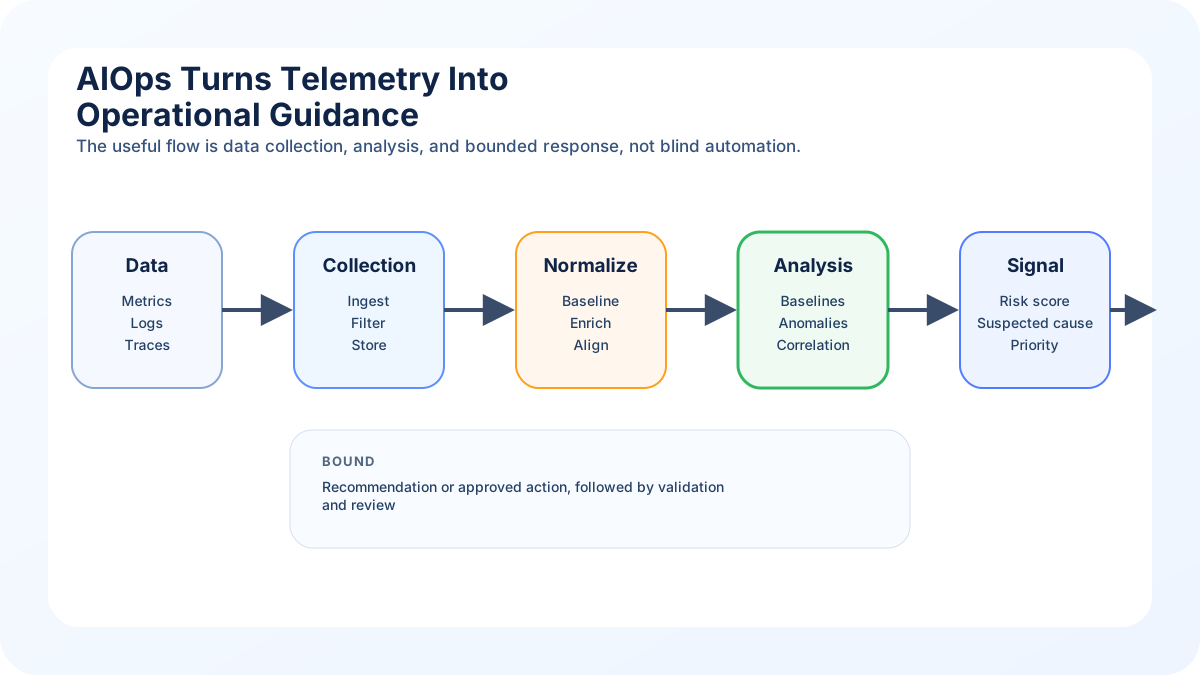
A Realistic AIOps Flow
A realistic AIOps flow looks like this:
Data Sources -> Collection -> Normalization -> Analysis -> Operational Signal -> Recommendation or Controlled Action -> Validation
Data sources
- metrics
- logs
- traces
- Kubernetes events
- deployment history
- configuration changes
- incident history
- cloud provider events
Analysis
- threshold rules
- statistical baselines
- anomaly detection
- event correlation
- classification
- forecasting
- summarization
Outputs
- incident grouping
- alert prioritization
- suspected cause
- recommended action
- risk score
- capacity forecast
Actions
- open an incident
- notify an engineer
- execute an approved runbook
- perform controlled scaling
- apply an approved rollback
- restart a workload
- block a deployment
Those actions should still be bounded, reviewed, and reversible.
How NebuaCloud Fits Into This Model
NebuaCloud fits naturally on the operational side of this model.
The platform can provide the telemetry, change history, and response boundaries that an AIOps system would need, but the article should not imply that predictive AI is already a finished product feature unless the repository shows that directly.
What this means in practice
NebuaCloud can help teams:
- manage Kubernetes and k3s clusters
- view metrics, logs, alerts, and events in one operating model
- connect deployment changes to runtime behavior
- keep remediation bounded and auditable
- work across multi-tenant infrastructure with clearer operational context
That is useful because AIOps works best when the surrounding platform is already disciplined.
Practical Example: A Risky Rollout
Imagine a Deployment rolling out a new API version.
The platform observes:
- readiness is slower than normal
- restart counts are increasing
- latency is rising
- a node shows pressure
- the rollout is taking longer than the historical baseline
An AIOps layer may then:
- mark the rollout as risky
- correlate the change with the alert pattern
- enrich the incident with namespace and node context
- recommend a pause or rollback
- hand the decision back to the engineer
That is far more realistic than claiming perfect prediction.
Conclusion
AIOps in cloud infrastructure is about using analytics and machine learning to make sense of operational telemetry. It can improve detection, prioritization, and response, but it should not be confused with plain monitoring, deterministic automation, or GitOps reconciliation.
In the NebuaCloud codebase, what is clearly confirmed today is the operational foundation: metrics, logs, alerts, capacity forecasting, and bounded remediation paths. Predictive AI for incident detection should be described as future direction unless a specific feature is implemented and exposed to users.
Try it with NebuaCloud -> deploy in minutes
Current Availability
Note: The AIOps capabilities described in this article illustrate the direction of the NebuaCloud platform and are not yet available in the current release.
Today, NebuaCloud already provides Kubernetes management, GitOps workflows, multi-cluster operations, resource metrics, and application deployment. AI-assisted anomaly detection and automated response are planned for future releases as the platform continues to evolve.
GitOps flows described here work without artificial intelligence. Any AIOps-style analysis would be integrated as a separate layer in the future, not as part of NebuaCloud's current standard GitOps workflow.
This article is intended to explain the concepts and practical value of AIOps in cloud infrastructure, while outlining the long-term direction for NebuaCloud.