What Is k3s and When Should You Use It?
Learn what k3s is, how it differs from standard Kubernetes, where it fits in production infrastructure, and how teams can use it with GitOps and managed operations.
Kubernetes has become the default control plane for running containers in production, but not every environment needs the full operational footprint of a large upstream Kubernetes distribution. Teams deploying workloads at the edge, in homelabs, on small cloud instances, or across distributed environments often need the Kubernetes API without the weight of a larger cluster design.
k3s is a lightweight Kubernetes distribution that preserves the Kubernetes API and workload model while packaging several operational components into a simpler installation. It still uses standard Kubernetes concepts such as Pods, Deployments, Services, namespaces, storage classes, ingress, and GitOps-driven delivery.
This article explains what k3s is, how it differs from standard Kubernetes, where it works well, where it may not fit, and how it can be used as part of a practical DevOps workflow.
The Problem: Kubernetes Is Powerful, but Often Heavy
Kubernetes solves a real infrastructure problem: it gives teams a common platform for scheduling containers, managing service discovery, rolling out applications, handling configuration, and building repeatable deployment workflows.
The tradeoff is operational complexity. A production Kubernetes cluster usually requires several moving parts:
- A reliable control plane
- etcd backup and restore planning
- Container networking
- Ingress and load balancing
- Persistent storage
- Certificate management
- Monitoring and alerting
- Cluster upgrades
- Access control and tenant isolation
For large teams and large workloads, this complexity is often justified. For smaller environments, edge deployments, internal platforms, CI test clusters, and private infrastructure, the overhead can become disproportionate to the workloads being deployed.
Engineers may want Kubernetes compatibility, but they may not want to operate a full upstream cluster stack for every environment.
What Is k3s?
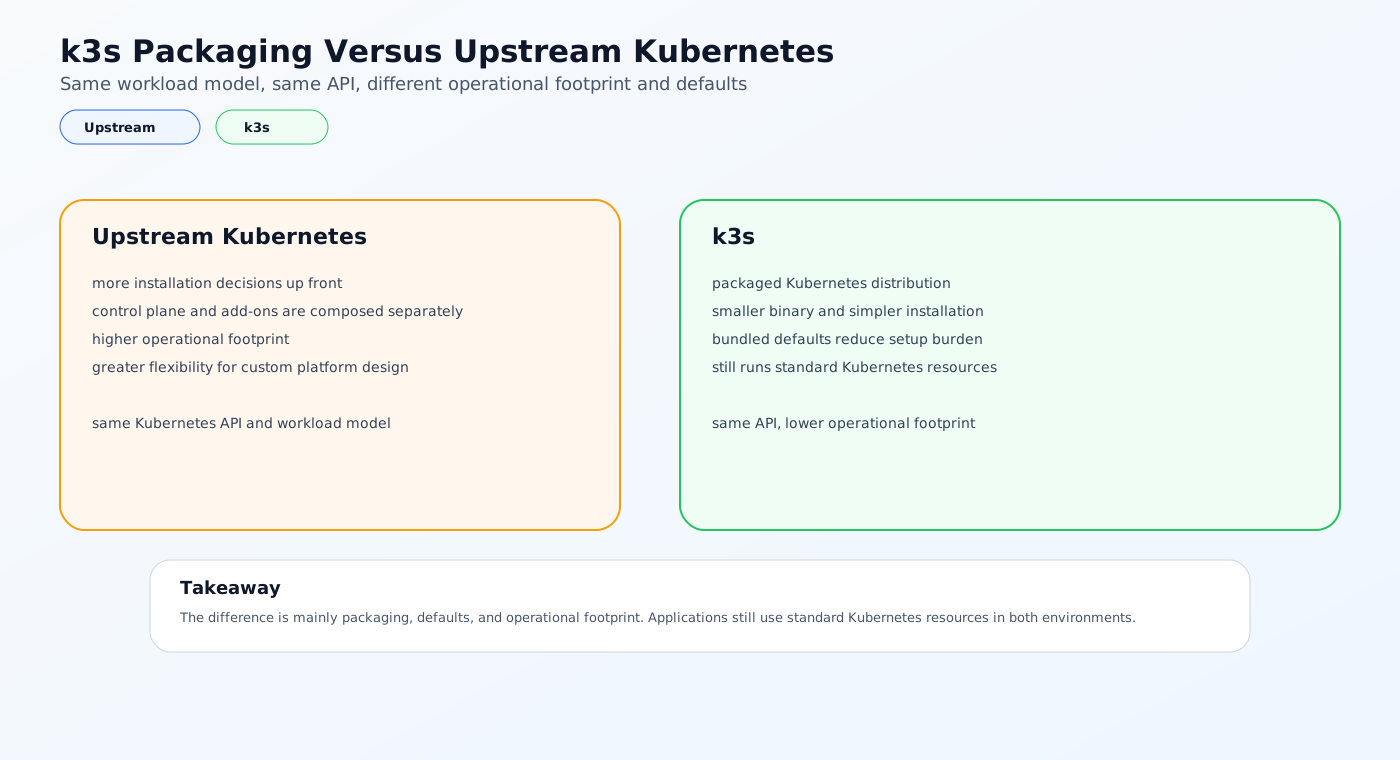
k3s is a lightweight Kubernetes distribution designed to simplify installation and operation in resource-constrained environments. It is still Kubernetes. It exposes the Kubernetes API and supports standard Kubernetes objects, which means existing manifests, Helm charts, controllers, and GitOps tools can usually run with minimal changes.
The difference is mainly in packaging, defaults, and operational footprint.
How k3s Reduces Operational Overhead
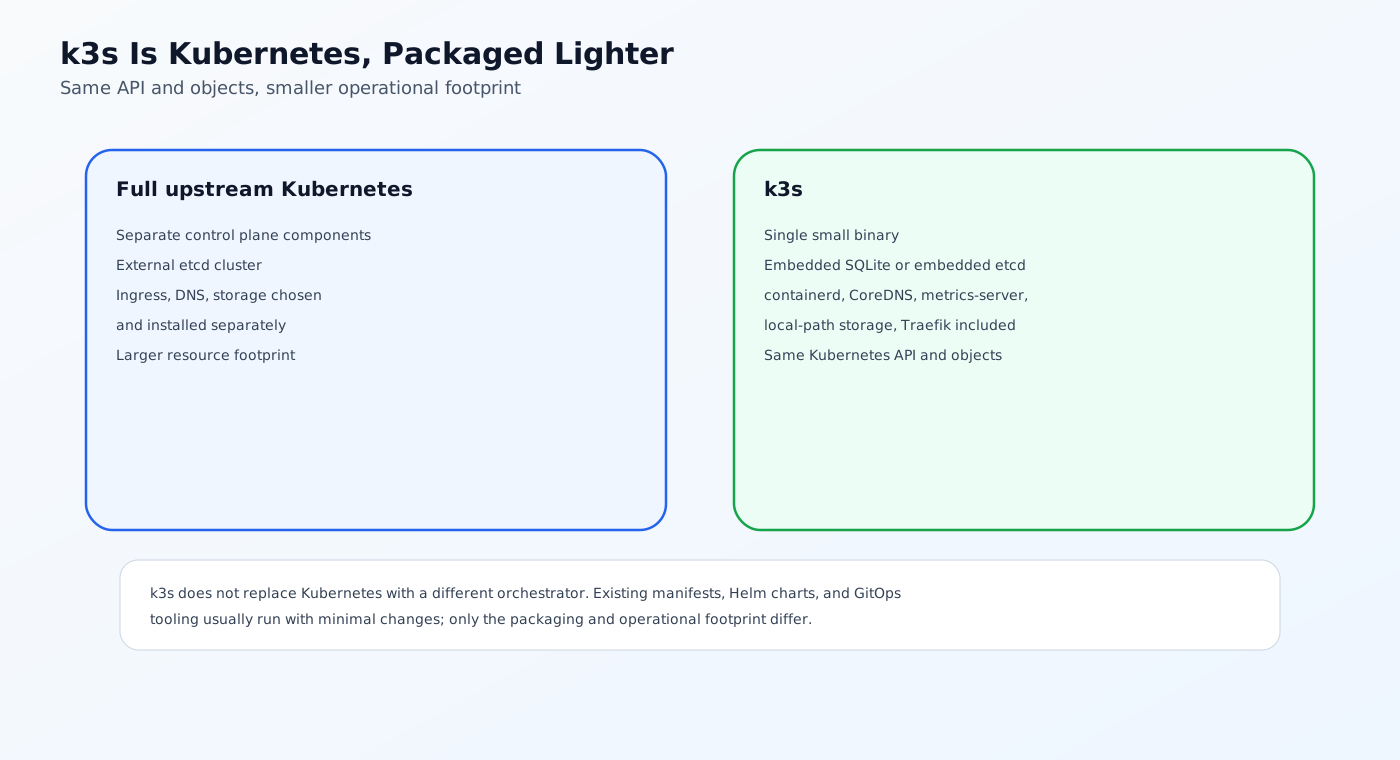
k3s simplifies Kubernetes by bundling common components and making practical defaults:
- It ships as a small single binary.
- It can use embedded SQLite for lightweight single-node deployments.
- It supports embedded etcd for highly available clusters.
- It includes a default container runtime based on containerd.
- It includes commonly needed components such as CoreDNS, metrics-server, local-path storage, and Traefik by default.
- It reduces memory and CPU requirements compared with many full Kubernetes installations.
These defaults make k3s approachable for small clusters while still allowing teams to customize or replace components when they need production-grade behavior.
k3s vs Kubernetes: What Is Actually Different?
The common comparison of "k3s vs Kubernetes" can be misleading because k3s is a Kubernetes distribution. A better comparison is k3s versus a heavier upstream Kubernetes installation or a managed Kubernetes service.
Standard Kubernetes Distributions
A traditional Kubernetes installation often gives teams maximum control. That can be valuable when a platform team needs to define every component explicitly: CNI, CSI, ingress controller, policy engine, observability stack, and upgrade process.
The cost is setup and maintenance. Running kubeadm or a custom distribution can require more decisions up front and more ongoing operational ownership.
Managed Kubernetes Services
Managed Kubernetes services such as EKS, GKE, and AKS reduce control plane operations. They are a good fit for teams already standardized on a major cloud provider and running workloads at a scale where cloud-native integrations are useful.
The tradeoffs include provider lock-in, network complexity, cost, and less flexibility for private data centers, edge environments, or hybrid infrastructure.
k3s
k3s fits between those models. It keeps the Kubernetes API and ecosystem but reduces the cost of running clusters in smaller or distributed environments. It is especially useful when teams need Kubernetes behavior outside a large managed cloud cluster.
When Should You Use k3s?
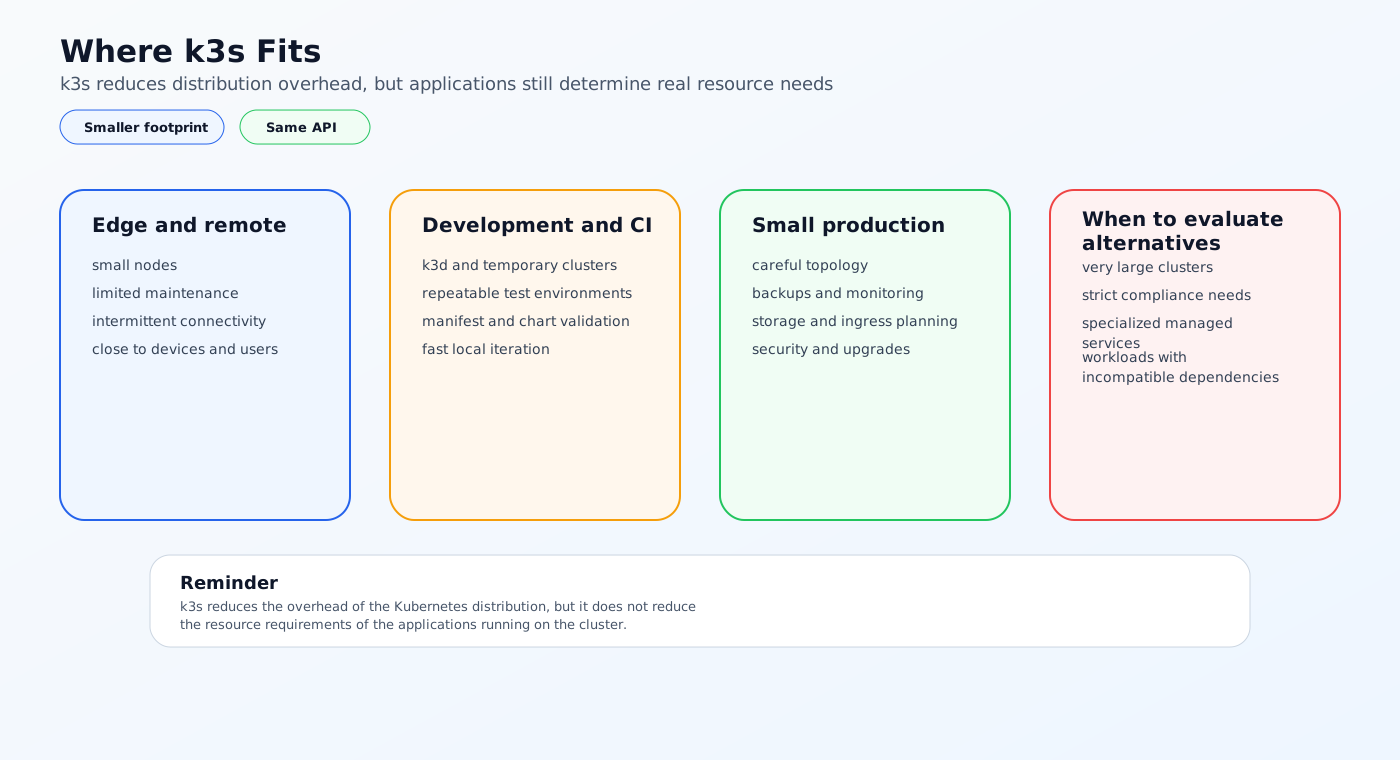
k3s is strongest when the goal is practical Kubernetes with a smaller operational footprint.
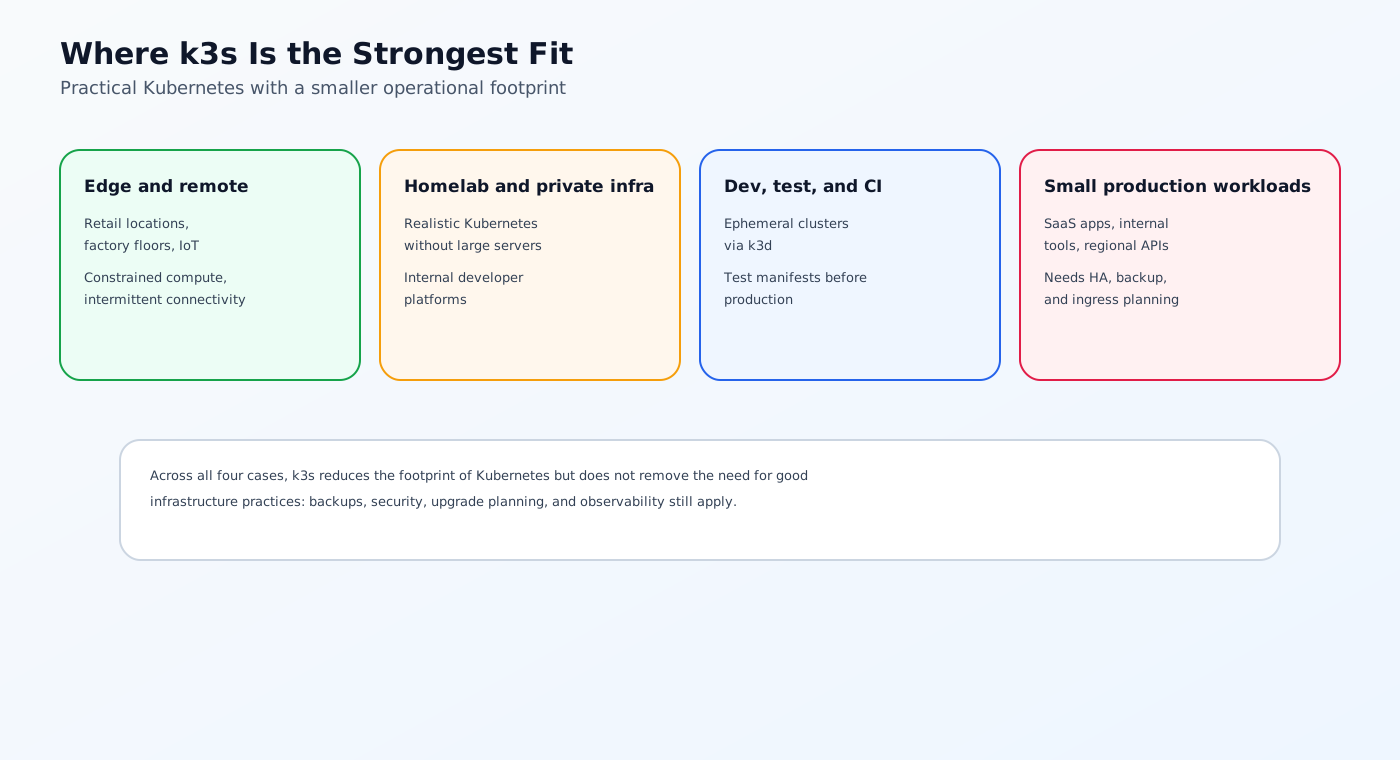
Edge and Remote Environments
Edge locations often have constrained compute, intermittent connectivity, and limited hands-on maintenance. k3s works well for these scenarios because it can run on small nodes and does not require a complex cluster bootstrap process.
Examples include retail locations, factory floors, branch offices, IoT gateways, and regional infrastructure where workloads must continue running close to users or devices.
Homelab and Private Infrastructure
k3s is popular in homelabs because it gives engineers a realistic Kubernetes environment without requiring large servers. The same characteristics also make it useful for private cloud infrastructure, internal developer platforms, and small production clusters.
In these environments, teams often want GitOps, ingress, certificates, storage, monitoring, and workload isolation, but they may not need a large managed Kubernetes service.
Development, Testing, and CI Environments
k3s can be useful for ephemeral clusters, integration testing, and CI pipelines. Tools such as k3d run k3s in containers, making it possible to create local or temporary Kubernetes clusters quickly.
This helps teams test Helm charts, Kubernetes manifests, operators, and GitOps workflows before applying changes to production.
Small Production Workloads
k3s can run production workloads when the cluster is designed carefully. That means planning for high availability, backups, ingress, persistent storage, monitoring, upgrades, and security controls.
For small SaaS applications, internal tools, APIs, and regional workloads, k3s can be a pragmatic production platform.
Current Approaches for Running Kubernetes in Smaller Environments
Teams usually choose one of several paths when they need Kubernetes outside a large managed service.
kubeadm or Full Self-Managed Kubernetes
kubeadm provides a standard way to bootstrap Kubernetes. It is flexible and widely understood, but it leaves many operational decisions to the team. This is appropriate for experienced platform teams, but it can slow down smaller DevOps teams that need a working environment quickly.
Managed Kubernetes
Managed services reduce control plane management and integrate well with cloud load balancers, IAM, storage, and observability. They are often the right choice for cloud-first production environments.
They are less ideal when workloads must run on bare metal, in private data centers, at the edge, or across different infrastructure providers.
Lightweight Kubernetes Distributions
k3s, MicroK8s, and similar distributions reduce installation and runtime overhead. They are commonly used for labs, edge deployments, smaller production clusters, and developer environments.
The advantage is speed and simplicity. The challenge is that teams still need to make production decisions around persistence, ingress, security, upgrades, and application delivery.
Limitations and Risks of k3s
k3s simplifies Kubernetes, but it does not remove the need for Kubernetes operations. The API is lighter to run, but production workloads still need production-grade practices.
Default Components May Not Match Your Requirements
k3s includes defaults such as Traefik and local-path storage. These are useful for getting started, but production environments may require different ingress controllers, storage backends, certificate flows, or network policies.
For example, local-path storage can be fine for simple single-node workloads but may not be appropriate for highly available stateful services.
High Availability Still Requires Design
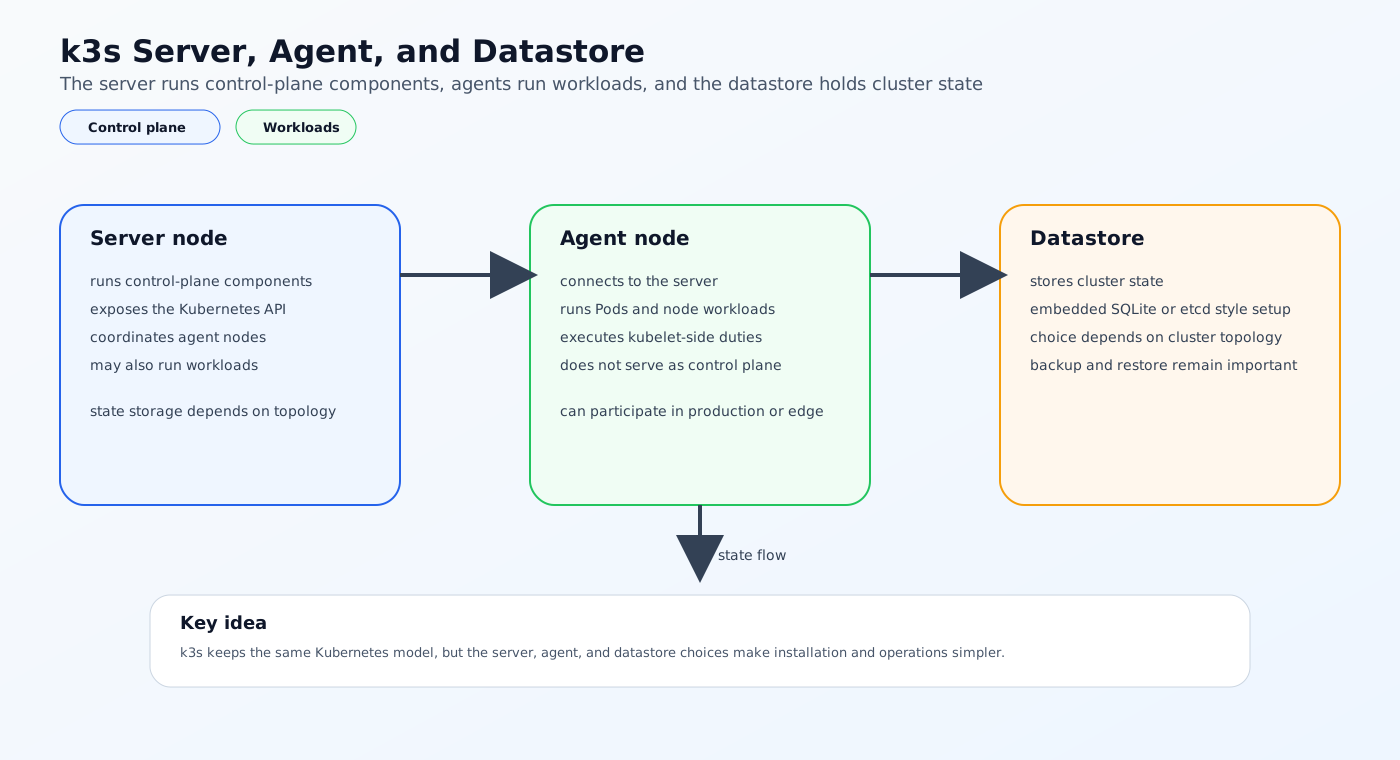
k3s supports high availability using embedded etcd or an external datastore, but HA is not automatic just because the distribution is lightweight. Teams still need to plan node topology, control plane quorum, backups, restore procedures, load balancing, and upgrade sequencing.
Multi-Tenancy Needs Additional Controls
Namespaces and RBAC are useful, but they are not complete multi-tenancy by themselves. Teams that need stronger isolation often add policy engines, network policies, separate clusters, or virtual cluster patterns similar to vCluster.
This is especially important for platforms where multiple teams, customers, or environments share the same physical infrastructure.
Observability and Day-2 Operations Still Matter
k3s can be simple to install, but day-2 operations remain: monitoring node health, detecting failed workloads, tracking resource pressure, rotating certificates, upgrading components, and recovering from storage or networking failures.
Without operational automation, a small cluster can still become difficult to maintain.
A Practical Solution Approach
A reliable k3s setup should treat the lightweight cluster as one part of a larger operating model. The strongest deployments combine k3s with GitOps, observability, tenant isolation, and repeatable infrastructure automation.
Use GitOps as the Deployment Source of Truth
GitOps tools such as Argo CD or Flux make Kubernetes changes auditable and repeatable. Instead of manually applying YAML, teams store manifests, Helm values, and environment overlays in Git.
A typical GitOps flow looks like this:
- A developer opens a pull request with application or infrastructure changes.
- CI validates manifests, Helm charts, and policy rules.
- The change is merged into the environment branch.
- Argo CD or Flux reconciles the desired state into the k3s cluster.
- Monitoring confirms rollout health.
This pattern works well with k3s because it keeps cluster operations consistent even when many small clusters are distributed across environments.
Separate Platform Components from Application Workloads
Even in a small cluster, it helps to separate platform concerns from application concerns. Platform components may include ingress, cert-manager, external-dns, storage, monitoring, logging, and policy engines.
Application workloads can then be deployed through Helm charts or Kubernetes manifests with clear ownership boundaries.
Plan Multi-Tenancy Early
If a k3s cluster will host workloads for multiple teams or environments, isolation should be part of the initial design. Depending on the risk model, teams can use:
- Namespaces and RBAC for basic separation
- NetworkPolicy for traffic boundaries
- ResourceQuota and LimitRange for fair usage
- Separate clusters for stronger isolation
- Virtual cluster approaches for Kubernetes API isolation
The right model depends on how much trust exists between tenants and how sensitive the workloads are.
How NebuaCloud Fits Into This Model
Once a team decides that k3s is the right runtime, the next challenge is operating it consistently. This is where NebuaCloud can fit naturally into the workflow.
NebuaCloud focuses on Kubernetes management, GitOps workflows, and multi-tenant infrastructure. For k3s environments, that means teams can use a lightweight Kubernetes distribution while still getting a structured operating layer around it.
Instead of treating each k3s cluster as a manually maintained island, NebuaCloud helps centralize the operational patterns around clusters, workloads, and tenants:
- GitOps-based deployment workflows for production applications
- Kubernetes and k3s cluster management from a common platform
- Multi-tenant infrastructure patterns with stronger isolation boundaries
- Operational visibility across workloads and environments
- Simplified deployment paths for production workloads
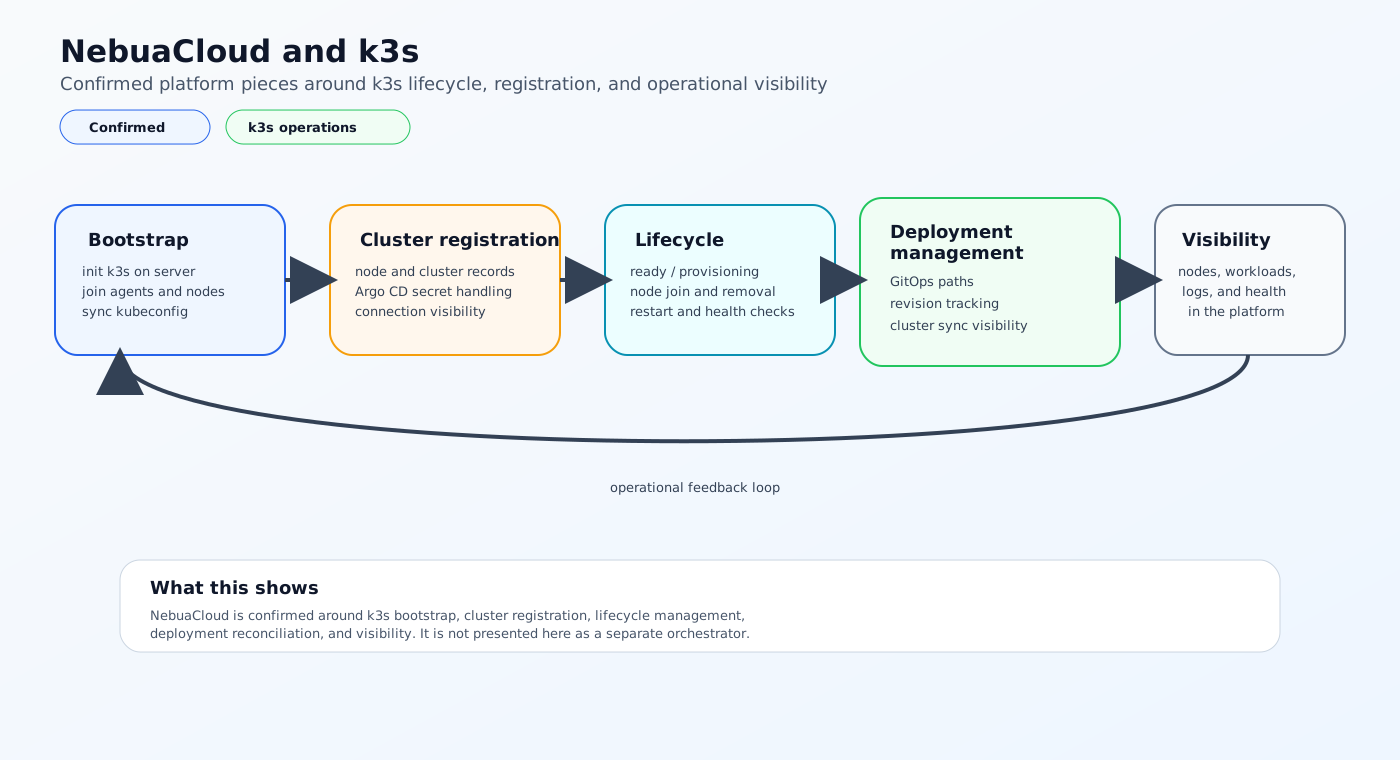
The result is not that k3s becomes something different. It remains Kubernetes. The value is in making the surrounding operational model easier to manage, especially when teams are running more than one cluster or supporting more than one environment.
Practical Workflow: Deploying an Application to k3s with GitOps
The following workflow shows how a team might use k3s in a production-oriented setup.
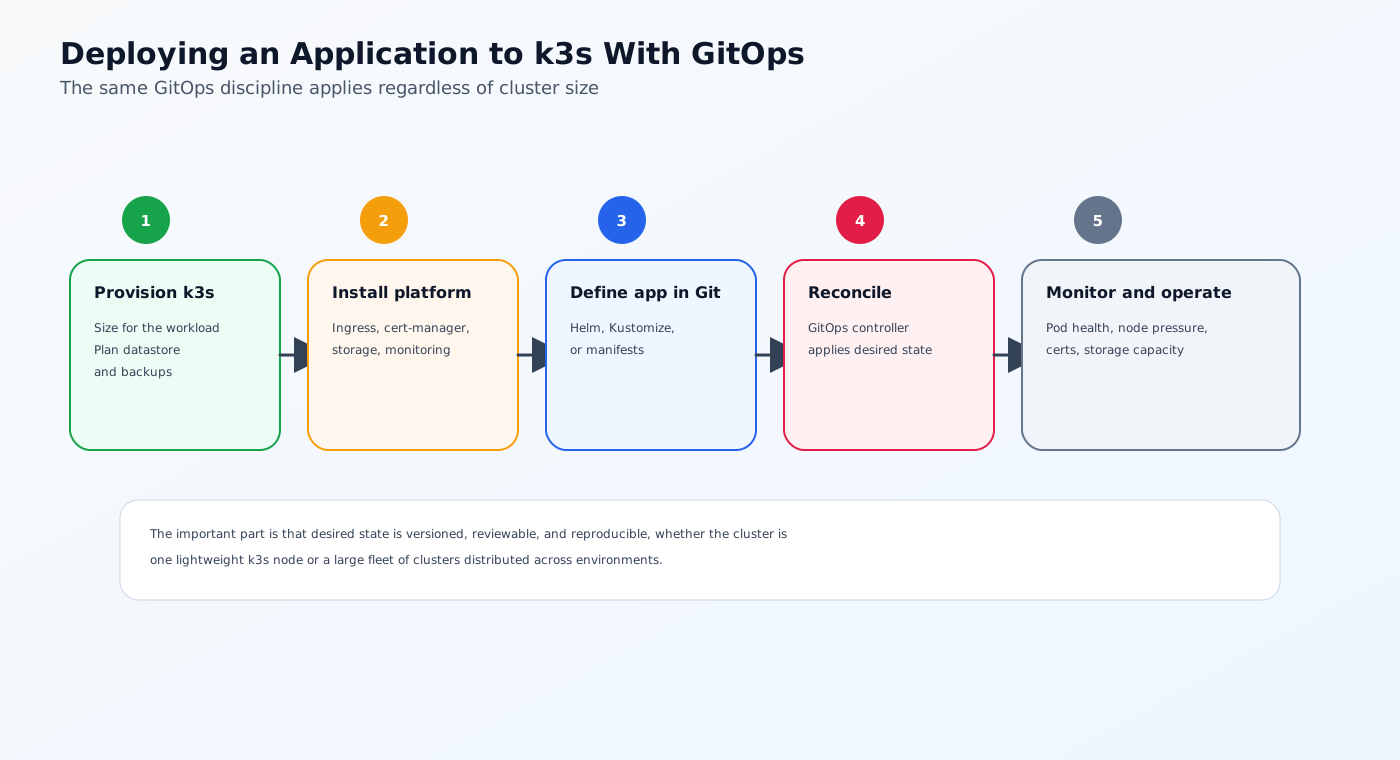
1. Provision the k3s Cluster
Start with a k3s cluster sized for the workload. For production use, this usually means multiple server nodes, a planned datastore model, backups, and a clear ingress strategy.
For smaller environments, a single-node cluster may be acceptable, but the failure model should be explicit.
2. Install Platform Components
Install or configure the platform layer:
- Ingress controller
- cert-manager for TLS certificates
- Storage class for persistent volumes
- Metrics and log collection
- Policy controls where required
- GitOps controller such as Argo CD or Flux
These components turn the base k3s installation into a usable application platform.
3. Define the Application in Git
Store the application deployment in Git using Helm, Kustomize, or plain Kubernetes manifests. A simple application repository might include:
apps/
  api/
    chart/
    values-production.yaml
  web/
    chart/
    values-production.yaml
platform/
  ingress/
  certificates/
  monitoring/
The important part is that the desired state is versioned, reviewable, and reproducible.
4. Reconcile with GitOps
Argo CD or Flux watches the Git repository and applies the desired state to the k3s cluster. If someone changes the cluster manually, the GitOps controller can detect drift and bring the environment back to the declared state.
This improves repeatability and reduces the need for manual kubectl operations.
5. Monitor and Automate Operations
After deployment, the operational loop matters. Teams should monitor pod health, node pressure, failed rollouts, certificate expiration, ingress errors, and storage capacity.
With NebuaCloud in the workflow, those operational signals can be surfaced alongside cluster and workload context, making it easier to identify issues and act on them before they become incidents.
Availability In NebuaCloud
NebuaCloud currently supports k3s-oriented cluster bootstrap and join flows through the agent, kubeconfig handling, node lifecycle operations, cluster registration, GitOps deployment management, and operational visibility around clusters and workloads.
What is not exposed as one fully finished product workflow today is a complete end-to-end "create any k3s cluster, manage every topology automatically, and provide a single universal HA/backup/restore console" experience across all deployment surfaces. Those broader capabilities may be introduced in future updates.
Conclusion
k3s is a lightweight Kubernetes distribution designed for environments where standard Kubernetes may be too heavy or too complex to operate efficiently. It is a strong fit for edge deployments, homelabs, private infrastructure, CI environments, and smaller production workloads.
The main thing to remember is that k3s reduces the footprint of Kubernetes, but it does not remove the need for good infrastructure practices. Production k3s still needs GitOps, observability, secure access control, storage planning, backup strategy, and clear tenant boundaries.
For teams that want the Kubernetes API with a simpler runtime, k3s is a practical choice. For teams that also need repeatable operations, multi-tenant infrastructure, and guided deployment workflows, NebuaCloud provides a natural management layer around that choice.