What Is Multi-Tenancy in Kubernetes?
Learn what multi-tenancy in Kubernetes means, how teams isolate workloads and tenants, common implementation patterns, and the tradeoffs in production.
Multi-tenancy in Kubernetes means multiple teams, customers, environments, or business units share the same platform while using boundaries that limit how much they can affect one another. Those boundaries can be logical, policy-based, or structural, but they are only effective when they are combined deliberately.
Kubernetes gives platform teams the building blocks: namespaces, RBAC, quotas, NetworkPolicies, admission controls, and storage and workload primitives. None of those controls, by itself, makes a complete tenancy model. Secure multi-tenancy comes from layering identity, access, resource, network, and workload controls around the shared cluster.
This article explains what multi-tenancy really means, how the common Kubernetes models differ, what namespaces and RBAC do and do not protect, and where NebuaCloud currently fits in that picture.
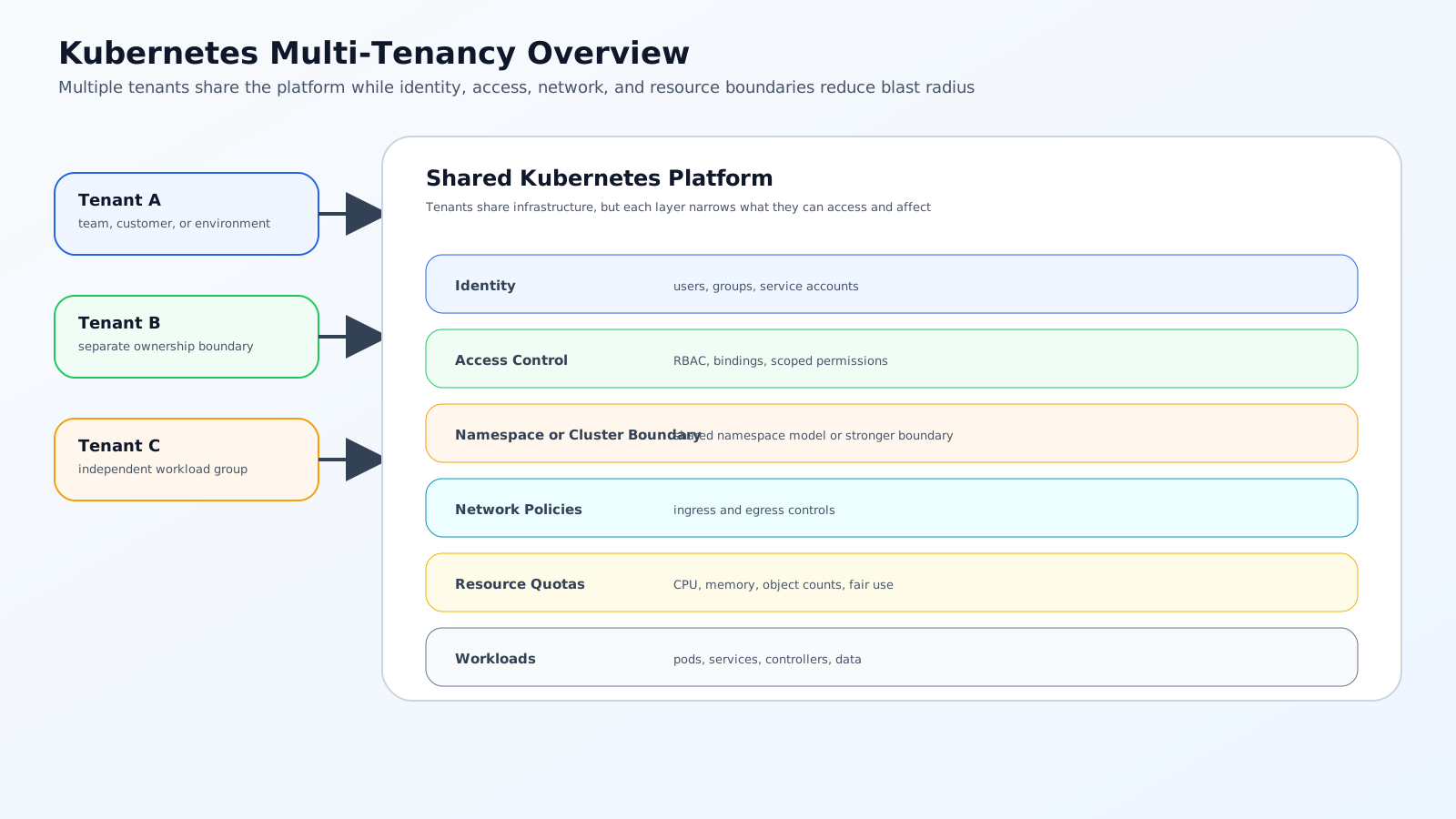
Kubernetes multi-tenancy allows multiple teams or customers to share infrastructure while using access controls, resource boundaries, and isolation mechanisms to limit how tenants affect one another.
The Problem: Shared Infrastructure Needs Boundaries
The reason multi-tenancy exists is simple: not every organization wants a separate cluster for every workload, team, or customer.
Shared infrastructure can reduce cost and simplify operations, but it introduces new problems:
- One team can consume too many resources
- One tenant can affect another tenant through noisy-neighbor behavior
- Operational access can become too broad
- Network paths can be harder to control
- Compliance boundaries become less obvious
If those boundaries are not designed carefully, a shared cluster can become harder to operate than multiple isolated ones.
Application-level separation is not the same as Kubernetes isolation
NebuaCloud already shows application-level tenant separation through organizations, users, roles, workspaces, environment selection, cluster selection, and namespace-aware workflows. That is useful, but it should not be confused with full tenant isolation inside the Kubernetes cluster.
Application-level tenant separation controls access to the platform interface and data. Kubernetes tenant isolation requires additional controls inside the cluster.
What Multi-Tenancy Is Not
Multi-tenancy is not:
- just creating different users
- just creating organizations in the application
- just creating namespaces
- just adding labels to workloads
- a single feature that guarantees complete isolation
- an AI system
GitOps can version tenant-specific configuration, but GitOps does not create tenant isolation by itself.
Main Models of Kubernetes Multi-Tenancy
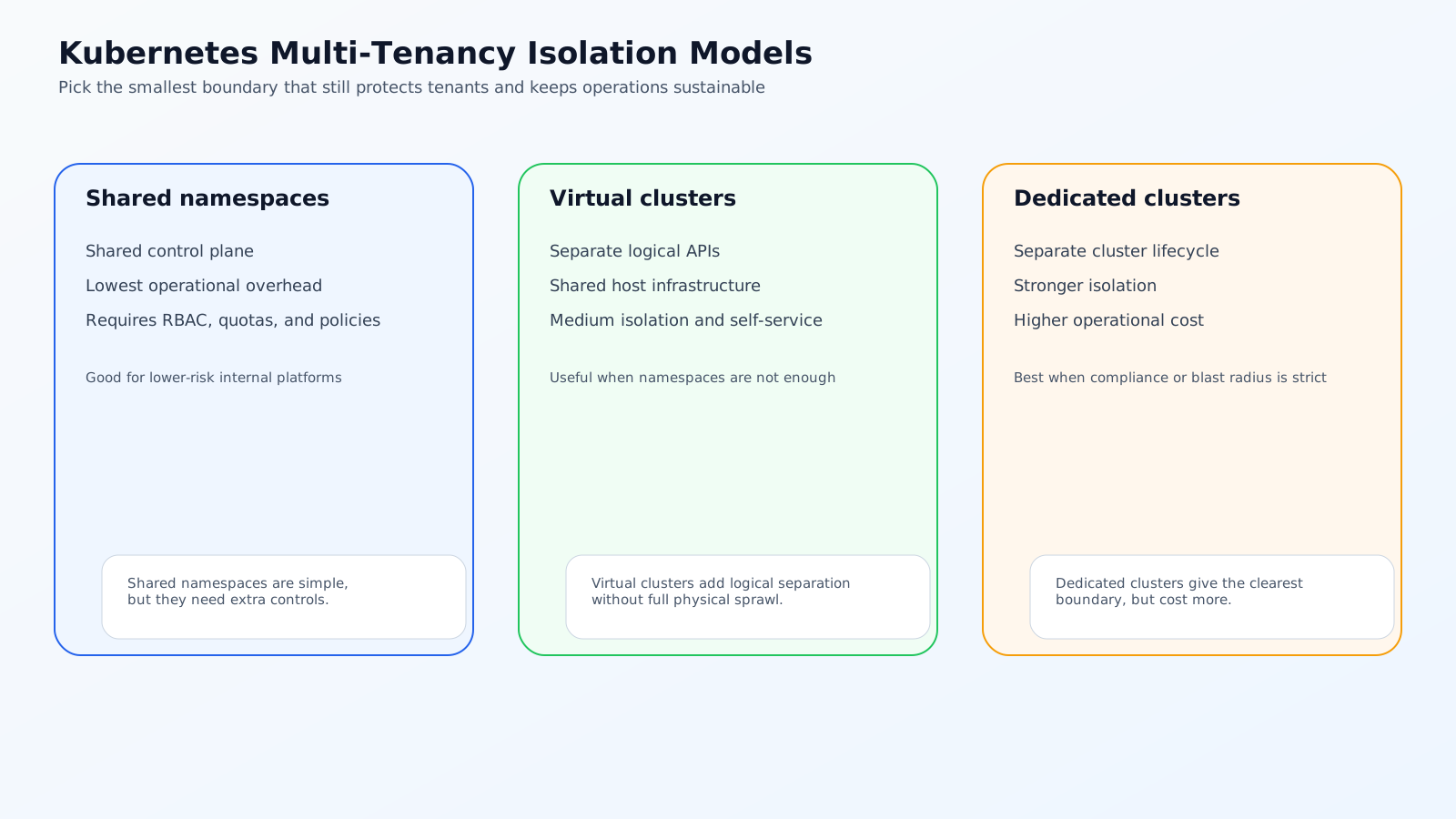
There is no single right answer. Most teams choose one of several patterns based on risk, trust, compliance, and operational cost.
1. Shared cluster with namespaces
This is the most common starting point.
Each team or tenant gets its own namespace, and the platform combines:
- RBAC
- ResourceQuota
- LimitRange
- NetworkPolicy
- admission policies
This model keeps operational cost low, but namespaces alone do not create complete security boundaries.
2. Virtual clusters
A virtual cluster gives each tenant a separate logical Kubernetes API while still using the host cluster underneath.
This is useful when namespaces are not enough, but cluster-per-tenant is too expensive.
Virtual clusters are not the same as dedicated clusters, and they are not an automatic Kubernetes feature.
3. Dedicated clusters
In this model, each tenant uses a separate Kubernetes cluster.
That can improve isolation, but it also means:
- more cluster lifecycle work
- more upgrades
- more monitoring
- more backups
- more infrastructure cost
Namespaces, RBAC, Network Policies, and Quotas
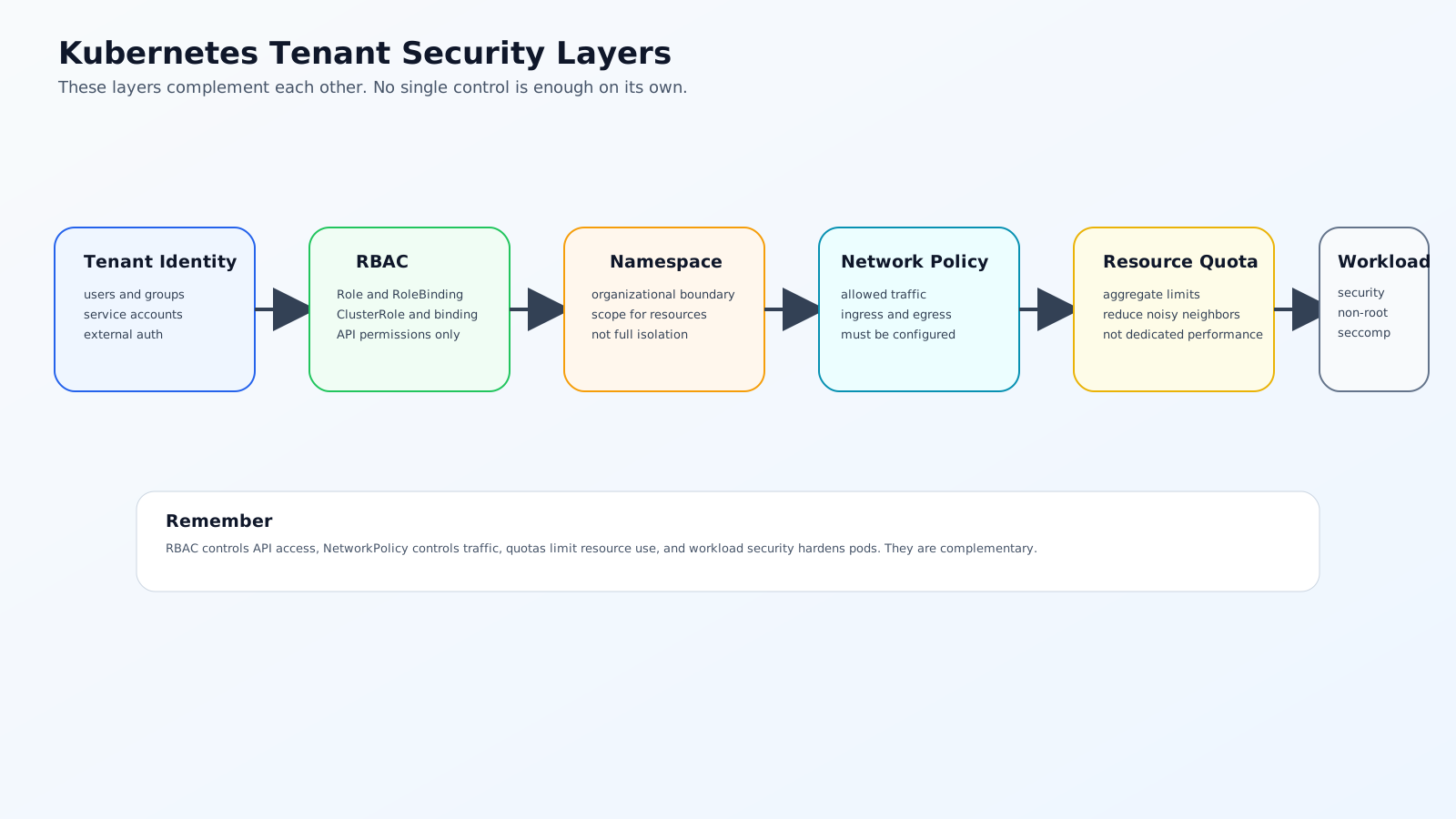
Good multi-tenancy is not just one control. It is a set of controls that work together.
Namespaces
Namespaces organize resources and provide administrative boundaries.
They are useful for scoping many namespaced resources, but they do not isolate cluster-scoped objects, nodes, or control plane behavior by themselves.
Namespaces provide organizational and administrative boundaries, but secure multi-tenancy requires additional access, network, resource, and workload controls.
RBAC
RBAC controls who can do what in the Kubernetes API.
Roleusually limits permissions to one namespaceClusterRolecan cover cluster-scoped resourcesRoleBindingattaches permissions inside a namespaceClusterRoleBindingapplies permissions at cluster scope- service accounts represent workloads inside the cluster
RBAC does not control network traffic, and it does not limit CPU or memory use.
Network Policies
NetworkPolicies control which pods may talk to each other.
They depend on network support from the cluster, and they must be configured intentionally. They do not replace RBAC, and they do not control resource usage.
ResourceQuota and LimitRange
ResourceQuota limits aggregate consumption in a namespace.
LimitRange sets defaults and per-container boundaries for requests and limits.
These controls help reduce noisy-neighbor problems, but they do not create full isolation on their own.
Workload and Data Security
Multi-tenancy also depends on workload hardening and data handling.
That usually includes:
- Pod Security Standards
- security contexts
- non-root execution
- Linux capabilities
- seccomp
- image policy enforcement
- secret handling
- encryption at rest
- storage boundaries
- admission policies
Secrets stored as Base64 are not encrypted by default. SecurityContext settings do not create complete tenant isolation. Storage and workload controls must be designed together with access and network controls.
How NebuaCloud Fits Into This Model
This is where NebuaCloud fits naturally.
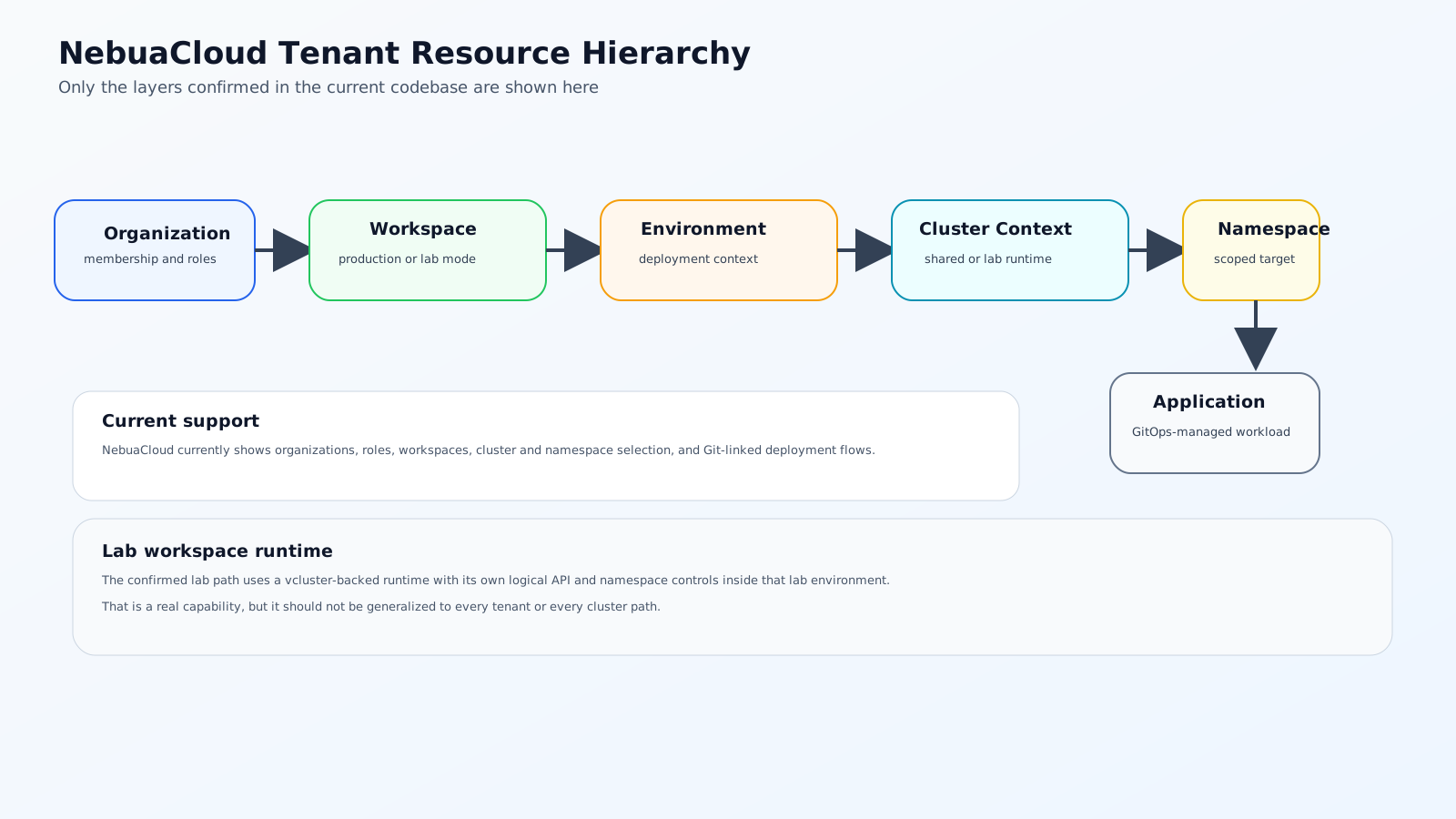
The current codebase shows real application-level tenancy through organizations, membership roles, workspaces, cluster context selection, environment-aware deployment flows, and namespace-aware operations. It also shows a lab workspace mode backed by a vcluster runtime, where the platform provisions a separate logical Kubernetes API for that lab workspace and applies namespace controls inside that runtime.
In practice, that means NebuaCloud can help teams operate shared infrastructure with clearer boundaries, while still treating Kubernetes isolation as a separate concern that must be modeled explicitly.
What that looks like today
NebuaCloud currently supports:
- organizations and membership roles
- workspace records and workspace mode selection
- environment and cluster-aware deployment flows
- namespace selection and namespace-aware workloads
- a lab workspace mode backed by vcluster
- lab-side namespace controls such as quotas, limit ranges, and a default NetworkPolicy
- GitOps reconciliation and visibility around deployments
That is useful, but it is not the same as a universal multi-tenant Kubernetes isolation system for every customer or team.
Availability in NebuaCloud
NebuaCloud currently provides foundational tenant separation through organizations, users, roles, workspaces, environment and cluster selection, and namespace-aware deployment flows. The platform also has a lab workspace mode that runs on a vcluster-backed runtime and applies namespace controls inside that lab environment.
A fully integrated Kubernetes multi-tenancy platform with universal per-tenant RBAC, NetworkPolicies, ResourceQuota, Pod Security, admission policies, and dedicated or virtual cluster automation is not currently available as a native platform feature across all tenant paths. Those capabilities may be introduced in future updates.
Conclusion
Multi-tenancy in Kubernetes is the practice of sharing infrastructure safely across multiple teams, customers, or workloads. The important part is not the word "shared" by itself. It is the set of identity, access, network, resource, and workload controls that make sharing predictable.
Namespaces, RBAC, quotas, NetworkPolicies, and stronger isolation patterns all have a place. GitOps can help version and reproduce those decisions, but it does not replace them.
For teams running Kubernetes and k3s in production, NebuaCloud currently provides a practical operational layer around organizations, workspaces, cluster selection, namespace-aware workflows, and lab vcluster-backed environments. The article's stronger isolation patterns should be understood as Kubernetes design options, not as blanket platform claims.